Media request
Currently the Guardian UK newspaper is currently working on a cover story for the G2 section of the Guardian newspaper on the significant increase in the number of babies being removed from mothers deemed unfit.
The article will take a look at what's behind this trend - an exploration of some of the complexities and — and will include plenty of voices of mothers who have lost babies, adopted adults, adoptive mothers, and social workers and others who have to make these very difficult decisions.
They are particularly interested in finding mothers who have had a young baby removed from them.
Kate is happy to change names and identifying details if required. They have to write the piece by mid Jan but hoping to tie up all interviews before Christmas.
As I say, early Jan is not out of the question either, however.
If interested contact Kate Hilpern 01753 645554
mobile 0795 737 5403
KHilpern@aol.com
Kindest regardsFassit Teamwww.fassit.co.uk
Showing posts with label the system. Show all posts
Showing posts with label the system. Show all posts
Monday, December 10, 2007


Thursday, December 6, 2007
Omaha Mall Shooter Robert Hawkins ; Former Foster Child Had Been "Treated" For ADHD, Depression

TELL ME WHEN - WHEN - WHEN ARE THEY GOING TO STOP!!!!
WHEN ARE THEY GOING TO STOP DRUGGING OUR YOUTH?
WHEN???? ISN'T IT ALREADY TIME? NO ISN'T IT LONG PAST DUE?
Omaha Mall Shooter Robert Hawkins ; Former Foster Child Had Been "Treated" For ADHD, Depression!
Todd Landry, the director of Nebraska's child services, defended the role his agency has played in Hawkins' life. He laid out a string of specific services, including a group home, that helped care for Hawkins. He also put a price tag of $265,000 on the treatments and services rendered.
"This tragedy was not a failure of the system to provide appropriate quality of services for a youth that needed them," Landry said.
"This tragedy was not a failure of the system to provide appropriate quality of services for a youth that needed them," Landry said.
Police: Omaha Mall Shooter Stepped Off Elevator, Started Firing
Victims Included Six Department Store Workers, Two Customers at Omaha Mall
Warren says the video shows Hawkins entering the Von Maur department store in Omaha's Westroads Mall on the second level.
The video, which authorities said today they will release at the conclusion of the investigation, reportedly shows Hawkins taking the elevator to the third floor where the shooting began. He can be seen firing off shots as soon as he exits a third-floor elevator, Warren said.
Hawkins then walked to a customer service area, shot several people and then himself.
Before the shooting spree, Hawkins left a note in the home of his adopted family that said he was "sorry for everything" and would not be a burden on his family anymore. He also wrote, "Now I'll be famous." He apparently also left text and phone messages for several friends.
Before the shooting spree, Hawkins left a note in the home of his adopted family that said he was "sorry for everything" and would not be a burden on his family anymore. He also wrote, "Now I'll be famous." He apparently also left text and phone messages for several friends.
"The weapon that was used was an AK-47 assault weapon. We believe that Hawkins obtained the firearm from his stepfather. We believe that Robert Hawkins stole the firearm. It had been stored at his father's," Warren said. Authorities are not yet sure whether the weapon was legally owned.
The shooting had concluded by the time officers arrived on the scene, Warren said.
The Westroads mall was closed today.
Victims Are Identified
Today the victims were identified as Gary Sharp, a customer and resident of Lincoln, Neb.; John MacDonald, 66, a customer and resident of Council Bluffs, Iowa; Angie Shuster, 35, an employee; Maggie Webb, 24, an employee; Janet Jorgenson, 66, an employee; Diane Trent, 55, an employee; Gary Joy, 56, an employee; and Becky Flynn, 47, an employee.
Jeff Shaffart, who was shot in the arm by Hawkins, was shopping with his wife for a dress for their 2-year-old daughter. He told "Good Morning America" today that he thought balloons had popped or construction work was going on.
"It didn't dawn on me at the time I'd been shot," Shaffart said, adding that he didn't see the gunman. It wasn't until he saw blood on his fingers that he realized he had been hit. As he ducked for cover among other frightened shoppers, Shaffart said that he got separated from his wife. The sheriff arrived and essentially directed people out of the mall with a shotgun raised, reuniting the man with his wife.
'Lost Pound Puppy'
People who knew Hawkins say he was an "introverted troubled young man."
Though the first widely released picture of the gunman shows a mop-topped teen, Wednesday, he wore a military-style haircut and black outfit, witnesses said.
Hawkins, from Bellevue, Neb., was kicked out by his family about a year ago. He moved in with a friend's family, and Debora Maruca-Kovac and her husband welcomed him into their home and tried to help the teen.
"When he first came in the house, he was introverted, a troubled young man who was like a lost pound puppy that nobody wanted," Maruca-Kovac said in a TV interview.
Todd Landry, the director of Nebraska's child services, defended the role his agency has played in Hawkins' life. He laid out a string of specific services, including a group home, that helped care for Hawkins. He also put a price tag of $265,000 on the treatments and services rendered.
"This tragedy was not a failure of the system to provide appropriate quality of services for a youth that needed them," Landry said.
She also told the Omaha World-Herald that the night before the shooting, Hawkins and her sons showed her a rifle — the same type used in the shooting.
She said she didn't think much of it — the gun looked too old to work.
ABC News affiliate KETV in Omaha reported that police and federal agents executed a search warrant late Wednesday night at the house where Hawkins' biological mother reportedly lives.
Records in Sarpy and Washington counties show Hawkins had a felony drug conviction and several misdemeanor cases filed against him, including an arrest 11 days before the shooting for underage drinking. He was due again in court in two weeks.
Maruca-Kovac said Hawkins was fired from his job at a McDonald's this week and had recently broken up with his girlfriend. She said he phoned her at 1 p.m. Wednesday, telling her he had left a note. She tried to get him to explain.
'It's too Late'
"He said, 'It's too late,'" and hung up, Maruca-Kovac said. She says she then called Hawkins' mother.
Maruca-Kovac went to her job as a nurse at the Nebraska Medical Center, where victims of the shooting soon began to arrive.
The first 911 call came in at 3:42 p.m. ET.
Police snipers and SWAT teams were on the scene inside the busy shopping mall within six minutes, police said. The mall was placed on lockdown early Wednesday as shoppers were allowed out, but no one was permitted to enter the mall.
Employees and shoppers at the mall's Von Maur department store described hiding in offices and storerooms for about half an hour, but the shooting, which apparently were random, was already over and Hawkins lay dead on the third floor.
'Bang, Bang, Bang'
'Bang, Bang, Bang'
Roxanne Philp, an employee inside the Von Maur store on the third floor, told "GMA" that the last thing she remembered after the gunshots rang out was crawling on the floor toward a back exit.
"We have some gift-wrapping tables with the door on one end," Philp said. "I climbed inside of there and was trying to get the door closed tight so he couldn't see me."
Philp said she heard moaning from the other side of the door, but she just laid there waiting for the gunfire to stop, which it abruptly did. "You want to help the people that you love and the people you don't even know but want to help," she said. "It's just not the situation for it."
Charissa Totten, also working on the third floor of the store, immediately thought about helping guide shoppers toward the backrooms. "I kind of flagged them to the door," she told ABC News. "And then I actually stayed in the doorway because I was afraid there might be someone who hadn't made it into the backroom yet."
It's a holiday shopping nightmare that many in Omaha will have a difficult time shaking. Carol Pardon, who was shopping inside the department store when the rampage began, said it was agonizing to sit and watch as a fellow shopper nearby was hit.
'I Couldn't Help Him, I Couldn't Go to Him'
"I couldn't help him, I couldn't go to him," Pardon said. "That scene, watching his blood, you know, drift along the tiles of the Von Maur department store, that's a scene I'll never forget."
President Bush was in town for a fundraiser in Omaha, but left at about 3 p.m. ET, before the shooting, which took place around 4 p.m. ET.
Friday night members of the Omaha police bomb squad were called to the same mall when a grenade was found in the parking lot. Security guards at the mall found the explosive intact and the bomb squad safely retrieved the device.
The Von Maur store is part of a 22-store Midwestern chain. The sprawling, three-level mall has more than 135 stores and restaurants. It gets 14.5 million visitors every year, according to its Web site.
It was the second mass shooting at a mall this year. In February, nine people were shot, five of them fatally, at Trolley Square mall in Salt Lake City. The gunman, 18-year-old Sulejman Talovic, was shot and killed by police.
Information from The Associated Press was used in this report.
Thursday, November 29, 2007
Child Protective Services faces legislative changes, may see its funding cut
By Josh Brodesky
arizona daily star
Tucson, Arizona Published: 11.27.2007
After nearly a year of intense public scrutiny following the deaths of three Tucson children, Child Protective Services faces the prospect of legislative changes and possible funding cuts.
The agency is in the midst of public hearings about its handling of cases involving three Tucson children who allegedly were killed by their parents.
Legislators want to hold a hearing in December on how CPS handled the case of 5-year-old Brandon Williams, an autistic boy who was killed in March, allegedly by his mother and a friend. That follows a September hearing on how the agency handled the case of 4-year-old Ariana Payne and her 5-year-old brother, Tyler, who were killed last year, allegedly by their father and his girlfriend
Some of the legislative changes under consideration would make CPS case records more open, allow CPS workers to file missing persons reports, give them greater access to criminal history records and open state employee records to the public in the same way as municipal and county employee records.
But with the state roughly a billion dollars in the red, there is also the prospect that the beleaguered agency will take a funding hit, even as it tries to meet public expectations for improvement.
"The governor has indicated it is her intent to hold children's services harmless from the majority of the reductions that would have to occur in agencies to meet the budget deficit," said Ken Deibert, deputy director of the Department of Economic Security, which oversees CPS.
"Any significant budget cuts for our services would certainly have some very concerning repercussions," Diebert said.
State Rep. Jonathan Paton, a Tucson Republican who has taken the lead in the legislative hearings on CPS, said he expects cuts across all state agencies, but he does not want to see a reduction in CPS workers.
"I don't necessarily think things are going to be improved if you lose more caseworkers," Paton said.
Low morale, high turnover
Against that backdrop of controversy and scrutiny, CPS workers continue to push on, handling roughly 35,000 reports a year.
For workers in Pima County, the year has been marked by high turnover and low morale, said Ilene Stern, a program supervisor and investigator.
"Morale is … seriously affected by workload, by media, by criticisms, by high turnover," she said. "It hasn't been good for a while."
Stern mostly handles reports involving children who have been placed with relatives or in foster care. She also oversees an investigator in Ajo and picks up reports on the side, partly because of staffing shortages.
CPS currently has 13 openings in Pima County.
"There are very few of us here for more than five years," Stern said. "I'm here 17 and a half, and I will retire here."
In that time the agency has evolved. Workers have less family contact and more case management, she said. Methamphetamine is prevalent in many cases. There is also an emphasis on in-home services, essentially referrals to family services such as counseling and parenting classes, as a way to keep children with families.
This emphasis on family is also seen in the agency's push for workers to take a more global approach to investigations, essentially looking beyond the black-and-white world of allegations to see what services or needs a family might require.
A recent independent review of the agency's handling of the Payne and Williams cases faulted CPS workers for being too focused on whether the allegations were true rather than the broader family situations and risks that existed.
To encourage a shift in philosophy, the agency has adopted a new assessment tool, which some workers have criticized because of its length. A sample version is roughly 80 pages.
Stern was diplomatic about the new tool, saying that while it took more time to fill out, the fieldwork didn't change, or at least it shouldn't.
"Your face-to-face time shouldn't be affected by your documentation," she said.
In her own handling of cases, Stern adopted this broader investigative approach.
The ride-along
On a warm, late October morning she treks out to White Elementary School on Tucson's far Southwest Side to investigate a report from the school of a young boy with a cut on his ear. Reportedly his father shot him with a disc gun, a small toy gun that fires plastic discs.
Stern interviews the boy about the cut, as well as his two older brothers, who are also students at the school. Her focus, however, quickly shifts from the cut, which is fairly small and clearly accidental, to concerns about a gun in the home and the employment situations of the parents.
After about an hour and a half interviewing the three children separately, she heads to the parents' house.
Neither parent is working full time. The mother goes to beauty school. The father works construction jobs but has been staying home to watch their young daughter. Stern gives them a referral for day-care services, which would allow the father to work more.
"They were very cooperative," she said. "This job is often sorting through who is pointing the finger at who. Part of my job is to put that information together."
In the public eye
There is no doubt public pressure about the handling of the Payne and Williams cases affected morale at the agency.
During the ride-along, Stern remarked that the Arizona Daily Star's coverage of the cases did not reflect the personal side of the work, or the workers.
And this summer, after the Star ran an article quoting state Rep. Steve Farley — a Tucson Democrat who took a ride-along with a CPS worker and has been supportive of the agency — a number of CPS workers forwarded the article by e-mail, commenting on how they had found a supporter.
"So often we only get the very negative media, and while some of that is included here, we now have someone supporting us," wrote Karin Kline of the DES public information office.
Lillian Downing, who heads CPS in Pima County, remarked via e-mail that perhaps the comments from Farley would help "turn the tide."
But Paton said the public scrutiny has brought about some needed changes to the agency, notably the requirements for workers to check court records and not to date clients or former clients — policy changes that he hopes to make law.
"You can see the results of an agency that's kind of been hidden away, and there have been some really bad things that happened," he said. "At the end of the day you see that because of the public's attention on what's going on, that scrutiny ultimately led to changes that they've made in their policies."
● Contact reporter Josh Brodesky at 807-7789 or jbrodesky@azstarnet.com.
As of this writting there are 27 comments on this story -
Click here for more
Child Protective Services faces legislative changes, may see its funding cut www.azstarnet.com ®
arizona daily star
Tucson, Arizona Published: 11.27.2007
After nearly a year of intense public scrutiny following the deaths of three Tucson children, Child Protective Services faces the prospect of legislative changes and possible funding cuts.
The agency is in the midst of public hearings about its handling of cases involving three Tucson children who allegedly were killed by their parents.
Legislators want to hold a hearing in December on how CPS handled the case of 5-year-old Brandon Williams, an autistic boy who was killed in March, allegedly by his mother and a friend. That follows a September hearing on how the agency handled the case of 4-year-old Ariana Payne and her 5-year-old brother, Tyler, who were killed last year, allegedly by their father and his girlfriend
Some of the legislative changes under consideration would make CPS case records more open, allow CPS workers to file missing persons reports, give them greater access to criminal history records and open state employee records to the public in the same way as municipal and county employee records.
But with the state roughly a billion dollars in the red, there is also the prospect that the beleaguered agency will take a funding hit, even as it tries to meet public expectations for improvement.
"The governor has indicated it is her intent to hold children's services harmless from the majority of the reductions that would have to occur in agencies to meet the budget deficit," said Ken Deibert, deputy director of the Department of Economic Security, which oversees CPS.
"Any significant budget cuts for our services would certainly have some very concerning repercussions," Diebert said.
State Rep. Jonathan Paton, a Tucson Republican who has taken the lead in the legislative hearings on CPS, said he expects cuts across all state agencies, but he does not want to see a reduction in CPS workers.
"I don't necessarily think things are going to be improved if you lose more caseworkers," Paton said.
Low morale, high turnover
Against that backdrop of controversy and scrutiny, CPS workers continue to push on, handling roughly 35,000 reports a year.
For workers in Pima County, the year has been marked by high turnover and low morale, said Ilene Stern, a program supervisor and investigator.
"Morale is … seriously affected by workload, by media, by criticisms, by high turnover," she said. "It hasn't been good for a while."
Stern mostly handles reports involving children who have been placed with relatives or in foster care. She also oversees an investigator in Ajo and picks up reports on the side, partly because of staffing shortages.
CPS currently has 13 openings in Pima County.
"There are very few of us here for more than five years," Stern said. "I'm here 17 and a half, and I will retire here."
In that time the agency has evolved. Workers have less family contact and more case management, she said. Methamphetamine is prevalent in many cases. There is also an emphasis on in-home services, essentially referrals to family services such as counseling and parenting classes, as a way to keep children with families.
This emphasis on family is also seen in the agency's push for workers to take a more global approach to investigations, essentially looking beyond the black-and-white world of allegations to see what services or needs a family might require.
A recent independent review of the agency's handling of the Payne and Williams cases faulted CPS workers for being too focused on whether the allegations were true rather than the broader family situations and risks that existed.
To encourage a shift in philosophy, the agency has adopted a new assessment tool, which some workers have criticized because of its length. A sample version is roughly 80 pages.
Stern was diplomatic about the new tool, saying that while it took more time to fill out, the fieldwork didn't change, or at least it shouldn't.
"Your face-to-face time shouldn't be affected by your documentation," she said.
In her own handling of cases, Stern adopted this broader investigative approach.
The ride-along
On a warm, late October morning she treks out to White Elementary School on Tucson's far Southwest Side to investigate a report from the school of a young boy with a cut on his ear. Reportedly his father shot him with a disc gun, a small toy gun that fires plastic discs.
Stern interviews the boy about the cut, as well as his two older brothers, who are also students at the school. Her focus, however, quickly shifts from the cut, which is fairly small and clearly accidental, to concerns about a gun in the home and the employment situations of the parents.
After about an hour and a half interviewing the three children separately, she heads to the parents' house.
Neither parent is working full time. The mother goes to beauty school. The father works construction jobs but has been staying home to watch their young daughter. Stern gives them a referral for day-care services, which would allow the father to work more.
"They were very cooperative," she said. "This job is often sorting through who is pointing the finger at who. Part of my job is to put that information together."
In the public eye
There is no doubt public pressure about the handling of the Payne and Williams cases affected morale at the agency.
During the ride-along, Stern remarked that the Arizona Daily Star's coverage of the cases did not reflect the personal side of the work, or the workers.
And this summer, after the Star ran an article quoting state Rep. Steve Farley — a Tucson Democrat who took a ride-along with a CPS worker and has been supportive of the agency — a number of CPS workers forwarded the article by e-mail, commenting on how they had found a supporter.
"So often we only get the very negative media, and while some of that is included here, we now have someone supporting us," wrote Karin Kline of the DES public information office.
Lillian Downing, who heads CPS in Pima County, remarked via e-mail that perhaps the comments from Farley would help "turn the tide."
But Paton said the public scrutiny has brought about some needed changes to the agency, notably the requirements for workers to check court records and not to date clients or former clients — policy changes that he hopes to make law.
"You can see the results of an agency that's kind of been hidden away, and there have been some really bad things that happened," he said. "At the end of the day you see that because of the public's attention on what's going on, that scrutiny ultimately led to changes that they've made in their policies."
● Contact reporter Josh Brodesky at 807-7789 or jbrodesky@azstarnet.com.
As of this writting there are 27 comments on this story -
Click here for more
Child Protective Services faces legislative changes, may see its funding cut www.azstarnet.com ®
Sunday, November 18, 2007
1983
Section 1983
Section 1983 of title 42 of the U.S. Code is part of the Civil Rights Act of 1871. This provision was formerly enacted as part of the Ku Klux Klan Act of 1871 and was originally designed to combat post-Civil War racial violence in the Southern states. Reenacted as part of the Civil Rights Act, section 1983 is today the primary means of enforcing all constitutional rights.
Section 1983 provides:
Every person who, under color of any statute, ordinance, regulation, custom, or usage, of any State or Territory or the District of Columbia, subjects, or causes to be subjected, any citizen of the United States or other person within the jurisdiction thereof to the deprivation of any rights, privileges, or immunities secured by the Constitution and laws, shall be liable to the party injured in an action at law, suit in equity, or other proper proceeding for redress.
On March 23, 1871, President Ulysses S. Grant sent an urgent message to Congress calling for national legislation that could combat the alarming increase in racial unrest and violence in the South. Congress reacted swiftly to this request, proposing a bill just five days later. The primary objective of the bill was to provide a means for individuals and states to enforce, in the federal or state courts, the provisions of the Fourteenth Amendment. The proposed bill created heated debate lasting several weeks but was eventually passed on April 20, 1871.
During the first ninety years of the act, few causes of action were brought due to the narrow and restrictive way that the U.S. Supreme Court interpreted the act. For example, the phrase "person … [acting] under color of any statute" was not interpreted to include those wrongdoers who happened to be state or municipal officials acting within the scope of their employment but not in accordance with the state or municipal laws. Those officials were successfully able to argue that they were not acting under color of statute and therefore their actions did not fall under the mandates of section 1983. In addition, courts narrowly construed the definition of "rights, privileges, or immunities."
But the Supreme Court decisions in Monroe v. Pape, 365 U.S. 167, 81 S. Ct. 473, 5 L. Ed. 2d 492 (1961), and Monell v. Department of Social Services, 436 U.S. 658, 98 S. Ct. 2018, 56 L. Ed. 2d 611 (1978), finally recognized the full scope of Congress's original intent in enacting section 1983. The Supreme Court began accepting an expansive definition of rights, privileges, or immunities and held that the act does cover the actions of state and municipal officials, even if they had no authority under state statute to act as they did in violating someone's federal rights.
Jurisdiction
Federal courts are authorized to hear cases brought under section 1983 pursuant to two statutory provisions: 28 U.S.C.A. § 1343(3) (1948) and 28 U.S.C.A. § 1331 (1948). The former statute permits federal district courts to hear cases involving the deprivation of civil rights, and the latter statute permits federal courts to hear all cases involving a federal question or issue. Cases brought under section 1983 may therefore be heard in federal courts by application of both jurisdictional statutes.
State courts may also properly hear section 1983 cases pursuant to the Supremacy Clause of Article VI of the U.S. Constitution. The Supremacy Clause mandates that states must provide hospitable forums for federal claims and the vindication of federal rights. This point was solidified in the Supreme Court decision of Felder v. Casey, 487 U.S. 131, 108 S. Ct. 2302, 101 L. Ed. 2d 123 (1988). The Felder case involved an individual who was arrested in Wisconsin and later brought suit in state court against the police officers and city for violations of his federal rights. The state court dismissed the claim because the plaintiff failed to properly comply with a state procedural law. But the Supreme Court overturned the state decision, holding that the Wisconsin statute could not bar the individual's federal claim.
To bring an action under section 1983, the plaintiff does not have to begin in state court. However, if the plaintiff chooses to bring suit in state court, the defendant has the right to remove the case to federal court.
Elements of a Section 1983 Claim
To prevail in a claim under section 1983, the plaintiff must prove two critical issues: a person subjected the plaintiff to conduct that occurred under color of state law, and this conduct deprived the plaintiff of rights, privileges, or immunities guaranteed under federal law or the U.S. Constitution.
A state is not a "person" under section 1983, but a city is a person under the law (Will v. Michigan Department of State Police, 491 U.S. 58, 109 S. Ct. 2304, 105 L. Ed. 2d 45 [1989]). Similarly, state officials sued in their official capacities are not deemed persons under section 1983, but if sued in their personal capacities, they are considered to be persons. Thus if a plaintiff wants to bring a section 1983 claim against a state official, she or he must name the defendants in their personal capacity and not in their professional capacity. Like a state, a territory, such as the territory of Guam, is not considered to be a person for the purposes of section 1983.
The Supreme Court has broadly construed the provision "under color of any statute" to include virtually any state action including the exercise of power of one "possessed by virtue of state law and made possible only because the wrongdoer is clothed with the authority of state law" (United States v. Classic, 313 U.S. 299, 61 S. Ct. 1031, 85 L. Ed. 1368 [1941]). Thus, the wrongdoer's employment by the government may indicate state action, although it does not conclusively prove it. Even if the wrongdoer did not act pursuant to a state statute, the plaintiff may still show that the defendant acted pursuant to a "custom or usage" that had the force of law in the state. In Adickes v. S. H. Kress & Co., 398 U.S. 144, 90 S. Ct. 1598, 26 L. Ed. 2d 142 (1970), the plaintiff was able to prove that she was refused service in a restaurant due to her race because of a state-enforced custom of racial segregation, even though no state statute promoted racial segregation in restaurants.
A successful section 1983 claim also requires a showing of the deprivation of a constitutional or federal statutory "right." This showing is required because section 1983 creates a remedy when rights are violated but does not create any rights itself. It is not enough to show a violation of a federal law because all federal laws do not necessarily create federal rights. A violation of the Fourth Amendment's guarantee against unreasonable searches and seizures or a violation of the Commerce Clause are examples of federal constitutional rights that may be deprived. Deprivation of federal statutory rights is also actionable when it can be shown that the statute creates a federal right. To show that a federal statute creates a federal right, the plaintiff must demonstrate that the federal law was designed and clearly intended to benefit the plaintiff, resulting in the creation of a federal right. For example, the Supreme Court held that a person's entitlement to welfare benefits under the federal Social Security Act is a federal right stemming from a federal statute that can be protected by section 1983 (Maine v. Thiboutot, 448 U.S. 1, 100 S. Ct. 2502, 65 L. Ed. 2d 555 [1980]).
If the plaintiff can demonstrate that a federal law granted her a federal right that was then violated, the defendant can defeat the plaintiff's claim by demonstrating that Congress specifically foreclosed a remedy under section 1983 for the type of injury that the plaintiff is pleading. The Supreme Court has held that the defendant must prove that a section 1983 action would be inconsistent with the cautious and precise scheme of remedies provided by Congress. For example, if a federal law specifically provides for a means to privately enforce that law, or if the statute does not create "rights" within the meaning of section 1983, the defendant may prevail in showing that Congress did not intend a section 1983 remedy to apply in that circumstance. It is the defendant's burden to demonstrate congressional intent to prevent a remedy under section 1983.
Absolute and Qualified Immunities
Although section 1983 does not specifically provide for absolute immunity for any parties, the Supreme Court has deemed that some officials are immune. The Supreme Court reached this conclusion by applying the common-law principles of tort immunity that existed in the United States at the time section 1983 was enacted, assuming that Congress had intended those common-law immunities to apply without having to specifically so provide in the statute. State and regional legislators are absolutely immune, as long as they are engaged in traditional legislative functions. Although the Supreme Court has not had the opportunity to extend this rule to municipal legislators, lower courts have done so (Reed v. Village of Shorewood, 704 F.2d 943 [7th Cir. 1983]).
Judges have also been held to be absolutely immune from section 1983 actions, as long as they are performing adjudicative functions (Pierson v. Ray, 386 U.S. 547, 87 S. Ct. 1213, 18 L. Ed. 2d 288 [1967]; Stump v. Sparkman, 435 U.S. 349, 98 S. Ct. 1099, 55 L. Ed. 2d 331 [1978]). Judges are considered to be performing their adjudicative functions as long as they had jurisdiction over the subject matter at the time they acted and the action was a judicial act. A minority of lower courts have extended this absolute judicial immunity to quasi-judicial agencies, such as parole boards, when they have performed functions similar to those of judges (Johnson v. Wells, 566 F.2d 1016 [5th Cir. 1978]). Absolute judicial immunity has also been extended in some cases to those judicial employees who act under the direction of the judge, such as a law clerk, court administrator, paralegal, or court reporter (Lockhart v. Hoenstine, 411 F.2d 455 [3d Cir. 1969]).
State prosecuting attorneys who are acting within the scope of their duty in presenting the state's case are also absolutely immune from suits for damages under section 1983 claims but are not absolutely immune from suits seeking prospective relief (Imbler v. Pachtman, 424 U.S. 409, 96 S. Ct. 984, 47 L. Ed. 2d 128 [1976]). Other state officials who act in a prosecutorial role are similarly immune. The Supreme Court differentiated public defenders, however, in Polk County v. Dodson, 454 U.S. 312, 102 S. Ct. 445, 70 L. Ed. 2d 509 (1981), holding that they do not act under color of state law when performing their duties and therefore are not in need of immunity because their conduct is not covered by section 1983.
Witnesses who testify in court are absolutely immune from section 1983 actions for damages, even if the claim arises out of the wit- ness's perjured testimony (Briscoe v. LaHue, 460 U.S. 325, 103 S. Ct. 1108, 75 L. Ed. 2d 96 [1983]).
The Supreme Court has also recognized a qualified immunity defense to section 1983 actions in certain circumstances. Most state and local officials and employees, who do not enjoy absolute immunity, are entitled to qualified immunity. Thus, a prosecuting attorney who enjoys absolute immunity in performing her prosecutorial functions may also enjoy a qualified immunity in hiring and firing subordinates. The Supreme Court has held that school board members, state mental institution administrators, law enforcement officers, prison officials, and state and local executives have qualified immunity (Wood v. Strickland, 420 U.S. 308, 95 S. Ct. 992, 43 L. Ed. 2d 214 [1975]; O'Connor v. Donaldson, 422 U.S. 563, 95 S. Ct. 2486, 45 L. Ed. 2d 396 [1975]; Pierson v. Ray, 386 U.S. 547, 87 S. Ct. 1213, 18 L. Ed. 2d 288 [1967]; Procunier v. Navarette, 434 U.S. 555, 98 S. Ct. 855, 55 L. Ed. 2d 24 [1978]; Scheuer v. Rhodes, 416 U.S. 232, 94 S. Ct. 1683, 40 L. Ed. 2d 90 [1974]). Most federal circuit courts have deemed that parole board members and prison disciplinary committee members have qualified immunity (Fowler v. Cross, 635 F.2d 476 [5th Cir. 1981]; Thompson v. Burke, 556 F.2d 231 [3d Cir. 1977]). Lower courts have extended the defense of qualified immunity to a number of other officials, such as city managers, county health administrators, and state Department of Veterans' Affairs trust officers.
If the defendant can raise the defense of absolute or qualified immunity, then it is his duty to plead it (Gomez v. Toledo, 446 U.S. 635, 100 S. Ct. 1920, 64 L. Ed. 2d 572 [1980]).
Remedies
The Supreme Court has held that section 1983 creates "a species of tort liability" (Imbler v. Pachtman, 424 U.S. 409, 96 S. Ct. 984, 47 L. Ed. 2d 128 [1976]). Thus, the Supreme Court has held that, as in tort law, a section 1983 plaintiff is entitled to receive only nominal damages, not to exceed one dollar, unless she or he can prove actual damages (Carey v. Piphus, 435 U.S. 247, 98 S. Ct. 1042, 55 L. Ed. 2d 252 [1978]). The jury is not entitled to place a monetary value on the constitutional rights of which the plaintiff was deprived (Memphis Community School District v. Stachura, 477 U.S. 299, 106 S. Ct. 2537, 91 L. Ed. 2d 249 [1986]). Plaintiffs bear the burden, therefore, of presenting evidence of all expenses incurred, such as medical or psychiatric expenses, lost wages, and any damages due to pain and suffering, emotional distress, or damage to reputation. The plaintiff is also under a burden to mitigate his damages, and the award of damages may be reduced to the extent that the plaintiff failed to do so.
A section 1983 plaintiff is also required to prove that a federal right was violated and, similar to tort law, that the alleged violation was a proximate or legal cause of the damages that the plaintiff suffered (Arnold v. IBM Corp., 637 F.2d 1350 [9th Cir. 1981]).
The Supreme Court has also held that, similar to tort law, punitive damages are available under section 1983 (Smith v. Wade, 461 U.S. 30, 103 S. Ct. 1625, 75 L. Ed. 2d 632 [1983]). A plaintiff is entitled to punitive damages if the jury finds that the defendant's conduct was reckless or callously indifferent to the federally protected rights of others, or if the defendant was motivated by an evil intent. The jury has the duty to assess the amount of punitive damages. Because the purpose of punitive damages is to punish the wrongdoer, such damages may be awarded even if the plaintiff cannot show actual damages (Basista v. Weir, 340 F.2d 74 [3d Cir. 1965]). As in tort law, the judge has the right to overturn a jury verdict if the jury awards what the judge considers to be excessive punitive damages.
Courts also have broad power to grant equitable relief to plaintiffs in section 1983 actions. Equitable remedies that courts have provided in the past include school desegregation, restructuring of state mental health facilities, and restructuring of prisons (United States v. City of Yonkers, 96 F. 3d 600 [2nd Cir. 1996]; Wyatt v. Stickney, 344 F. Supp. 373 [M.D. Ala. 1972]; Hutto v. Finney, 437 U.S. 678, 98 S. Ct. 2565, 57 L. Ed. 2d 522 [1978]). When the court does provide equitable relief, it usually also provides ongoing evaluation and supervision of the enforcement of its orders.
The Civil Rights Attorney's Fee Awards Act of 1976 (42 U.S.C.A. § 1988[b]) allows for the award of reasonable attorneys' fees to the prevailing party in cases brought under various federal civil rights laws, including section 1983. This provision applies whether or not compensatory damages were awarded. This provision also applies whether the plaintiff or the defendant prevails. However, if the defendant is the prevailing party, attorneys' fees have been held to be appropriate only where the lawsuit was "vexatious, frivolous, or brought to harass or embarrass the defendant" (Hensley v. Eckerhart, 461 U.S. 424, 103 S. Ct. 1933, 76 L. Ed. 2d 40 [1983]). In addition, section 1988 does not require that the attorneys' fees awarded be in proportion to the amount of damages recovered (City of Riverside v. Rivera, 477 U.S. 561, 106 S. Ct. 2686, 91 L. Ed. 2d 466 [1986]).
Rule 68 of the Federal Rules of Civil Procedure can lead to the adjustment of the amount of damages awarded by a jury in a section 1983 case. Enacted to encourage parties to settle their matters out of court, rule 68 provides that if the plaintiff rejected a settlement offer made by the defendant before trial that is better than the award the plaintiff ultimately received in the trial, the defendant is not liable for plaintiff's attorneys' fees incurred after the time the defendant made the settlement offer (Marek v. Chesny, 473 U.S. 1, 105 S. Ct. 3012, 87 L. Ed. 2d 1 [1985]). Under rule 68, section 1983 plaintiffs need to carefully consider any settlement offers made by the defendants.
Bars to Relief
Section 1983 does not provide a specific statute of limitations, which is a time limit in which a claim must be brought after the alleged violation occurred. But 42 U.S.C.A. § 1988 (1976) states that where the federal law does not provide a statute of limitations, state law shall apply. In determining which state statute of limitations to apply in a section 1983 case, the Supreme Court has held that in the interests of national uniformity and predictability, all section 1983 claims shall be treated as tort claims for the recovery of personal injuries (Wilson v. Garcia, 471 U.S. 261, 105 S. Ct. 1938, 85 L. Ed. 2d 254 [1985]). If the state has various statutes of limitations for different intentional torts, the Supreme Court mandates that the state's general or residual personal injury statute of limitations should apply (Owens v. Okure, 488 U.S. 235, 109 S. Ct. 573, 102 L. Ed. 2d 594 [1989]).
The Supreme Court has also held that state tolling statutes, which provide a plaintiff with an additional period of time in which to bring a lawsuit equal to the period of time in which the plaintiff was legally disabled, apply to section 1983 cases (Board of Regents v. Tomanio, 446 U.S. 478, 100 S. Ct. 1790, 64 L. Ed. 2d 440 [1980]).
Under section 1983, the statute of limitations does not begin to run until the cause of action accrues. The cause of action accrues when "the plaintiff knows or has reason to know of the injury which is the basis of the action" (Cox v. Stanton, 529 F.2d 47 [4th Cir. 1975]). However, in employment law cases, the Supreme Court has held that the cause of action accrues when the discriminatory act occurs (Delaware State College v. Ricks, 449 U.S. 250, 101 S. Ct. 498, 66 L. Ed. 2d 431 [1980]). Thus, if an employee is being terminated for reasons that violate section 1983, the statute of limitations begins on the day that the employee learns of the termination, not when the termination actually begins (Chardon v. Fernandez, 454 U.S. 6, 102 S. Ct. 28, 70 L. Ed. 2d 6 [1981]).
The legal rules of res judicata (claim preclusion) and collateral estoppel (issue preclusion) apply to section 1983 claims. This means that federal courts must give state court judgments the same preclusive effect that the law of the state in which the judgment was rendered would give. Plaintiffs need to be careful to raise all potential federal claims in cases brought in state court because they will not be allowed to bring those claims later in federal court after the state court has rendered a decision on the issues before it.
A plaintiff may waive his or her right to sue under section 1983, but such a waiver may be deemed unenforceable if "the interest in its enforcement is outweighed in the circumstances by a public policy harmed by enforcement of the agreement" (Town of Newton v. Rumery, 480 U.S. 386, 107 S. Ct. 1187, 94 L. Ed. 2d 405 [1987]).
Section 1983 of title 42 of the U.S. Code is part of the Civil Rights Act of 1871. This provision was formerly enacted as part of the Ku Klux Klan Act of 1871 and was originally designed to combat post-Civil War racial violence in the Southern states. Reenacted as part of the Civil Rights Act, section 1983 is today the primary means of enforcing all constitutional rights.
Section 1983 provides:
Every person who, under color of any statute, ordinance, regulation, custom, or usage, of any State or Territory or the District of Columbia, subjects, or causes to be subjected, any citizen of the United States or other person within the jurisdiction thereof to the deprivation of any rights, privileges, or immunities secured by the Constitution and laws, shall be liable to the party injured in an action at law, suit in equity, or other proper proceeding for redress.
On March 23, 1871, President Ulysses S. Grant sent an urgent message to Congress calling for national legislation that could combat the alarming increase in racial unrest and violence in the South. Congress reacted swiftly to this request, proposing a bill just five days later. The primary objective of the bill was to provide a means for individuals and states to enforce, in the federal or state courts, the provisions of the Fourteenth Amendment. The proposed bill created heated debate lasting several weeks but was eventually passed on April 20, 1871.
During the first ninety years of the act, few causes of action were brought due to the narrow and restrictive way that the U.S. Supreme Court interpreted the act. For example, the phrase "person … [acting] under color of any statute" was not interpreted to include those wrongdoers who happened to be state or municipal officials acting within the scope of their employment but not in accordance with the state or municipal laws. Those officials were successfully able to argue that they were not acting under color of statute and therefore their actions did not fall under the mandates of section 1983. In addition, courts narrowly construed the definition of "rights, privileges, or immunities."
But the Supreme Court decisions in Monroe v. Pape, 365 U.S. 167, 81 S. Ct. 473, 5 L. Ed. 2d 492 (1961), and Monell v. Department of Social Services, 436 U.S. 658, 98 S. Ct. 2018, 56 L. Ed. 2d 611 (1978), finally recognized the full scope of Congress's original intent in enacting section 1983. The Supreme Court began accepting an expansive definition of rights, privileges, or immunities and held that the act does cover the actions of state and municipal officials, even if they had no authority under state statute to act as they did in violating someone's federal rights.
Jurisdiction
Federal courts are authorized to hear cases brought under section 1983 pursuant to two statutory provisions: 28 U.S.C.A. § 1343(3) (1948) and 28 U.S.C.A. § 1331 (1948). The former statute permits federal district courts to hear cases involving the deprivation of civil rights, and the latter statute permits federal courts to hear all cases involving a federal question or issue. Cases brought under section 1983 may therefore be heard in federal courts by application of both jurisdictional statutes.
State courts may also properly hear section 1983 cases pursuant to the Supremacy Clause of Article VI of the U.S. Constitution. The Supremacy Clause mandates that states must provide hospitable forums for federal claims and the vindication of federal rights. This point was solidified in the Supreme Court decision of Felder v. Casey, 487 U.S. 131, 108 S. Ct. 2302, 101 L. Ed. 2d 123 (1988). The Felder case involved an individual who was arrested in Wisconsin and later brought suit in state court against the police officers and city for violations of his federal rights. The state court dismissed the claim because the plaintiff failed to properly comply with a state procedural law. But the Supreme Court overturned the state decision, holding that the Wisconsin statute could not bar the individual's federal claim.
To bring an action under section 1983, the plaintiff does not have to begin in state court. However, if the plaintiff chooses to bring suit in state court, the defendant has the right to remove the case to federal court.
Elements of a Section 1983 Claim
To prevail in a claim under section 1983, the plaintiff must prove two critical issues: a person subjected the plaintiff to conduct that occurred under color of state law, and this conduct deprived the plaintiff of rights, privileges, or immunities guaranteed under federal law or the U.S. Constitution.
A state is not a "person" under section 1983, but a city is a person under the law (Will v. Michigan Department of State Police, 491 U.S. 58, 109 S. Ct. 2304, 105 L. Ed. 2d 45 [1989]). Similarly, state officials sued in their official capacities are not deemed persons under section 1983, but if sued in their personal capacities, they are considered to be persons. Thus if a plaintiff wants to bring a section 1983 claim against a state official, she or he must name the defendants in their personal capacity and not in their professional capacity. Like a state, a territory, such as the territory of Guam, is not considered to be a person for the purposes of section 1983.
The Supreme Court has broadly construed the provision "under color of any statute" to include virtually any state action including the exercise of power of one "possessed by virtue of state law and made possible only because the wrongdoer is clothed with the authority of state law" (United States v. Classic, 313 U.S. 299, 61 S. Ct. 1031, 85 L. Ed. 1368 [1941]). Thus, the wrongdoer's employment by the government may indicate state action, although it does not conclusively prove it. Even if the wrongdoer did not act pursuant to a state statute, the plaintiff may still show that the defendant acted pursuant to a "custom or usage" that had the force of law in the state. In Adickes v. S. H. Kress & Co., 398 U.S. 144, 90 S. Ct. 1598, 26 L. Ed. 2d 142 (1970), the plaintiff was able to prove that she was refused service in a restaurant due to her race because of a state-enforced custom of racial segregation, even though no state statute promoted racial segregation in restaurants.
A successful section 1983 claim also requires a showing of the deprivation of a constitutional or federal statutory "right." This showing is required because section 1983 creates a remedy when rights are violated but does not create any rights itself. It is not enough to show a violation of a federal law because all federal laws do not necessarily create federal rights. A violation of the Fourth Amendment's guarantee against unreasonable searches and seizures or a violation of the Commerce Clause are examples of federal constitutional rights that may be deprived. Deprivation of federal statutory rights is also actionable when it can be shown that the statute creates a federal right. To show that a federal statute creates a federal right, the plaintiff must demonstrate that the federal law was designed and clearly intended to benefit the plaintiff, resulting in the creation of a federal right. For example, the Supreme Court held that a person's entitlement to welfare benefits under the federal Social Security Act is a federal right stemming from a federal statute that can be protected by section 1983 (Maine v. Thiboutot, 448 U.S. 1, 100 S. Ct. 2502, 65 L. Ed. 2d 555 [1980]).
If the plaintiff can demonstrate that a federal law granted her a federal right that was then violated, the defendant can defeat the plaintiff's claim by demonstrating that Congress specifically foreclosed a remedy under section 1983 for the type of injury that the plaintiff is pleading. The Supreme Court has held that the defendant must prove that a section 1983 action would be inconsistent with the cautious and precise scheme of remedies provided by Congress. For example, if a federal law specifically provides for a means to privately enforce that law, or if the statute does not create "rights" within the meaning of section 1983, the defendant may prevail in showing that Congress did not intend a section 1983 remedy to apply in that circumstance. It is the defendant's burden to demonstrate congressional intent to prevent a remedy under section 1983.
Absolute and Qualified Immunities
Although section 1983 does not specifically provide for absolute immunity for any parties, the Supreme Court has deemed that some officials are immune. The Supreme Court reached this conclusion by applying the common-law principles of tort immunity that existed in the United States at the time section 1983 was enacted, assuming that Congress had intended those common-law immunities to apply without having to specifically so provide in the statute. State and regional legislators are absolutely immune, as long as they are engaged in traditional legislative functions. Although the Supreme Court has not had the opportunity to extend this rule to municipal legislators, lower courts have done so (Reed v. Village of Shorewood, 704 F.2d 943 [7th Cir. 1983]).
Judges have also been held to be absolutely immune from section 1983 actions, as long as they are performing adjudicative functions (Pierson v. Ray, 386 U.S. 547, 87 S. Ct. 1213, 18 L. Ed. 2d 288 [1967]; Stump v. Sparkman, 435 U.S. 349, 98 S. Ct. 1099, 55 L. Ed. 2d 331 [1978]). Judges are considered to be performing their adjudicative functions as long as they had jurisdiction over the subject matter at the time they acted and the action was a judicial act. A minority of lower courts have extended this absolute judicial immunity to quasi-judicial agencies, such as parole boards, when they have performed functions similar to those of judges (Johnson v. Wells, 566 F.2d 1016 [5th Cir. 1978]). Absolute judicial immunity has also been extended in some cases to those judicial employees who act under the direction of the judge, such as a law clerk, court administrator, paralegal, or court reporter (Lockhart v. Hoenstine, 411 F.2d 455 [3d Cir. 1969]).
State prosecuting attorneys who are acting within the scope of their duty in presenting the state's case are also absolutely immune from suits for damages under section 1983 claims but are not absolutely immune from suits seeking prospective relief (Imbler v. Pachtman, 424 U.S. 409, 96 S. Ct. 984, 47 L. Ed. 2d 128 [1976]). Other state officials who act in a prosecutorial role are similarly immune. The Supreme Court differentiated public defenders, however, in Polk County v. Dodson, 454 U.S. 312, 102 S. Ct. 445, 70 L. Ed. 2d 509 (1981), holding that they do not act under color of state law when performing their duties and therefore are not in need of immunity because their conduct is not covered by section 1983.
Witnesses who testify in court are absolutely immune from section 1983 actions for damages, even if the claim arises out of the wit- ness's perjured testimony (Briscoe v. LaHue, 460 U.S. 325, 103 S. Ct. 1108, 75 L. Ed. 2d 96 [1983]).
The Supreme Court has also recognized a qualified immunity defense to section 1983 actions in certain circumstances. Most state and local officials and employees, who do not enjoy absolute immunity, are entitled to qualified immunity. Thus, a prosecuting attorney who enjoys absolute immunity in performing her prosecutorial functions may also enjoy a qualified immunity in hiring and firing subordinates. The Supreme Court has held that school board members, state mental institution administrators, law enforcement officers, prison officials, and state and local executives have qualified immunity (Wood v. Strickland, 420 U.S. 308, 95 S. Ct. 992, 43 L. Ed. 2d 214 [1975]; O'Connor v. Donaldson, 422 U.S. 563, 95 S. Ct. 2486, 45 L. Ed. 2d 396 [1975]; Pierson v. Ray, 386 U.S. 547, 87 S. Ct. 1213, 18 L. Ed. 2d 288 [1967]; Procunier v. Navarette, 434 U.S. 555, 98 S. Ct. 855, 55 L. Ed. 2d 24 [1978]; Scheuer v. Rhodes, 416 U.S. 232, 94 S. Ct. 1683, 40 L. Ed. 2d 90 [1974]). Most federal circuit courts have deemed that parole board members and prison disciplinary committee members have qualified immunity (Fowler v. Cross, 635 F.2d 476 [5th Cir. 1981]; Thompson v. Burke, 556 F.2d 231 [3d Cir. 1977]). Lower courts have extended the defense of qualified immunity to a number of other officials, such as city managers, county health administrators, and state Department of Veterans' Affairs trust officers.
If the defendant can raise the defense of absolute or qualified immunity, then it is his duty to plead it (Gomez v. Toledo, 446 U.S. 635, 100 S. Ct. 1920, 64 L. Ed. 2d 572 [1980]).
Remedies
The Supreme Court has held that section 1983 creates "a species of tort liability" (Imbler v. Pachtman, 424 U.S. 409, 96 S. Ct. 984, 47 L. Ed. 2d 128 [1976]). Thus, the Supreme Court has held that, as in tort law, a section 1983 plaintiff is entitled to receive only nominal damages, not to exceed one dollar, unless she or he can prove actual damages (Carey v. Piphus, 435 U.S. 247, 98 S. Ct. 1042, 55 L. Ed. 2d 252 [1978]). The jury is not entitled to place a monetary value on the constitutional rights of which the plaintiff was deprived (Memphis Community School District v. Stachura, 477 U.S. 299, 106 S. Ct. 2537, 91 L. Ed. 2d 249 [1986]). Plaintiffs bear the burden, therefore, of presenting evidence of all expenses incurred, such as medical or psychiatric expenses, lost wages, and any damages due to pain and suffering, emotional distress, or damage to reputation. The plaintiff is also under a burden to mitigate his damages, and the award of damages may be reduced to the extent that the plaintiff failed to do so.
A section 1983 plaintiff is also required to prove that a federal right was violated and, similar to tort law, that the alleged violation was a proximate or legal cause of the damages that the plaintiff suffered (Arnold v. IBM Corp., 637 F.2d 1350 [9th Cir. 1981]).
The Supreme Court has also held that, similar to tort law, punitive damages are available under section 1983 (Smith v. Wade, 461 U.S. 30, 103 S. Ct. 1625, 75 L. Ed. 2d 632 [1983]). A plaintiff is entitled to punitive damages if the jury finds that the defendant's conduct was reckless or callously indifferent to the federally protected rights of others, or if the defendant was motivated by an evil intent. The jury has the duty to assess the amount of punitive damages. Because the purpose of punitive damages is to punish the wrongdoer, such damages may be awarded even if the plaintiff cannot show actual damages (Basista v. Weir, 340 F.2d 74 [3d Cir. 1965]). As in tort law, the judge has the right to overturn a jury verdict if the jury awards what the judge considers to be excessive punitive damages.
Courts also have broad power to grant equitable relief to plaintiffs in section 1983 actions. Equitable remedies that courts have provided in the past include school desegregation, restructuring of state mental health facilities, and restructuring of prisons (United States v. City of Yonkers, 96 F. 3d 600 [2nd Cir. 1996]; Wyatt v. Stickney, 344 F. Supp. 373 [M.D. Ala. 1972]; Hutto v. Finney, 437 U.S. 678, 98 S. Ct. 2565, 57 L. Ed. 2d 522 [1978]). When the court does provide equitable relief, it usually also provides ongoing evaluation and supervision of the enforcement of its orders.
The Civil Rights Attorney's Fee Awards Act of 1976 (42 U.S.C.A. § 1988[b]) allows for the award of reasonable attorneys' fees to the prevailing party in cases brought under various federal civil rights laws, including section 1983. This provision applies whether or not compensatory damages were awarded. This provision also applies whether the plaintiff or the defendant prevails. However, if the defendant is the prevailing party, attorneys' fees have been held to be appropriate only where the lawsuit was "vexatious, frivolous, or brought to harass or embarrass the defendant" (Hensley v. Eckerhart, 461 U.S. 424, 103 S. Ct. 1933, 76 L. Ed. 2d 40 [1983]). In addition, section 1988 does not require that the attorneys' fees awarded be in proportion to the amount of damages recovered (City of Riverside v. Rivera, 477 U.S. 561, 106 S. Ct. 2686, 91 L. Ed. 2d 466 [1986]).
Rule 68 of the Federal Rules of Civil Procedure can lead to the adjustment of the amount of damages awarded by a jury in a section 1983 case. Enacted to encourage parties to settle their matters out of court, rule 68 provides that if the plaintiff rejected a settlement offer made by the defendant before trial that is better than the award the plaintiff ultimately received in the trial, the defendant is not liable for plaintiff's attorneys' fees incurred after the time the defendant made the settlement offer (Marek v. Chesny, 473 U.S. 1, 105 S. Ct. 3012, 87 L. Ed. 2d 1 [1985]). Under rule 68, section 1983 plaintiffs need to carefully consider any settlement offers made by the defendants.
Bars to Relief
Section 1983 does not provide a specific statute of limitations, which is a time limit in which a claim must be brought after the alleged violation occurred. But 42 U.S.C.A. § 1988 (1976) states that where the federal law does not provide a statute of limitations, state law shall apply. In determining which state statute of limitations to apply in a section 1983 case, the Supreme Court has held that in the interests of national uniformity and predictability, all section 1983 claims shall be treated as tort claims for the recovery of personal injuries (Wilson v. Garcia, 471 U.S. 261, 105 S. Ct. 1938, 85 L. Ed. 2d 254 [1985]). If the state has various statutes of limitations for different intentional torts, the Supreme Court mandates that the state's general or residual personal injury statute of limitations should apply (Owens v. Okure, 488 U.S. 235, 109 S. Ct. 573, 102 L. Ed. 2d 594 [1989]).
The Supreme Court has also held that state tolling statutes, which provide a plaintiff with an additional period of time in which to bring a lawsuit equal to the period of time in which the plaintiff was legally disabled, apply to section 1983 cases (Board of Regents v. Tomanio, 446 U.S. 478, 100 S. Ct. 1790, 64 L. Ed. 2d 440 [1980]).
Under section 1983, the statute of limitations does not begin to run until the cause of action accrues. The cause of action accrues when "the plaintiff knows or has reason to know of the injury which is the basis of the action" (Cox v. Stanton, 529 F.2d 47 [4th Cir. 1975]). However, in employment law cases, the Supreme Court has held that the cause of action accrues when the discriminatory act occurs (Delaware State College v. Ricks, 449 U.S. 250, 101 S. Ct. 498, 66 L. Ed. 2d 431 [1980]). Thus, if an employee is being terminated for reasons that violate section 1983, the statute of limitations begins on the day that the employee learns of the termination, not when the termination actually begins (Chardon v. Fernandez, 454 U.S. 6, 102 S. Ct. 28, 70 L. Ed. 2d 6 [1981]).
The legal rules of res judicata (claim preclusion) and collateral estoppel (issue preclusion) apply to section 1983 claims. This means that federal courts must give state court judgments the same preclusive effect that the law of the state in which the judgment was rendered would give. Plaintiffs need to be careful to raise all potential federal claims in cases brought in state court because they will not be allowed to bring those claims later in federal court after the state court has rendered a decision on the issues before it.
A plaintiff may waive his or her right to sue under section 1983, but such a waiver may be deemed unenforceable if "the interest in its enforcement is outweighed in the circumstances by a public policy harmed by enforcement of the agreement" (Town of Newton v. Rumery, 480 U.S. 386, 107 S. Ct. 1187, 94 L. Ed. 2d 405 [1987]).
Monday, October 29, 2007
What if ..
REFRESH - Go to Home-Page
(1) In October 01, an Agency for Children’s Services case was falsely “Indicated” for attempted suicide allegedly with an over dose of prescription drugs. Case was “indicated” despite medical documentation [in patient psychiatric unit discharge papers], along with the treating psychiatrists evaluation and other physical evidence disproving the “indicated” suicide theory. Estranged abusive, vindictive husband had called ACS three times prior to this “indicated” case all unfounded.
(2) Thirty eight thousand dollars out of 40 thousand something dollars in back child support owed to subject mother of said false indicated case by estranged husband disappeared behind closed doors, without mothers knowledge, permission or signature. twenty five hundred or so had been sent to mother in September 03.
(2) Said “indicated false case was then “concealed” by the Richmond County Court and Staten Island Family Court Services for the next five years, while the subject of this false case was accused of being a dangerous drug addict who should have no contact with her children, yet repeatedly denied drug testing. [Intrinsic and extrinsic fraud]
(3) Subject mother of indicated case frustrated with allegations of her being a drug addict, desperate to see her children, and being denied drug testing went for her own private hair drug test through her place of employment using Quest Diagnostic Labs, test was 100% negative.
(4) Subject mother then desperately attempted to have this negative hair drug test entered onto the record, hearing officer refused to accept the test, or to allow subject mother any visitation with her children. [There was an appearance of an attempt at ONE supervised visit where children claimed they did not want to see subject mother.] Children told a witness the following day they were afraid their father would get angry if they saw the subject mother, so they declined.
(5) After eighteen months of the estranged husband and the court keeping subject mother and her children apart, estranged husband via his attorney Catherine Bridge had filed for custody, subject mother had no money to retain an attorney; she was given a court appointed attorney Mario Acunzo.
(6) Subject mother was now being charged with child support yet her industry was destroyed by 9/11. Child Support was building, and arrears were being applied.
(7) Subject mother was threatened by her court appointed attorney with never seeing her children again if she fought her estranged husband on the custody issue. Subject mother was desperate to see her children, she agreed to allow her estranged husband to have custody. Mother could not figure out how her estranged husbands “word” along with the family court services “word” that she was a drug addict was accepted yet her proof [negative hair drug test] that she was not a drug addict was deliberately kept off the record. Mothers biggest mistake was trusting her court appointed attorney.
(8) Subject mother and her children were never reunited, court gave mother “visitation” only at sports games and after school activities, ordered father to keep mother informed of such events.
(9) Father refused to allow mother to visit with children, by refusing to send her any information on after school activates and or sporting events. (2002-2007)
(10) Despite numerous motions by mother pro se, pleading with the court over the next three years to give her visitation/custody, the court refused to reunite mother and children.
(11) Despite numerous letters to James Veloce, [deputy court clerk,] William Quirk [court clerk,] to the grievance committee, Office of Professional Discipline, The Commission on Judicial Conduct, Sherrill Spatz [The special inspector general for bias matters] The Bar Association, Martin F. Horn, Commissioner and Chief Judge Kaye mother and children are still not reunited.
(12) Mother finds out about false indicated case from a Social Worker with ACS after mother contacted them, to plead with them to investigate the alienation as child abuse.
Mother contacted Albany and had an administrative review opened wherein case was over turned on the original evidence available to them from the beginning.
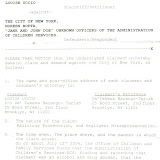
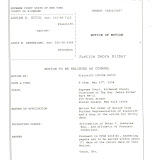
(13) Mother via her civil rights attorney sues the Administration of Children’s Services and the City for Malicious Prosecution and Negligent Misrepresentation.
(14) Mother found out that father is living Aggie Panepinto.
(15) Mother finds out that estranged husbands coaching job with the CYO is under the direction of Joseph Panepinto. Mother becomes curious as to the connection.
(16) Mother finds out that Joseph Panepinto is married to Supreme Court Judge Barbara Panepinto. Mother begins to wonder if this could be considered a political connection or is it just a suspicious coincidence.
(17) Mother finds something [in writing] stating that Aggie Panepinto uses her camera for child pornography.
(18) Mother borrows 15k from a friend to hire an attorney, and a psychologist to act as a consultant to the attorney to rebut the lies and to pay off arrears after she was put in jail for the third time on Child Support arrears. Mother is now not able to work she is suffering horrendous stress from this situation.
(19) Mother’s attorney files a summons and complaint for a divorce in January 2007, along with a Pendenti Lite motion to bring the custody case up to her home town [Westchester] along with the Divorce. Mothers Attorney fills out papers with joint custody, knowing joint custody WILL NOT WORK with a severe alienator, and he asks me to sign and agree, I REFUSE!
(20) Estranged Husbands attorney Catherine Bridge, submitted her answer, claiming that Jospeh Panepinto, works for catholic charities and she claims that the CYO is not part of the catholic charities. [Please entertain me and type in catholic charities and notice under youth- it clearly states CYO Director Jospeh Panepinto.
(21) Judge Lubell in Westchester granted estranged husbands motion via his attorney in estranged husbands absence; a motion for forum non-conveniens. The case has been in limbo with lost papers or other mishaps since then. My attorney who is well versed in Parental Alienation and is an alienated father himself suggests that I voluntarily terminate my parental rights, and that once I do that my children will come running back to me.
I REFUSED!
(22)Then what if the case got sent back down to the original jurisdiction and ended up in Judge Barbara Panepinto's lap?
(23) Then imagine your reaction when your own attorney, opposing counsel, and Judge Panepinto decide behind closed doors that she will NOT consolidate the divorce with the custody case, nor will she recuse herself!
(24) Finally after 2 court dates in front of Judge Panepinto she finally recuses herself, but not before arguing with your attorney from the bench, arms flailing all over the place, (attitude must have been "going back to her roots) "If your client wants me to recuse then file a motion!"
Blah Blah yadda yadda, the scandal, I mean saga continues.. I'll fill in the rest tomorrow...
How can I not wonder what the hell is going on here?
What if you were the judge and this case was sent to you, how would you rule?
What would you think is going on here, incompetent court system/child protective system?
Suspicious coincidence?
Political Connections and perhaps much more?
(1) In October 01, an Agency for Children’s Services case was falsely “Indicated” for attempted suicide allegedly with an over dose of prescription drugs. Case was “indicated” despite medical documentation [in patient psychiatric unit discharge papers], along with the treating psychiatrists evaluation and other physical evidence disproving the “indicated” suicide theory. Estranged abusive, vindictive husband had called ACS three times prior to this “indicated” case all unfounded.
(2) Thirty eight thousand dollars out of 40 thousand something dollars in back child support owed to subject mother of said false indicated case by estranged husband disappeared behind closed doors, without mothers knowledge, permission or signature. twenty five hundred or so had been sent to mother in September 03.
(2) Said “indicated false case was then “concealed” by the Richmond County Court and Staten Island Family Court Services for the next five years, while the subject of this false case was accused of being a dangerous drug addict who should have no contact with her children, yet repeatedly denied drug testing. [Intrinsic and extrinsic fraud]
(3) Subject mother of indicated case frustrated with allegations of her being a drug addict, desperate to see her children, and being denied drug testing went for her own private hair drug test through her place of employment using Quest Diagnostic Labs, test was 100% negative.
(4) Subject mother then desperately attempted to have this negative hair drug test entered onto the record, hearing officer refused to accept the test, or to allow subject mother any visitation with her children. [There was an appearance of an attempt at ONE supervised visit where children claimed they did not want to see subject mother.] Children told a witness the following day they were afraid their father would get angry if they saw the subject mother, so they declined.
(5) After eighteen months of the estranged husband and the court keeping subject mother and her children apart, estranged husband via his attorney Catherine Bridge had filed for custody, subject mother had no money to retain an attorney; she was given a court appointed attorney Mario Acunzo.
(6) Subject mother was now being charged with child support yet her industry was destroyed by 9/11. Child Support was building, and arrears were being applied.
(7) Subject mother was threatened by her court appointed attorney with never seeing her children again if she fought her estranged husband on the custody issue. Subject mother was desperate to see her children, she agreed to allow her estranged husband to have custody. Mother could not figure out how her estranged husbands “word” along with the family court services “word” that she was a drug addict was accepted yet her proof [negative hair drug test] that she was not a drug addict was deliberately kept off the record. Mothers biggest mistake was trusting her court appointed attorney.
(8) Subject mother and her children were never reunited, court gave mother “visitation” only at sports games and after school activities, ordered father to keep mother informed of such events.
(9) Father refused to allow mother to visit with children, by refusing to send her any information on after school activates and or sporting events. (2002-2007)
(10) Despite numerous motions by mother pro se, pleading with the court over the next three years to give her visitation/custody, the court refused to reunite mother and children.
(11) Despite numerous letters to James Veloce, [deputy court clerk,] William Quirk [court clerk,] to the grievance committee, Office of Professional Discipline, The Commission on Judicial Conduct, Sherrill Spatz [The special inspector general for bias matters] The Bar Association, Martin F. Horn, Commissioner and Chief Judge Kaye mother and children are still not reunited.
(12) Mother finds out about false indicated case from a Social Worker with ACS after mother contacted them, to plead with them to investigate the alienation as child abuse.
Mother contacted Albany and had an administrative review opened wherein case was over turned on the original evidence available to them from the beginning.
(13) Mother via her civil rights attorney sues the Administration of Children’s Services and the City for Malicious Prosecution and Negligent Misrepresentation.
(14) Mother found out that father is living Aggie Panepinto.
(15) Mother finds out that estranged husbands coaching job with the CYO is under the direction of Joseph Panepinto. Mother becomes curious as to the connection.
(16) Mother finds out that Joseph Panepinto is married to Supreme Court Judge Barbara Panepinto. Mother begins to wonder if this could be considered a political connection or is it just a suspicious coincidence.
(17) Mother finds something [in writing] stating that Aggie Panepinto uses her camera for child pornography.
(18) Mother borrows 15k from a friend to hire an attorney, and a psychologist to act as a consultant to the attorney to rebut the lies and to pay off arrears after she was put in jail for the third time on Child Support arrears. Mother is now not able to work she is suffering horrendous stress from this situation.
(19) Mother’s attorney files a summons and complaint for a divorce in January 2007, along with a Pendenti Lite motion to bring the custody case up to her home town [Westchester] along with the Divorce. Mothers Attorney fills out papers with joint custody, knowing joint custody WILL NOT WORK with a severe alienator, and he asks me to sign and agree, I REFUSE!
(20) Estranged Husbands attorney Catherine Bridge, submitted her answer, claiming that Jospeh Panepinto, works for catholic charities and she claims that the CYO is not part of the catholic charities. [Please entertain me and type in catholic charities and notice under youth- it clearly states CYO Director Jospeh Panepinto.
(21) Judge Lubell in Westchester granted estranged husbands motion via his attorney in estranged husbands absence; a motion for forum non-conveniens. The case has been in limbo with lost papers or other mishaps since then. My attorney who is well versed in Parental Alienation and is an alienated father himself suggests that I voluntarily terminate my parental rights, and that once I do that my children will come running back to me.
I REFUSED!
(22)Then what if the case got sent back down to the original jurisdiction and ended up in Judge Barbara Panepinto's lap?
(23) Then imagine your reaction when your own attorney, opposing counsel, and Judge Panepinto decide behind closed doors that she will NOT consolidate the divorce with the custody case, nor will she recuse herself!
(24) Finally after 2 court dates in front of Judge Panepinto she finally recuses herself, but not before arguing with your attorney from the bench, arms flailing all over the place, (attitude must have been "going back to her roots) "If your client wants me to recuse then file a motion!"
Blah Blah yadda yadda, the scandal, I mean saga continues.. I'll fill in the rest tomorrow...
How can I not wonder what the hell is going on here?
What if you were the judge and this case was sent to you, how would you rule?
What would you think is going on here, incompetent court system/child protective system?
Suspicious coincidence?
Political Connections and perhaps much more?
Wednesday, October 24, 2007
Big Big WIN for Parents and Children
There you have it, CPS and its employees can not threaten parents with court orders or the removal of children because parents assert their 4th and 14th Amendment Rights and refuse to cooperate. Parents do not have to cooperate with CPS what so ever and CPS employees have to go away when parents deny them access to their home and children. They must conclude their investigation without the cooperation of the parents and children.
CPS workers are trained and instructed in this unconstitutional practice in order to conduct an unreasonable search and seizure of the home and child. They are to lie and threaten any way they can.
All parents who were threatened should file a federal lawsuit against DCF, their workers, their supervisors and the police.
Thomas Dutkiewicz
October 22, 2007
Federal Judge Rules Social Worker Fear Tactics Unconstitutional
A federal court in Arizona has ruled that an unsupported threat to place children in custody, made to coerce cooperation with a social services investigation, violates the constitutional guarantee of family privacy and integrity.
As detailed in the March/April 2007 issue of the Court Report, social workers and sheriff’s deputies had come to the home of Home School Legal Defense Association members John and Tiffany Loudermilk, demanding entry based on a six-week-old anonymous tip that the newly constructed home was unsafe for children. The Loudermilks declined consent, as was their right under the Fourth Amendment. After an escalating confrontation at the front door that lasted 40 minutes, the social workers, backed by no fewer than four deputies, threatened to take the Loudermilks’ children into custody and place them in foster care if the Loudermilks continued to deny them entry to their home. An assistant attorney general repeated this threat to HSLDA attorney Thomas Schmidt, who was assisting the Loudermilks during the confrontation.
Under this duress, Mr. and Mrs. Loudermilk allowed the social workers and sheriff’s deputies inside. Within five minutes, the social workers determined that the anonymous tip was false and left.
HSLDA filed a federal lawsuit on behalf of the Loudermilk family, alleging that the search violated the Fourth Amendment and that the unjustified threat to remove the children was a separate constitutional violation of the family’s Fourteenth Amendment right to privacy and family integrity. The social workers and assistant attorney general moved to dismiss the claims, arguing that neither the search nor the threat to remove the children violated the Loudermilks’ constitutional rights.
On September 27, 2007, the judge ruled in the Loudermilks favor, stating: “Defendants persisted in their threats to remove the children if Plaintiff Parents did not consent to the search, stating that [they] could arrest or handcuff the Parents in front of the children. Based on the allegations set forth in the Amended Complaint, viewed in Plaintiff’s favor, no reasonable official would have believed that his or her conduct was authorized by state or constitutional law.” With regard to the assistant attorney general, the court ruled that “Plaintiffs have sufficiently alleged that [the attorney] . . . by ‘threat’ exerted ‘coercive pressure’ on them to allow the search of their home so that their children would not be removed.”
The judge’s ruling allows the case to proceed to trial. “The ruling in this case makes it clear that threatening to remove children to gain a parent’s cooperation is unconstitutional,” said James R. Mason, Senior Counsel for HSLDA. “We hope that this ruling will change this common tactic used by investigative caseworkers all over the country.”
Judge’s Ruling in the Loudermilk Defendants’ Motion to Dismiss
(requires Adobe Acrobat Reader)
Thomas M. Dutkiewicz, PresidentSpecial Family Advocate on Constitutional ProtectionConnecticut DCF WatchP.O. Box 9775Forestville, CT 06011-9775860-833-4127Admin@connecticutdcfwatch.comwww.connecticutDCFwatch.com
P.S. Check out our web site for the FREE handbook on parental rights. There is also a manual on "reasonable efforts" with sections for Attorneys, Judges and Agencies.
CPS workers are trained and instructed in this unconstitutional practice in order to conduct an unreasonable search and seizure of the home and child. They are to lie and threaten any way they can.
All parents who were threatened should file a federal lawsuit against DCF, their workers, their supervisors and the police.
Thomas Dutkiewicz
October 22, 2007
Federal Judge Rules Social Worker Fear Tactics Unconstitutional
A federal court in Arizona has ruled that an unsupported threat to place children in custody, made to coerce cooperation with a social services investigation, violates the constitutional guarantee of family privacy and integrity.
As detailed in the March/April 2007 issue of the Court Report, social workers and sheriff’s deputies had come to the home of Home School Legal Defense Association members John and Tiffany Loudermilk, demanding entry based on a six-week-old anonymous tip that the newly constructed home was unsafe for children. The Loudermilks declined consent, as was their right under the Fourth Amendment. After an escalating confrontation at the front door that lasted 40 minutes, the social workers, backed by no fewer than four deputies, threatened to take the Loudermilks’ children into custody and place them in foster care if the Loudermilks continued to deny them entry to their home. An assistant attorney general repeated this threat to HSLDA attorney Thomas Schmidt, who was assisting the Loudermilks during the confrontation.
Under this duress, Mr. and Mrs. Loudermilk allowed the social workers and sheriff’s deputies inside. Within five minutes, the social workers determined that the anonymous tip was false and left.
HSLDA filed a federal lawsuit on behalf of the Loudermilk family, alleging that the search violated the Fourth Amendment and that the unjustified threat to remove the children was a separate constitutional violation of the family’s Fourteenth Amendment right to privacy and family integrity. The social workers and assistant attorney general moved to dismiss the claims, arguing that neither the search nor the threat to remove the children violated the Loudermilks’ constitutional rights.
On September 27, 2007, the judge ruled in the Loudermilks favor, stating: “Defendants persisted in their threats to remove the children if Plaintiff Parents did not consent to the search, stating that [they] could arrest or handcuff the Parents in front of the children. Based on the allegations set forth in the Amended Complaint, viewed in Plaintiff’s favor, no reasonable official would have believed that his or her conduct was authorized by state or constitutional law.” With regard to the assistant attorney general, the court ruled that “Plaintiffs have sufficiently alleged that [the attorney] . . . by ‘threat’ exerted ‘coercive pressure’ on them to allow the search of their home so that their children would not be removed.”
The judge’s ruling allows the case to proceed to trial. “The ruling in this case makes it clear that threatening to remove children to gain a parent’s cooperation is unconstitutional,” said James R. Mason, Senior Counsel for HSLDA. “We hope that this ruling will change this common tactic used by investigative caseworkers all over the country.”
Judge’s Ruling in the Loudermilk Defendants’ Motion to Dismiss
(requires Adobe Acrobat Reader)
Thomas M. Dutkiewicz, PresidentSpecial Family Advocate on Constitutional ProtectionConnecticut DCF WatchP.O. Box 9775Forestville, CT 06011-9775860-833-4127Admin@connecticutdcfwatch.comwww.connecticutDCFwatch.com
P.S. Check out our web site for the FREE handbook on parental rights. There is also a manual on "reasonable efforts" with sections for Attorneys, Judges and Agencies.
Thursday, September 13, 2007
State askes the people to respond to how they are doing -Gail answers
Today a friened of mine Gail Head yes the same woman that put together the Awareness quilt wrote a letter to CPS in her hometown of Texas.
I had to share, so with her permission here it is..
From Gail Head
(She is open to anyone contacting her for more info- or even a story)
This is a copy of the email letter I sent in reponse to the published article for TX asking "how they are doing". I seriously doubt I will get an answer, but I sent in my opinion. And now, we wait to see "if" they respond.
Dear Ms Elizabeth Kromrei,
It amazes me that such an important as issue as this with a survey to "hear" from parents and citizens of this State of Texas to report their experiences and findings regarding the doings and activities of CPS would be shut down so soon after being published. That certainly makes it appear that the truth is "not wanted" in the reports, or, CPS has been hit in the face with far more truth than they can handle dealing with. The truth is what it is and what it is, is that CPS needs to be SHUT DOWN and a new system put in its place. CPS is CORRUPT to the very core~!!!
The Caseworkers are literally, and ILLEGALLY I might add, destroying innocent families every day over and over again. These are common street-walkers who are not trained in Social Work and how to work with families in trouble and children trutly at risks or in harm's way. These caseworkers are given crash courses of a few short weeks, as testified to in a hearing that I attended when she was asked under oath about her training and how long she had been a caseworker with CPS, then turned out on the streets to "investigate" and destroy families, taking into state custody every child they can manage to snatch. This is NOT what CPS was established for. However, CPS has now become nothing more than a STATE MONEY-MAKING BUSINESS with the commodity being our children. The government financial incentives speak for themselves. The truth is what the truth is.
There is NO accountability in the CPS department. The caseworkers LIE, fabricate, twist and distort the facts, in every aspect of the case to whatever extent they "think" they need to do in order to justify their actions against the families, enter it into the court records and attest under oath to them being true facts. What's the legal term used for that? PERJURY. However, they couldn't care less as they know nothing will be done about their commission of that even under oath. They just claim "immunity". It is ALL ABOUT THE MONEY~!!! It is NOT about helping children and families but rather helping themselves to the children of our families.
Want FACTS to support what I am saying? I'm sure you already have them and probably know them like the back of your hand, but just in case you should need them, I will gladly show you just how ILLEGALLY your caseworkers are operating in your CPS offices. I can personally show you the FACTS of 2 such offices and each being in a different county. This is "par" for the whole State of Texas. How brave are you to sit down and face me with the FACTS in black and white??? I even have admission by 2 of your workers committing to Medicaid FRAUD. Oh but FRAUD when committed by your workers is acceptable even though it's breaking the LAW. Right???? Nothing was done to them when I turned it in so obviously, that's acceptable practice within the agency, just like all the other ILLEGAL actions that are never questioned nor dealt with.
So, in answer to the question, How is CPS doing???? ROTTEN~!!! CPS as is stands presently should be DESTROYED and a new system put it in place with some LEGAL checks and balances to prevent it from becoming the REAL ABUSERS of children and their families. CPS was designed and set up to PROTECT children from being abused and neglected. Well, well, NOW we have the total opposite of that. CPS IS NOW the ABUSER and NEGLECTOR. Caseworkers snatch the children, run with them, toss them into abusive foster homes, (and yes, I have proof of that too), start the process of PAS so that they can end their course of none to rare existant reunification with a TPR and then SELL the children into one of their adoption placements and collect the huge Federal Government Adoption Bonus Incentive for doing so. Legalized Black Market Child Trafficing. Cold hard TRUTH of what the TRUTH is. All of you sitting there in your high-up CPS offices who think we, the parents of this state and this country don't know what is going on and what you are doing, you best "think again".
WHY don't you start with these complaints and the TRUTH in these emails about what is going on and do a REAL INVESTIGATION into what your caseworkers are doing ILLEGALLY to your Texas Families. PUT BACK TOGETHER what they have shredded and destroyed, back-charge them for their collection of funds for the ILLEGAL cases they did, then PROSECUTE them for it~!!! The State Agency could then hire QUALIFIED Social Workers who would HELP the children and their families in the ways they need to be helped rather than destroy as many families as they can for the money, as is happening today.
CPS is ROTTEN to the very core and their work speaks for itself. I personally DARE you to open your door to the facts I hold in my hands that PROVE what I am saying. I shall wait and see if you bother to even respond to this letter, let alone face me to see the TRUTH and FACTS.
Sincerely,
Gail Head
PO Box 392
Paradise, TX 76073
I had to share, so with her permission here it is..
From Gail Head
(She is open to anyone contacting her for more info- or even a story)
This is a copy of the email letter I sent in reponse to the published article for TX asking "how they are doing". I seriously doubt I will get an answer, but I sent in my opinion. And now, we wait to see "if" they respond.
Dear Ms Elizabeth Kromrei,
It amazes me that such an important as issue as this with a survey to "hear" from parents and citizens of this State of Texas to report their experiences and findings regarding the doings and activities of CPS would be shut down so soon after being published. That certainly makes it appear that the truth is "not wanted" in the reports, or, CPS has been hit in the face with far more truth than they can handle dealing with. The truth is what it is and what it is, is that CPS needs to be SHUT DOWN and a new system put in its place. CPS is CORRUPT to the very core~!!!
The Caseworkers are literally, and ILLEGALLY I might add, destroying innocent families every day over and over again. These are common street-walkers who are not trained in Social Work and how to work with families in trouble and children trutly at risks or in harm's way. These caseworkers are given crash courses of a few short weeks, as testified to in a hearing that I attended when she was asked under oath about her training and how long she had been a caseworker with CPS, then turned out on the streets to "investigate" and destroy families, taking into state custody every child they can manage to snatch. This is NOT what CPS was established for. However, CPS has now become nothing more than a STATE MONEY-MAKING BUSINESS with the commodity being our children. The government financial incentives speak for themselves. The truth is what the truth is.
There is NO accountability in the CPS department. The caseworkers LIE, fabricate, twist and distort the facts, in every aspect of the case to whatever extent they "think" they need to do in order to justify their actions against the families, enter it into the court records and attest under oath to them being true facts. What's the legal term used for that? PERJURY. However, they couldn't care less as they know nothing will be done about their commission of that even under oath. They just claim "immunity". It is ALL ABOUT THE MONEY~!!! It is NOT about helping children and families but rather helping themselves to the children of our families.
Want FACTS to support what I am saying? I'm sure you already have them and probably know them like the back of your hand, but just in case you should need them, I will gladly show you just how ILLEGALLY your caseworkers are operating in your CPS offices. I can personally show you the FACTS of 2 such offices and each being in a different county. This is "par" for the whole State of Texas. How brave are you to sit down and face me with the FACTS in black and white??? I even have admission by 2 of your workers committing to Medicaid FRAUD. Oh but FRAUD when committed by your workers is acceptable even though it's breaking the LAW. Right???? Nothing was done to them when I turned it in so obviously, that's acceptable practice within the agency, just like all the other ILLEGAL actions that are never questioned nor dealt with.
So, in answer to the question, How is CPS doing???? ROTTEN~!!! CPS as is stands presently should be DESTROYED and a new system put it in place with some LEGAL checks and balances to prevent it from becoming the REAL ABUSERS of children and their families. CPS was designed and set up to PROTECT children from being abused and neglected. Well, well, NOW we have the total opposite of that. CPS IS NOW the ABUSER and NEGLECTOR. Caseworkers snatch the children, run with them, toss them into abusive foster homes, (and yes, I have proof of that too), start the process of PAS so that they can end their course of none to rare existant reunification with a TPR and then SELL the children into one of their adoption placements and collect the huge Federal Government Adoption Bonus Incentive for doing so. Legalized Black Market Child Trafficing. Cold hard TRUTH of what the TRUTH is. All of you sitting there in your high-up CPS offices who think we, the parents of this state and this country don't know what is going on and what you are doing, you best "think again".
WHY don't you start with these complaints and the TRUTH in these emails about what is going on and do a REAL INVESTIGATION into what your caseworkers are doing ILLEGALLY to your Texas Families. PUT BACK TOGETHER what they have shredded and destroyed, back-charge them for their collection of funds for the ILLEGAL cases they did, then PROSECUTE them for it~!!! The State Agency could then hire QUALIFIED Social Workers who would HELP the children and their families in the ways they need to be helped rather than destroy as many families as they can for the money, as is happening today.
CPS is ROTTEN to the very core and their work speaks for itself. I personally DARE you to open your door to the facts I hold in my hands that PROVE what I am saying. I shall wait and see if you bother to even respond to this letter, let alone face me to see the TRUTH and FACTS.
Sincerely,
Gail Head
PO Box 392
Paradise, TX 76073
Sunday, August 5, 2007
Patients Diagnosed Schizophrenic and Bipolar To Boost Seroquel Sales
April 11, 2007
By Evelyn Pringle
LawyersandSettlements.com
Washington, DC: For over a decade, drug makers have been influencing doctors to diagnose patients, especially those covered by public health care programs like Medicare and Medicaid, with mental illnesses to justify the over-prescribing of the new class of drugs known as "atypical" antipsychotics.
For instance, Seroquel, marketed by AstraZeneca, is only FDA approved to treat acute manic episodes associated with bipolar I disorder and schizophrenia, and yet it is one of the most widely prescribed drugs in the world.
Astra reports that over 16 million patients have taken Seroquel since it came on the market in 1997, and the drug had sales of close to three and a half billion dollars in 2006, according to SEC filings.
Decision Resources, an advisory firm on health care matters, reported that in 2005, two of the top 10 selling drugs worldwide were atypicals.
A new study by the US Agency for Healthcare Research and Quality, found that between 1997 and 2004, spending on antipsychotics more than tripled from $1.3 billion to $4.1 billion and the largest purchasers of atypicals are public health care programs.
The other drugs in this class include Eli Lilly's Zyprexa, Bristol-Myers Squibb's Abilify, Johnson & Johnson's Risperdal, and Pfizer's Geodon.
These drugs were promoted as working better than the old "typical" antipsychotics in addition to having fewer of the serious side effects associated with the older drugs.
Both of these claims have now been proven false, but unfortunately tens of millions of people have already taken the new drugs.
A study funded by the National Institute of Mental Health, entitled the "Clinical Antipsychotic Trials of Intervention Effectiveness (CATIE)," compared the atypicals against the older medication, perphenazine and found the atypicals were no more effective than the older drug although they cost 10 to 20 times more.
By comparison, the cost of perphenazine was $50 a month, and Zyprexa was $545. But the results of this $40-odd million dollar tax payer funded study is not news.
Back in December 2000, the British Journal of Psychiatry reported a review of 52 studies involving 12,649 patients and stated: "There is no clear evidence that the atypical antipsychotics are more effective or better tolerated than conventional antipsychotics."Over the past several years, studies have linked the atypicals to a number of serious health problems including insulin resistance and diabetes.
According to an October 2006, report by the National Association of State Mental Health Program Directors, diabetes causes tissue damage in many organs, is a major cause of vascular disease, and is the number one cause of adult blindness, end-stage kidney disease and non-traumatic amputations. Insulin resistance, the report says, is closely linked to developing metabolic syndrome, which includes hypertension, high cholesterol, increased blood clotting and eventually insulin dependent diabetes.
Astra is currently facing nearly 10,000 lawsuits in state and Federal courts over injuries and deaths caused by Seroquel, and Eli Lilly has already agreed to pay well over a $1 billion to settle cases out-of-court with approximately 26,000 Zyprexa victims.
In February 2007, the state of Pennsylvania filed a lawsuit against AstraZeneca, and other atypical makers, alleging the drug giant illegally marketed Seroquel off-label for unapproved uses.
The state is demanding reimbursement for the cost of the drug and medical care provided to patients who developed serious health conditions while taking the drug. The lawsuit alleges Astra concealed the risks of Seroquel and exaggerated the benefits while persuading doctors to prescribe it for uses not FDA approved as safe and effective.
Astra, the complaint alleges, cost Pennsylvania's Medicaid and drug assistance for the elderly program millions of dollars for "reimbursing for non-medically accepted indications and non-medically necessary uses," of Seroquel, as well as "significant sums of money for the care and treatment" of patients injured by the drug.
Legal experts say millions of people have been duped into taking the atypicals with massive off-label marketing campaigns based on lies, distortions, and rigged-for-profit clinical trials.
Attorney, Derek Braslow, of the Conshohocken, Pennsylvania law firm, Pogust & Braslow, says the schemes usually follow a familiar pattern.
"First," he explains, "the drug maker promotes the drug as significantly more effective than the current standard of care when in reality, its effectiveness is questionable."
"Second," he says, "they market the drug to doctors as safer when not enough studies have been conducted to determine whether it is safe and perhaps, the studies were designed in a way that would never detect the risk in the first place."
"Third," Mr Braslow notes, "the companies promote the drug off label for all types of indications and for all age groups."
But prescribing doctors have played a major role in medicating patients for profit with the new atypicals.
Drug companies are prohibited from promoting a drug for off label uses outside of the FDA-approved indications because for conditions or patient population not listed on the label the drug has not been proven safe and effective.
However, through a major legal loophole, doctors have the authority to decide whether the risk of prescribing a drug for an unapproved use is justified by the benefits.
Which means all companies have to do is convince doctors, by whatever means, to prescribe a drug for unapproved uses and deny the drug maker's involvement in their decisions.
Unfortunately, it is the unwitting patients who will endure the stigma of a life-long label as a result of the atypical drugging for profit scheme.
When people think about schizophrenia or bipolar disorder they picture patients who hear voices, are delusional, and possibly dangerous to themselves or others.
The people misdiagnosed to boost the sale of these drugs, including scores of innocent children, will face a lifetime of suspicion and discrimination by society as a whole.
The Pennsylvania lawsuit says the drug maker influenced doctors to prescribe Seroquel off-label to children for behavior disorders like attention-deficit.
The atypicals are not approved to treat children for any condition but a review of records from HMOs and Medicaid programs by researchers at Vanderbilt University found a dramatic increase in the use of the drugs with children, particularly for behavioral disorders, according to the March/April 2006, Journal of Ambulatory Pediatrics.
The study found that between 1995 and 2002, there were 5,762,193 outpatient medical visits by children, aged 2 to 18 years old, at which an antipsychotic was prescribed. The drug companies have doctors in every field of medicine prescribing atypicals to kids, with 32% of the almost 6 million prescriptions, written by pediatricians, family physicians, emergency department doctors, or other types of providers.
The study authors specifically said that there had been no increase in mental disorders that could justify the prescribing increases "as recent studies do not suggest significant increases in the incidence of schizophrenia."According the study report, these medications have not been studied at all for behavioral disorders and yet, the most common diagnosis was attention deficit disorder or conduct disorder, accounting for 29.0% of all prescriptions.
Critics says, the logical question to ask is how would a pediatrician or family physician, whose practice does not ordinarily include diagnosing or treating mental disorders, ever come up with the idea to prescribe Seroquel to a child for any reason without the input from the drug maker.
As for the benefits of treating kids who are schizophrenic, an August 2006, study by the New York Psychiatric Institute found that the older drugs work far better. The average response rate in children among 8 studies employing the new antipsychotics was only 55.7%, compared to a 72.3% with children in 13 studies who received the older drugs.
The Pennsylvania lawsuit alleges the drug maker influenced doctors to prescribe Seroquel off-label for dementia in elderly patients. On April 11, 2005, after a study revealed that elderly patients with dementia who were taking atypicals were far more likely to die prematurely, the FDA announced the addition of black box warnings about the increased risk of death on the labels of atypicals.
A June 13, 2005, study in the Archives of Internal Medicine, reviewed atypical use by approximately 2.5 million Medicaid patients in nursing homes and found that over half received medications that exceeded the highest recommended dose, received duplicate therapy, or had inappropriate indications for the drugs to begin with.
All total, the study determined that more than 200,000 nursing home residents received atypicals but had "no appropriate indications for use."
On October 12, 2006, a study in the New England Journal of Medicine reported that the atypical drugs most commonly used to treat people with Alzheimer's were no more effective than placebos for most patients, and caused serious side effects including confusion, sleepiness and Parkinson's disease like symptoms.
The FDA has acted as an accomplice in allowing atypical makers to suppress other adverse events found in their own clinical trials. According to Dr David Healy, a world-renowned expert on psychiatric drugs, a great deal of data is available on the rates of suicides and suicidal acts in clinical trials on atypicals.
He says Zyprexa probably has the highest suicide rate in clinical trial history and calls the absence of available data on suicidal acts and Zyprexa "striking."
By using the Freedom of Information Act to obtain data from the FDA, award-winning journalist, Robert Whitaker, author of, Mad in America, reported that one in every 145 patients who participated in the clinical trials with the atypicals died.
On March 1, 2007, four days after the Pennsylvania lawsuit was filed, Astra became the target of another investigation, when US House of Representative, Henry Waxman (D-Cal), chairman of the House Oversight and Government Reform Committee, sent a letter to Astra, requesting information related to the exact same charges alleged in lawsuit.
The lawmaker's letter asks for a list of all Seroquel trials, studies, or reports; all presentations given to employees who promoted Seroquel; information shown to physicians; presentations related to physician prescribing patterns, continuing medical education, and off-label use; and all documents and correspondence related to funding for nonprofit professional organizations or consumer patient groups.
Critics say the culpability of the doctors in over-prescribing drugs that cause such serious diseases and adverse events cannot be ignored.
This critic says, labeling people mentally ill for profit, especially innocent children and the elderly, is an indefensible crime and that all the monsters that engaged in this 10-year off-label marketing scheme should be arrested and sent to prison, and the jailer on duty should throw away the key.
FAIR USE NOTICE: This may contain copyrighted (© ) material the use of which has not always been specifically authorized by the copyright owner. Such material is made available for educational purposes, to advance understanding of human rights, democracy, scientific, moral, ethical, and social justice issues, etc. It is believed that this constitutes a 'fair use' of any such copyrighted material as provided for in Title 17 U.S.C. section 107 of the US Copyright Law. This material is distributed without profit.
Tuesday, June 19, 2007
Breaking News!

A must read!
Breaking News: Supreme Court Upends Family Court.
Breaking News: Supreme Court Upends Family Court.
June 18, 2007San Diego
With the U.S. Supreme Court considering applying the Confrontation Clause in Crawford retro-actively and all courts being equal - marks a new day for family court attorneys. Bringing in out-of-court statements without the speaker testifying in person "is fundamentally at odds with the right of confrontation," U.S. Justice Antonin Scalia wrote in Crawford vs. Washington 124 S.Ct. 1354 (2004).
Requiring children testify will happily turn the current custody process in family court upside down, according to Bonnie Russell of USAjudges.com.
Should the Court decides to apply Crawford retroactively, thousands of child custody cases might be completely retried as parents and attorneys realize they can pro-actively end parental alienation, false accusations and preserve the relationship between parent and child."Within a short period of time custody cases will resolve," Russell said.
"The standards of one court would not be any less in another, especially in criminal abuse of a child Family Court judges routinely address.
The Crawford ruling is a sudden ravine through the foundation that has held families hostage to a divorce and custody industry," Russell said while en route to a speaking engagement at a American College of Trial Lawyers 10th Regional meeting in Oklahoma City.
Traditionally Family Court judges eschewed listening to children, preferring instead to grant a full employment act to therapeutic experts and Guardian Ad Litems to act as intermediaries, and report directly to the courts without the children themselves ever testifying.
These third parties would not relay complaints, but report their interpretations of the child's words, and opinions of cases as fact.This resulted with thousands of parents losing custody rights to their children without the court ever directly hearing of experiences from a child.
Such conditions stoked parental alienation cases, in which parent with custody emotionally isolate children and effectively convince them of problems and situations that never existed."What has happened in family courts has been criminal in an ironic way, Russell says.
"Families have been torn apart, children turned against loving parents, because too many professionals had a financial interest in preventing children from speaking for themselves."The Court applying Crawford retro-actively, means attorneys will be able to reopen previously settled cases.
"This might be painful for some" says Russell, but family court has needed this clean wind to dry so many unnecessary tears.
Things will have to be different going forward. The only question is whether those who have already been through the system might finally see justice as well. Who knows with retro-applicability in the future, maybe some parents will just decide to stop fighting and on their own decide a fifty-fifty split."
Saturday, May 26, 2007

IMAGINE
Living Where Parents Are Considered Enemies of Their Own Children
A land where children are considered property of thes tate, and are brutally ripped from their parents only to be consigned to decrepit, abusive theraputic" facilities.
Then more often than not forced on drugs when they are depressed over losing their family?
(Or given to a truly abusive parent, while the other parent is kept away?)
Imagine living where parents are considered as enemies of their own children, the parents who are vilified and maligned relentlessly, have false allegations and outright lies used to present a facade of legality for kidnapping their children, under color of law?
Imagine living in a land where the falsely accused parents are considered guilty until proven innocent", and even afte proving themselves innocent, are still considered guilty. All the while, the kidnapped children languish for years, locked away in strange homes or "facilities" or without one of their parents, growing despondent and heartbroken while yearning for all or part of thier family and freedom.
This isn't a description of life under a now defunct communist regime, this land exists in our world today, it isn't in some far off country, it isn't in some steaming third world jungle.
This land is right here in the good ole U.S. of A.
This land is... Right here in America; children are the fuel and fodder for the Child "Protective" and dysfuntional family law industry. Children are both the victims and the weapons used by abusive self serving adults.
And make no mistake, this is an industry, to the tune of BILLIONS of dollars annually in the United States.
This money flows from you, the taxpayer and is used to fill the coffers of county accounts, agency employees, lawyers,counselors, therapists,treatment centers, group "homes", supposedly "non-profit" organizations, and on and on and on...
It is far past time to join together to put a stop to the financial exploitation of our children and the bureaucratic errorism of our families by the Child "Destructive" Services, and Non or Dysfuntional Family laws.
DCRally 2007 is coming to Washington DC
http://www.dcrally2007.com/
Plan To Be There If You Can!
Original author unknown
(due to deleted emails that proceeded this one)
I've also adjusted this piece to fit not only Child "protective" services but family law in general.
Thursday, May 10, 2007
Think it won't happen to you?
Think again!
They are out of control and it won't be long before they target YOU and YOURS!
Long Island Press: Long Island Newspaper, News, Entertainment, Real Estate, Classifieds, Automotive, Weddings, Business News,...
Reading, ’Riting & Revenge
By April Jimenez
05/10/2007 1:46 pm
He looks like any other 12-year-old child—taller than his mother, with sandy hair that falls slightly over his light blue eyes. But when you ask Terence Connelly about what he did at school today, he stares blankly, visibly struggling with words that can’t seem to make their way to his mouth. Ask him about bees, though, and he’ll give you a description that rivals a National Geographic documentary on the subject. He may look like others his age, but he has several learning disabilities that hamper his ability to communicate.
Terry is dressed in short sleeves—any clothing too tight makes him feel constricted and itchy all over. He also overheats very easily. So he is very particular about his clothes. His mom, in turn, buys him the same clothes, which he wears day in and day out.
For this, she is being accused of being an abusive mother.
The line drawn in the sand regarding what is and isn’t child abuse is fuzzy at best. A parent disciplining an unruly child in the supermarket, muffled yells heard through a shared wall, an angry voicemail left for a child—all are open to scrutiny. But there are a number of Long Island parents who are shocked to learn that they are being accused of child abuse—by their school districts—for doing what they think is best for their children.
One Farmingville mother, Catherine Guglielmo, was accused of child abuse by her school district, not once, but twice—for keeping her son out of school, because he couldn’t walk after suffering serious injuries in a 2006 auto accident.
Another case involved Terence Connelly’s mother, Mary Connelly, from Westhampton Beach, who spent hours filing paperwork and having meetings with her son’s school last year, only to be told that there was no place for him at that school and that she should seek placement outside the district or in Board of Cooperative Educational Services (BOCES). She says that when she refused to "dump" her learning-disabled child into the BOCES system, the school district reported her to Suffolk County Department of Social Services’ Child Protective Services (CPS) Bureau for what CPS termed "educational neglect."
Every county Child Protective Services office is required to investigate child abuse and maltreatment reports, to protect children under 18 from further abuse or maltreatment, and to provide rehabilitative services to children, parents and other family members involved. CPS is a division of the state Office of Children and Family Services, which maintains a statewide Central Register of Child Abuse and Maltreatment for reports made pursuant to the Social Services Law.
The notion that a school district would retaliate against a parent by threatening to call CPS seems unbelievable. And yet it is happening, here on Long Island, and in other parts of the country—and some say it is a lot more common than we might think.
In Verona, a town in Upstate New York, the Knight family is in the middle of a court battle with their school district, because complaints they made against their autistic child’s teacher and school resulted in recriminations against their child and them. And then a complaint against the Knights was made to CPS.
There seems to be no rhyme or reason to what some say is a blatant abuse of the CPS system by school districts. There is no formula, or targeted group, no class discrimination or predisposed marker—the only thing that all these parents have in common is that they angered representatives of the school in some way.
Just A Bad Break?
Catherine Guglielmo has always considered herself to be a good mother. A divorced mom, she moved herself and her son Giovanni (not his real name) from Selden’s school district to the Sachem Central School District during the 2006 school year because she wanted her 13-year-old boy to have every opportunity possible. Sachem is considered one of the best districts on the Island. In August, Giovanni was hit by a car and was very seriously injured, fracturing his left femur. Giovanni was in surgery for hours and had three screws put into his leg. He was given very strict orders about what he could and couldn’t do in order for the important growth plate to heal correctly. Those orders included staying out of school until he healed.
Guglielmo says she went to her son’s new school, Sagamore Middle School in Holtsville, to request home tutoring. She supplied the school with a copy of a letter from her son’s surgeon at the time, Dr. Wesley V. Carrion, chief of pediatric orthopedics at Stony Brook University Hospital, mandating such. Sagamore guidance counselor William Cody questioned the validity of the letter, as well as Guglielmo’s motives, according to Guglielmo, who says Cody initially thought the date on the letter was suspect.
"I was told kids with broken legs come to school all the time," says Guglielmo, who challenged the guidance counselor’s statement and said, "I have to do whatever is best for my son, and at this time he needs to be home tutored." Guglielmo was told by Cody that the school would be in touch. The very next day, she says, Guglielmo was contacted by CPS. To her shock, she was reported for educational neglect. This was the first of two child-abuse claims the school would make against Guglielmo.
This is when, according to Guglielmo, the "harassment" began: Truancy officers made weekly trips to Guglielmo’s Farmingville home. After that, her landlord was asked to sign an affidavit proving Guglielmo lived in the district. Then, 30 days later, she was asked to supply additional proof in the form of credit card or utility bills.
"They were contradicting themselves, saying he wasn’t part of the district, then coming to my house and pounding on the door saying he is missing school, and sending me progress reports with his student ID number," says Guglielmo. Giovanni’s mother complied; she completed all proof-of-address forms and dropped off another prescription from Giovanni’s second physician, Dr. F. Javier Laplaza of Schneider Children’s Hospital, requiring home tutoring. Again, Giovanni was denied the tutoring, and still did not have medical clearance to attend school. A few days later, she says, Guglielmo was contacted by school principal Steven Siciliano, asking for more proof of residency. When she tried to explain the situation to the principal, she says Siciliano responded by raising his voice and telling her, "If you don’t straighten things out soon, I’m calling CPS on you."
On May 4, Giovanni received clearance from Dr. Laplaza to go back to school, with accommodations. These accommodations include a special bus, leaving classes early so as not to be knocked around in the hall, and no gym classes until further notice. Giovanni is still on crutches. And although the child is back at school, he has spent three months not being educated.
"He’s months behind in his school work—he’s a very bright kid and this really put a damper on him. He has an injury and he feels like the school was putting him at an unfair advantage," says Giovanni’s mother.
They are out of control and it won't be long before they target YOU and YOURS!
Long Island Press: Long Island Newspaper, News, Entertainment, Real Estate, Classifieds, Automotive, Weddings, Business News,...
Reading, ’Riting & Revenge
By April Jimenez
05/10/2007 1:46 pm
He looks like any other 12-year-old child—taller than his mother, with sandy hair that falls slightly over his light blue eyes. But when you ask Terence Connelly about what he did at school today, he stares blankly, visibly struggling with words that can’t seem to make their way to his mouth. Ask him about bees, though, and he’ll give you a description that rivals a National Geographic documentary on the subject. He may look like others his age, but he has several learning disabilities that hamper his ability to communicate.
Terry is dressed in short sleeves—any clothing too tight makes him feel constricted and itchy all over. He also overheats very easily. So he is very particular about his clothes. His mom, in turn, buys him the same clothes, which he wears day in and day out.
For this, she is being accused of being an abusive mother.
The line drawn in the sand regarding what is and isn’t child abuse is fuzzy at best. A parent disciplining an unruly child in the supermarket, muffled yells heard through a shared wall, an angry voicemail left for a child—all are open to scrutiny. But there are a number of Long Island parents who are shocked to learn that they are being accused of child abuse—by their school districts—for doing what they think is best for their children.
One Farmingville mother, Catherine Guglielmo, was accused of child abuse by her school district, not once, but twice—for keeping her son out of school, because he couldn’t walk after suffering serious injuries in a 2006 auto accident.
Another case involved Terence Connelly’s mother, Mary Connelly, from Westhampton Beach, who spent hours filing paperwork and having meetings with her son’s school last year, only to be told that there was no place for him at that school and that she should seek placement outside the district or in Board of Cooperative Educational Services (BOCES). She says that when she refused to "dump" her learning-disabled child into the BOCES system, the school district reported her to Suffolk County Department of Social Services’ Child Protective Services (CPS) Bureau for what CPS termed "educational neglect."
Every county Child Protective Services office is required to investigate child abuse and maltreatment reports, to protect children under 18 from further abuse or maltreatment, and to provide rehabilitative services to children, parents and other family members involved. CPS is a division of the state Office of Children and Family Services, which maintains a statewide Central Register of Child Abuse and Maltreatment for reports made pursuant to the Social Services Law.
The notion that a school district would retaliate against a parent by threatening to call CPS seems unbelievable. And yet it is happening, here on Long Island, and in other parts of the country—and some say it is a lot more common than we might think.
In Verona, a town in Upstate New York, the Knight family is in the middle of a court battle with their school district, because complaints they made against their autistic child’s teacher and school resulted in recriminations against their child and them. And then a complaint against the Knights was made to CPS.
There seems to be no rhyme or reason to what some say is a blatant abuse of the CPS system by school districts. There is no formula, or targeted group, no class discrimination or predisposed marker—the only thing that all these parents have in common is that they angered representatives of the school in some way.
Just A Bad Break?
Catherine Guglielmo has always considered herself to be a good mother. A divorced mom, she moved herself and her son Giovanni (not his real name) from Selden’s school district to the Sachem Central School District during the 2006 school year because she wanted her 13-year-old boy to have every opportunity possible. Sachem is considered one of the best districts on the Island. In August, Giovanni was hit by a car and was very seriously injured, fracturing his left femur. Giovanni was in surgery for hours and had three screws put into his leg. He was given very strict orders about what he could and couldn’t do in order for the important growth plate to heal correctly. Those orders included staying out of school until he healed.
Guglielmo says she went to her son’s new school, Sagamore Middle School in Holtsville, to request home tutoring. She supplied the school with a copy of a letter from her son’s surgeon at the time, Dr. Wesley V. Carrion, chief of pediatric orthopedics at Stony Brook University Hospital, mandating such. Sagamore guidance counselor William Cody questioned the validity of the letter, as well as Guglielmo’s motives, according to Guglielmo, who says Cody initially thought the date on the letter was suspect.
"I was told kids with broken legs come to school all the time," says Guglielmo, who challenged the guidance counselor’s statement and said, "I have to do whatever is best for my son, and at this time he needs to be home tutored." Guglielmo was told by Cody that the school would be in touch. The very next day, she says, Guglielmo was contacted by CPS. To her shock, she was reported for educational neglect. This was the first of two child-abuse claims the school would make against Guglielmo.
This is when, according to Guglielmo, the "harassment" began: Truancy officers made weekly trips to Guglielmo’s Farmingville home. After that, her landlord was asked to sign an affidavit proving Guglielmo lived in the district. Then, 30 days later, she was asked to supply additional proof in the form of credit card or utility bills.
"They were contradicting themselves, saying he wasn’t part of the district, then coming to my house and pounding on the door saying he is missing school, and sending me progress reports with his student ID number," says Guglielmo. Giovanni’s mother complied; she completed all proof-of-address forms and dropped off another prescription from Giovanni’s second physician, Dr. F. Javier Laplaza of Schneider Children’s Hospital, requiring home tutoring. Again, Giovanni was denied the tutoring, and still did not have medical clearance to attend school. A few days later, she says, Guglielmo was contacted by school principal Steven Siciliano, asking for more proof of residency. When she tried to explain the situation to the principal, she says Siciliano responded by raising his voice and telling her, "If you don’t straighten things out soon, I’m calling CPS on you."
On May 4, Giovanni received clearance from Dr. Laplaza to go back to school, with accommodations. These accommodations include a special bus, leaving classes early so as not to be knocked around in the hall, and no gym classes until further notice. Giovanni is still on crutches. And although the child is back at school, he has spent three months not being educated.
"He’s months behind in his school work—he’s a very bright kid and this really put a damper on him. He has an injury and he feels like the school was putting him at an unfair advantage," says Giovanni’s mother.
At home, with his leg resting on a chair, Giovanni says that the school’s actions were unfair, and that he just wants to go back and be a normal kid. He used to skateboard. He wants to go to college, loves to go fishing and boating and will gladly treat you to his best "Donald Duck voice," if he thinks it will make you smile—but his crutches keep him from doing the things he loves most, right now. He has been named the victim of abuse—but despite his fractured leg, it’s not the physical kind of abuse.
According to Guglielmo, although a CPS agent told her that both claims against her were unfounded, she has received no paperwork verifying this. But had the claims been "indicated," or found to be true, Catherine Guglielmo’s name would have stayed on the Statewide Central Register of Child Abuse and Maltreatment for 10 years after Giovanni’s 18th birthday, according to spokesman Brian Marchetti of the state Office of Children and Family Services. Yet she was simply doing what she thought best for her child. Is it any wonder parents buckle when schools threaten them with CPS?
When contacted by the Press, the Sachem Central School District responded by issuing the following statement: "It would be thoroughly inappropriate and a violation of New York State privacy laws to discuss matters pertaining to our school children and their families."
Falling On Deaf Ears
While it may be easy for parents to be angry at the county Department of Social Services and the CPS agent, the fact is that CPS is required to investigate every claim, even if the agent has doubts about its accuracy. And in New York State, mandated reporters, which include school officials, are obligated to report any suspicion of hazardous activity. If they don’t, reporters are guilty of a Class A misdemeanor, according to Marchetti.
The complete confidentiality that comes with reporting makes it possible to abuse the system—not just for schools but for anyone, including parents in the middle of a custody battle or even vengeful employees or friends. Reporters are not required to leave a name if they choose not to.
One must ask if the system is flawed. It very well may be.
"There is certainly a problem. School [officials] are mandated reporters—and they have to report cases where there could be abuse, and rightfully so. But then, on the other hand—how much evidence should they really have before they report? It’s a complicated problem," says Nicholas Agro, a Port Jefferson education attorney who deals with families who have developmental- and learning-disabled children, who often are not receiving their federally mandated Free Appropriate Public Education. He says that these parents—parents like the Connellys—often contend with CPS threats.
Terence Connelly suffers from several learning disabilities—expressive-receptive language disorder, dyslexia (problems with reading) and dysgraphia (problems with writing)—and his parents suspect he also suffers from central auditory processing disorder, which he will be tested for in early June. Essentially, this 12-year-old has incredible difficulty communicating and processing information. After he was classified as "multiply disabled," his doctor said that Terence would benefit from being around typical children for the majority of his time.
Westhampton Beach Middle School did not make it easy for her to follow doctor’s orders, says Connelly. Very much aware that her son needed specialized attention, she requested that Terence have a personal aide so that he could be included in modified classes, and the teacher would be free to tend to the rest of the class without disruption—just as the doctor had suggested.
"I felt that was a good placement for him. I would have been happy with that arrangement—he did well [with a one-on-one situation] with a tutor at home," says Connelly.
But the school apparently wasn’t happy with that plan. Connelly says she was told by Westhampton Beach Middle School principal Charisse Miller that a personalized aide was not necessary and perhaps Terence would do better in BOCES or even in another district, and that he could be moved to the neighboring Center Moriches Union Free School District.
Connelly asked why Center Moriches could teach her son, when Westhampton Beach could not. A Nov. 19 e-mail from Principal Miller to Connelly chronicles the events of a Nov. 16 team meeting (a meeting with the student’s parents, teachers and administrators to discuss the child’s progress), in which Miller informs Connelly that the Westhampton Beach School District did not offer an "IEP [Individualized Education Program] diploma," (awarded when a student meets his or her personal IEP goals but does not meet the graduation requirements necessary for a local or Regents diploma) or a life skills program.
However, Connelly says, she found out later from the New York State Department of Education that Miller’s statement was not true and that the school district did offer an IEP diploma. Connelly, angry, says she confronted the school, chastised them for lying to her, and demanded that the school educate her son appropriately. Connelly also learned that her son was being bullied regularly—common for children with disabilities—and that his teachers knew about it. But she was never notified of the incidents, she says.
Two weeks later a CPS agent came to Connelly’s door. Connelly was accused of educational neglect, after an anonymous reporter claimed that Terence was "tired in school" and that he often wore the same clothes.
"I explained to the agent that he [Terence] had a sensory dysfunction and that he rips the labels out of shirts or won’t wear them if they don’t feel right. When we find a shirt he likes, we buy four or five of them," says Connelly, who then showed the agent Terence’s army of similar clothes, and his 10 pairs of identical shoes. The CPS agent declared the Connelly case "unfounded" and Terence now does have a personal aide in the classroom. He is passing almost all his classes, but his mom is always on the lookout.
"I don’t know why this happened," she says, "but we are scared it will happen again. It’s a terrible way to live."
Calls made by the Press to Superintendent of Schools Lynn Schwartz at Westhampton Beach School District were not returned.
To Help Or Hinder
Some say that the system is guaranteeing children like Terence and their parents unnecessary turmoil. Kathleen Chamberlain, president of East End Special Education Parents, a nonprofit advocacy group in Mattituck, says that the districts’ list of the signs of child abuse practically mimics the actual symptoms of many developmental and learning disabilities.
"They’re setting kids up with disabilities to be labeled and pointed out. The mandated reporters need to know the difference," says Chamberlain.
And, in fact, the Individuals with Disabilities Education Act stipulates that school personnel can hold a manifestation determination review to determine whether there is a link between the child’s disability and misbehavior. Furthermore, the IEP team is supposed to investigate whether the behavior is a direct result of the school’s failure to implement the IEP. This clause is meant to keep children with disabilities from being unfairly punished or labeled.
But is this policy working?
According to the 1998 Packard Foundation article "Protecting Children From Abuse and Neglect," about 65 percent of all reports were labeled unfounded after being investigated.
"Simply by changing the reporting process from anonymous to confidential [for all reporters] will greatly reduce the number of false reports coming in to CPS. Prosecuting those individuals who knowingly file false reports will reduce the number of those reports," says Chamberlain.
There is a provision in New York State law for intentional false reporting—and those cases are prosecuted by the county district attorney’s office. However, it is difficult to prosecute a false claim when it is made anonymously.
"I’ve never heard of it [a parent pressing charges against the person who made the false report]. Usually the parents are relieved when [the report] is unfounded and it just gets dropped—which is unfortunate," says Agro.
But some parents are not taking it lying down.
The Knights, the family from Verona, were systematically kept away from their autistic son Kyle’s classroom because they spent "too much time in the classroom," according to Kyle’s mother Tammie Knight. She believes that the reason she and her husband were kept out of their son’s kindergarten classroom is because in 2006 she accused the child’s teacher, Christina Amodie, of calling her autistic son a "loser."
"He came home from school on the third day, and stood there, arms straight down, knees pulled in, his face bright red, and said, ‘Mommy, Mrs. Amodie said I’m a loser,’" says Knight, who asked her child if he had lost at a game. Kyle responded that he had not. "She just said I was a loser."
Another incident Knight believes contributed to the school’s labeling her a troublemaker, as she puts it, also came about as the result of Knight being in the classroom. She observed that her son’s kindergarten class was left alone for eight to 10 minutes while Amodie was eating lunch, says Knight. These events ultimately resulted in Knight pulling Kyle from Amodie’s class—and although she requested numerous times that he be put in a different class, the school’s administration said it would be in his best interest to stay in Amodie’s classroom. The family filed a grievance with the state’s Manhattan regional Office for Civil Rights (OCR) against the J.D. George Elementary School and the Vernon-Verona-Sherrill Central School District for discriminating against Kyle and his parents because of his disability.
Messages left at the school and district office by the Press were not returned.
OCR found "insufficient evidence" to support that the district discriminated against Kyle or the Knights. Still, the family was the subject of a CPS report, one that originally was founded: Tammie and Kurt Knight were charged with "inadequate guardianship." The CPS report concludes that the two were not cooperating with the child’s IEP.
"Ironic. This is the exact claim that we had made against the school," says Knight. After the family contested the CPS report, she says, it was reviewed and amended to be unfounded: "The report and all information identifying you [Tammie Knight and Kurt Knight] as the subject of this report has been amended to legally sealed by the New York State Child Abuse/Maltreatment Register."
Knight wrote letters to both President George W. Bush and Sen. Hillary Clinton (D-NY), but to no avail. Knight asked them to review the policy of schools that allows them to seek vengeance against parents through CPS, or discriminate against children because of a disability.
"Plenty of children in the school are being punished simply because they are autistic," says Knight, who reports that Kyle still attends J.D. George Elementary School this year. He has a wonderful teacher—but he is still failing.
Motives: Meddling Or Money
These are just a very small sample of the many stories that the Press investigated, about families accusing school districts of targeting them and retaliating. If this is as common and rampant as these families claim, why are schools doing this?
Most of the families believe it is simply to exact revenge, or to make an example of vocal parents, as in the Knight and Connelly cases, in which each mother intervened when she believed her child was being unfairly treated by a teacher. Auburn, N.Y., education attorney Andrew Cuddy names it an outright bullying tactic, used to pressure parents into compromising their child’s rights.
"Typically, a family backs down to whatever the school district is trying to do to the kid. This is a tactic employed by school districts in collusion with CPS," says Cuddy, who believes that districts’ motives range from trying to eject children who need special costly attention from the mainstream, to taking action against a parent who is outspoken or organizing protests against the school.
"It’s an intimidation thing, to have the parent back down. Because that’s all they’ve tried to do is intimidate me into falling in line," says Knight.
Others think it goes much deeper than that. George Deabold, an independent advocate and executive director of SchoolWatch, an LI-based school advocacy group with interests primarily in special education, believes that there are financial motives.
"The money [for lawyers] has nothing to do with budgets—legal fees are a non-contingent expense. They can spend as much on professional services and legal fees as they want," says Deabold. He adds, "I suspect there’s money going back to some of these schools, drumming up false cases, and getting lawyer hours. These schools are sending these attorneys on vacation."
Then there is the Guglielmo case. Catherine wonders how, if the validity of her address and her residence in the district were in question, her son could have received an active student ID number.
"Were they receiving money for him being there?" she asks.
The disturbing truth is that any of these possibilities could be true. Schools are no strangers to financial scandal.
But possibly the saddest part of this story is that these children are suffering at the very same hands that are supposed to protect them: the school, CPS and the adults they are supposed to trust.
"They are ruining these kids’ lives," says Deabold, who has seen firsthand exactly what can result from this cat-and-mouse game between the school district and the family, while working with the Sciaccas of East Islip. The family fell prey to a situation similar to the aforementioned families when Amanda Sciacca, then 15, got mononucleosis in January 2004. Additionally, Amanda suffered from chronic fatigue syndrome and migraines. She missed six weeks of school, but when she tried to return she was accused of "school refusal" by Patricia Cuccia, the district’s then-special education director, says Maureen, Amanda’s mother. Cuccia is no stranger to controversy, as featured in the Press’ exposé "Special Education Gets An ‘F’" [March 9, 2006]. She had been a lightning rod for disgruntled parents until her early retirement. To read the story, visit LongIslandPress.com and click on the "Award-Winning stories section.
Both Sciacca parents were reported for child abuse, even though Amanda’s family provided the school with doctors’ notes and documentation of her illnesses. After many hearings and six unfounded CPS claims (each parent was anonymously reported three times for educational neglect), Amanda chose to finish her high school career at the Brentwood campus of Suffolk County Community College, through a high-school equivalency program. And although the student continues to contend with her health problems, she is doing well in school. But she still suffers from the mental anguish the ordeal brought her.
"It is very difficult to see your parents do everything for you, and have someone tell them they are abusing you," says Amanda, now 18. She says she does not lament missing her education as much as missing out on the things that "regular teenagers" get to do, like go to the prom and graduation. "Those are memories I’ll never get back."
Subscribe to:
Posts (Atom)