More Lawsuits to come..
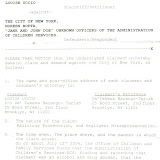
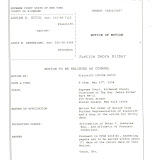
Arkansas Attorney General Dustin McDaniel claims that Janssen engaged in a direct, illegal, nationwide program of promotion of the use of the antipsychotic drug Risperdal for non-medically necessary uses. McDaniel accused the companies of deceptive marketing practices that pushed doctors to prescribe Risperdal much more than necessary. The lawsuit also accuses drugmakers of not including warnings on Risperdal's bottle about adverse effects such as neurological problems, weight gain and diabetes.
For articles and lawsuits on all the state lawsuits filed so far, see here: www.psychsearch.net/lawsuits.html
9 states have sued Eli Lilly regarding Zyprexa - Alaska, Louisiana, Mississippi, Montana, New Mexico, Pennsylvania, South Carolina, Utah and West Virginia.5 states have sued Janssen regarding Risperdal - Arkansas, Louisiana, South Carolina, Texas and Pennsylvana2 states have sued AstraZeneca regarding Seroquel - Pennsylvania, South Carolina
http://money.cnn.com/news/newsfeeds/articles/djf500/200711210636DOWJONESDJONLINE000498_FORTUNE5.htm
Arkansas AG Suing JNJ Over Anti-Psychotic Drug Marketing
November 21, 2007: 06:36 AM EST
LITTLE ROCK (AP)--Drug companies improperly marketed an anti-psychotic drug, Arkansas Attorney General Dustin McDaniel claimed Tuesday as he asked a state judge to force the firms to repay millions shelled out by the state's Medicaid program for unnecessary prescriptions.
McDaniel filed a lawsuit in Pulaski County Circuit Court against Janssen Pharmaceutica Inc., Janssen LP and Johnson & Johnson Inc. (JNJ). In the filing, McDaniel said the companies "engaged in a direct, illegal, nationwide program of promotion of the use of Risperdal for non-medically necessary uses."
New Brunswick, N.J.-based Johnson & Johnson is the parent company of both Janssen Pharmaceutica and Janssen LP.
The lawsuit did not specify how much the state is seeking, but McDaniel has estimated that the state's Medicaid program spent about $200 million over eight years to pay for prescriptions for Zyprexa, Seroquel and Risperdal. The lawsuit filed Tuesday focuses solely on Risperdal.
Gabe Holmstrom, a spokesman for McDaniel's office, said the state will file similar complaints about the marketing of the other drugs. McDaniel has said other companies that will be targeted include Eli Lilly and Co. (LLY) of Indianapolis and AstraZeneca PLC (AZN), a joint venture by a British firm and a Swedish firm.
McDaniel has said the drugs were prescribed for uses not approved by federal regulators or indicated in labeling. McDaniel accused the companies of deceptive marketing practices that pushed doctors to prescribe Risperdal much more than necessary.
The lawsuit also accuses drugmakers of not including warnings on Risperdal's bottle about adverse effects such as neurological problems, weight gain and diabetes.
Ambre Morley, a spokeswoman for Janssen, defended the company and said it fully disclosed all information about Risperdal to doctors and government agencies.
23,729 petition signatures against TeenScreen: http://www.petitiononline.com/TScreen/petition.html Video: http://www.youtube.com/watch?v=RfU9puZQKBY
Showing posts with label abilify. Show all posts
Showing posts with label abilify. Show all posts
Saturday, November 24, 2007


Tuesday, November 20, 2007
Children herded like cattle into Maryland courthouse for forced vaccinations as armed police and attack dogs stand guard
NewsTarget.com
Originally published November 19 2007
Following the State of Maryland's threats against parents who refuse to have their children vaccinated, children were herded into a Price George County courthouse being guarded by armed personnel with attack dogs. Inside, the children were forcibly vaccinated, many against their will, under orders from the State Attorney General, various State Judges and the local School Board Director, all of whom illegally conspired to threaten parents with imprisonment if they did not submit their children to vaccinations.
The State of Maryland has now turned to Gestapo tactics to force its medical will upon the People, stripping parents of any right to decide how they wish to protect their own children from infectious disease. Health authorities there have already announced their intent to essentially kidnap parents and throw them in jail, removing them from their children for up to thirty days if they continue to refuse to have their children vaccinated. This will all be conducted at gunpoint, with armed personnel and attack dogs at the ready, making sure nobody steps out of line, and suppressing any attempt at public dissent against the Orwellian vaccination policies.
The entire campaign against these parents is blatantly illegal. There is no law in Maryland requiring the vaccination of children, thus parents who refuse to do so may not be legally charged with violating any law. Instead, Maryland health and school authorities are using Gestapo-like tactics, threatening to charge the parents with child truancy violations, criminalizing them for daring to protect their children from the dangerous chemicals found in vaccines (including thimerosal, a chemical additive containing a neurotoxic form of mercury).
The desperation of organized medicine is becoming increasingly apparent
As more and more parents are becoming informed about the dangers of vaccinations and their link to autism, state health authorities are increasingly turning to "Gunpoint Medicine" to force the People to submit to the poisons of conventional medicine. Parents who attempt to save their children from deadly chemotherapy chemicals are being arrested and having their children kidnapped by Child Protective Services.
(see http://www.newstarget.com/Abraham_Cherrix.html )
Oncologists who used to be armed only with radiation machines and chemotherapy injectors and now arming themselves with U.S. Marshals and other local law enforcement authorities who are using loaded firearms to enforce "the will of the State" against parents who resist.
Even the American Association of Physicians and Surgeons (AAPS) announced its strong opposition to the Maryland "Gunpoint Medicine" vaccination campaign. In a press release published Nov. 16, the AAPS states:
The Association of American Physicians and Surgeons today condemned the “vaccine roundup” executed in Prince George’s county Maryland this week, and promised to do everything it can to support parents who refuse to immunize their children.
“This power play obliterates informed consent and parental rights,” said Kathryn Serkes, director of policy for the Association of American Physicians and Surgeons (AAPS), one of the few national physician groups that refuse corporate funding from pharmaceutical companies.
In a scenario reminiscent of cattle round-ups, the state’s attorney has issued summons to more than 1600 parents of children who have not provided certificates of immunization for their children. But instead of toting a cattle prod, this state’s attorney chooses to wield a syringe to keep the “herd” in line.Read the rest of the press release at:
http://www.aapsonline.org/press/nr-11-16-07.php
Gunpoint Medicine: Why drug pushers must now rely on Gestapo tactics
Conventional (pharmaceutical) medicine is the only system of medicine in the world that is so unpopular with informed consumers that it must be administered at the barrel of a gun. There is no other system of medicine anywhere in the world that resorts to such tactics to recruit patients.
At the Nov. 17th event in Maryland, activists Jim Moody and Kelly Ann Davis from SafeMinds (http://www.safeminds.org/) were able to get in front of TV news cameras and voice their opposition to the coerced vaccination policy. Yet, amazingly, most parents just lined up like cattle ready to be branded, not bothering to question the sanity or legality of the very system in which they were now agreeing to participate.
A health freedom blog called Center for the Common Interest (http://www.commoninterest.info/) also covered the event, and it reports that a local activist named Donovan Hubbard videotaped the event and plans to make the video available online.
(NewsTarget would like to contact Donovan and / or publicize his video. If you know of a way we can contact him, please call us at (520) 232-9300 to let us know...)
What's next for Gunpoint Medicine?
As the truth continues to emerge about the extreme dangers of vaccinations and pharmaceuticals, Big Pharma is becoming increasingly desperate to coerce the public into relying on its products. It is now working closely with state authorities (including Governors of several states) to mandate the use of vaccinations on young children. This results in the criminalization of parents who refuse to subject their children to these dangerous chemicals.
In effect, Big Pharma is hoping to turn natural health followers into criminals.
The FDA has already criminalized nutritional supplement companies who dare to tell the truth about the health benefits of their supplements.
Read the true history of armed FDA raids on vitamin companies here: http://www.newstarget.com/021791.html
Next, parents who refuse to subject their children to the chemical pharmaceuticals proposed by Big Pharma will be criminalized, rounded up and incarcerated for "refusing to comply with public health policy." This is all being done by the State in the name of "protecting the children" from their own natural health parents.
(Insane, isn't it, to think that protecting your child from toxic chemicals is now a criminal act in the United States?)
The end game of all this is to apply Gunpoint Medicine tactics to everyone: Adults and senior citizens included. Anyone suffering from high cholesterol, for example, who does not submit to Big Pharma's statin drugs could be arrested, strapped to a table and medicated against their will. People with cancer could be arrested for choosing to treat that cancer with safe and effective botanical medicines instead of patented, high-profit Big Pharma drugs. If you think the prisons are full enough right now from all the arrests for marijuana possession and other victimless crimes, just wait until the State starts arresting all the natural health moms and dads across the country who refuse to participate in the utterly insane and extremely harmful system of medicine that now dominates U.S. health care today.
The State is very clear about medicine: If you want to remain a free citizen, you must submit to the synthetic drugs made by the very same corporations that now control government health regulators.
Any person who resists such "treatments" will be branded a threat to public health --
A designation just beneath "terrorist" in the eyes of many government bureaucrats.
As such, they believe there is no limit to the level of force they may use to coerce such people into submitting to Big Pharma's chemicals. Today, it's armed guards with attack dogs. Tomorrow, it might be water boarding or other torture methods. Think that's impossible? Think again: Just five years ago, nobody in their right mind would have thought that parents who did not want to get their children vaccinated would end up in prison, their children kidnapped by state authorities and forced to subject themselves to dangerous chemical injections at gunpoint. Yet that is precisely what is happening right now in the state of Maryland. It happened on Saturday, in fact.
Where is the outrage?
What's most interesting about this issue of using the threat of imprisonment to force vaccinations upon children is not necessarily who is speaking out against it, but who has chosen to remain silent.
The American Medical Association, for example, has said nothing in opposition to the policy. Neither has the Food and Drug Administration. Where is the outrage from the Maryland Hospital Association? None of these organizations seem to have a problem with Gunpoint Medicine. The idea of rounding up parents and coercing their children into receiving injections of toxic chemicals does not seem to bother these organizations. And why should it? All of these organizations are closely tied to Big Pharma. They're all in favor of vaccinations for all, it seems, and I have no doubt that some individuals in these organizations (especially the AMA) are strongly in favor of the Gunpoint Medicine coerced vaccination policy being played out in Maryland right now.
Organized medicine believes the People are too stupid to be allowed to make their own health decisions. Bureaucrats and physicians should be the ones making these decisions, we're told, and any person who disagrees with such decisions should be labeled a criminal, arrested and prosecuted. This is no exaggeration. It is, in fact, a shockingly accurate description of Maryland's current vaccination policy.
It wasn't too long ago that Americans would have stood up and rallied against this kind of medical tyranny. The major news networks would have denounced Maryland's vaccination policy with strong language and harsh accusations. People would have been marching in the streets, demanding their health freedom. But today, it's a different America. The People are drugged up on pharmaceuticals and dosed on fluoride. They're too intoxicated to think straight, and they're frightened into submission by a fear-based government that invokes domestic tyranny at every opportunity to control and manipulate the People into doing whatever it wants.
The "free" America we all once knew is long gone, and it has been replaced with The United States of Corporate America, where police tactics are now used to enforce hazardous public health policies, and the people who run the State no longer think there's anything wrong with rounding up the population at gunpoint and performing large-scale medical experiments on their children. That's what modern vaccines are, after all: A grand medical experiment whose effects will only become known after a generation of mass poisoning has come and gone.
Original Article and disclaimer ..
Children herded like cattle into Maryland courthouse for forced vaccinations as armed police and attack dogs stand guard
All content posted on this site is commentary or opinion and is protected under Free Speech. Truth Publishing LLC takes sole responsibility for all content. Truth Publishing sells no hard products and earns no money from the recommendation of products. Newstarget.com is presented for educational and commentary purposes only and should not be construed as professional advice from any licensed practitioner. Truth Publishing assumes no responsibility for the use or misuse of this material. For the full terms of usage of this material, visit www.NewsTarget.com/terms.shtml
Originally published November 19 2007
Following the State of Maryland's threats against parents who refuse to have their children vaccinated, children were herded into a Price George County courthouse being guarded by armed personnel with attack dogs. Inside, the children were forcibly vaccinated, many against their will, under orders from the State Attorney General, various State Judges and the local School Board Director, all of whom illegally conspired to threaten parents with imprisonment if they did not submit their children to vaccinations.
The State of Maryland has now turned to Gestapo tactics to force its medical will upon the People, stripping parents of any right to decide how they wish to protect their own children from infectious disease. Health authorities there have already announced their intent to essentially kidnap parents and throw them in jail, removing them from their children for up to thirty days if they continue to refuse to have their children vaccinated. This will all be conducted at gunpoint, with armed personnel and attack dogs at the ready, making sure nobody steps out of line, and suppressing any attempt at public dissent against the Orwellian vaccination policies.
The entire campaign against these parents is blatantly illegal. There is no law in Maryland requiring the vaccination of children, thus parents who refuse to do so may not be legally charged with violating any law. Instead, Maryland health and school authorities are using Gestapo-like tactics, threatening to charge the parents with child truancy violations, criminalizing them for daring to protect their children from the dangerous chemicals found in vaccines (including thimerosal, a chemical additive containing a neurotoxic form of mercury).
The desperation of organized medicine is becoming increasingly apparent
As more and more parents are becoming informed about the dangers of vaccinations and their link to autism, state health authorities are increasingly turning to "Gunpoint Medicine" to force the People to submit to the poisons of conventional medicine. Parents who attempt to save their children from deadly chemotherapy chemicals are being arrested and having their children kidnapped by Child Protective Services.
(see http://www.newstarget.com/Abraham_Cherrix.html )
Oncologists who used to be armed only with radiation machines and chemotherapy injectors and now arming themselves with U.S. Marshals and other local law enforcement authorities who are using loaded firearms to enforce "the will of the State" against parents who resist.
Even the American Association of Physicians and Surgeons (AAPS) announced its strong opposition to the Maryland "Gunpoint Medicine" vaccination campaign. In a press release published Nov. 16, the AAPS states:
The Association of American Physicians and Surgeons today condemned the “vaccine roundup” executed in Prince George’s county Maryland this week, and promised to do everything it can to support parents who refuse to immunize their children.
“This power play obliterates informed consent and parental rights,” said Kathryn Serkes, director of policy for the Association of American Physicians and Surgeons (AAPS), one of the few national physician groups that refuse corporate funding from pharmaceutical companies.
In a scenario reminiscent of cattle round-ups, the state’s attorney has issued summons to more than 1600 parents of children who have not provided certificates of immunization for their children. But instead of toting a cattle prod, this state’s attorney chooses to wield a syringe to keep the “herd” in line.Read the rest of the press release at:
http://www.aapsonline.org/press/nr-11-16-07.php
Gunpoint Medicine: Why drug pushers must now rely on Gestapo tactics
Conventional (pharmaceutical) medicine is the only system of medicine in the world that is so unpopular with informed consumers that it must be administered at the barrel of a gun. There is no other system of medicine anywhere in the world that resorts to such tactics to recruit patients.
At the Nov. 17th event in Maryland, activists Jim Moody and Kelly Ann Davis from SafeMinds (http://www.safeminds.org/) were able to get in front of TV news cameras and voice their opposition to the coerced vaccination policy. Yet, amazingly, most parents just lined up like cattle ready to be branded, not bothering to question the sanity or legality of the very system in which they were now agreeing to participate.
A health freedom blog called Center for the Common Interest (http://www.commoninterest.info/) also covered the event, and it reports that a local activist named Donovan Hubbard videotaped the event and plans to make the video available online.
(NewsTarget would like to contact Donovan and / or publicize his video. If you know of a way we can contact him, please call us at (520) 232-9300 to let us know...)
What's next for Gunpoint Medicine?
As the truth continues to emerge about the extreme dangers of vaccinations and pharmaceuticals, Big Pharma is becoming increasingly desperate to coerce the public into relying on its products. It is now working closely with state authorities (including Governors of several states) to mandate the use of vaccinations on young children. This results in the criminalization of parents who refuse to subject their children to these dangerous chemicals.
In effect, Big Pharma is hoping to turn natural health followers into criminals.
The FDA has already criminalized nutritional supplement companies who dare to tell the truth about the health benefits of their supplements.
Read the true history of armed FDA raids on vitamin companies here: http://www.newstarget.com/021791.html
Next, parents who refuse to subject their children to the chemical pharmaceuticals proposed by Big Pharma will be criminalized, rounded up and incarcerated for "refusing to comply with public health policy." This is all being done by the State in the name of "protecting the children" from their own natural health parents.
(Insane, isn't it, to think that protecting your child from toxic chemicals is now a criminal act in the United States?)
The end game of all this is to apply Gunpoint Medicine tactics to everyone: Adults and senior citizens included. Anyone suffering from high cholesterol, for example, who does not submit to Big Pharma's statin drugs could be arrested, strapped to a table and medicated against their will. People with cancer could be arrested for choosing to treat that cancer with safe and effective botanical medicines instead of patented, high-profit Big Pharma drugs. If you think the prisons are full enough right now from all the arrests for marijuana possession and other victimless crimes, just wait until the State starts arresting all the natural health moms and dads across the country who refuse to participate in the utterly insane and extremely harmful system of medicine that now dominates U.S. health care today.
The State is very clear about medicine: If you want to remain a free citizen, you must submit to the synthetic drugs made by the very same corporations that now control government health regulators.
Any person who resists such "treatments" will be branded a threat to public health --
A designation just beneath "terrorist" in the eyes of many government bureaucrats.
As such, they believe there is no limit to the level of force they may use to coerce such people into submitting to Big Pharma's chemicals. Today, it's armed guards with attack dogs. Tomorrow, it might be water boarding or other torture methods. Think that's impossible? Think again: Just five years ago, nobody in their right mind would have thought that parents who did not want to get their children vaccinated would end up in prison, their children kidnapped by state authorities and forced to subject themselves to dangerous chemical injections at gunpoint. Yet that is precisely what is happening right now in the state of Maryland. It happened on Saturday, in fact.
Where is the outrage?
What's most interesting about this issue of using the threat of imprisonment to force vaccinations upon children is not necessarily who is speaking out against it, but who has chosen to remain silent.
The American Medical Association, for example, has said nothing in opposition to the policy. Neither has the Food and Drug Administration. Where is the outrage from the Maryland Hospital Association? None of these organizations seem to have a problem with Gunpoint Medicine. The idea of rounding up parents and coercing their children into receiving injections of toxic chemicals does not seem to bother these organizations. And why should it? All of these organizations are closely tied to Big Pharma. They're all in favor of vaccinations for all, it seems, and I have no doubt that some individuals in these organizations (especially the AMA) are strongly in favor of the Gunpoint Medicine coerced vaccination policy being played out in Maryland right now.
Organized medicine believes the People are too stupid to be allowed to make their own health decisions. Bureaucrats and physicians should be the ones making these decisions, we're told, and any person who disagrees with such decisions should be labeled a criminal, arrested and prosecuted. This is no exaggeration. It is, in fact, a shockingly accurate description of Maryland's current vaccination policy.
It wasn't too long ago that Americans would have stood up and rallied against this kind of medical tyranny. The major news networks would have denounced Maryland's vaccination policy with strong language and harsh accusations. People would have been marching in the streets, demanding their health freedom. But today, it's a different America. The People are drugged up on pharmaceuticals and dosed on fluoride. They're too intoxicated to think straight, and they're frightened into submission by a fear-based government that invokes domestic tyranny at every opportunity to control and manipulate the People into doing whatever it wants.
The "free" America we all once knew is long gone, and it has been replaced with The United States of Corporate America, where police tactics are now used to enforce hazardous public health policies, and the people who run the State no longer think there's anything wrong with rounding up the population at gunpoint and performing large-scale medical experiments on their children. That's what modern vaccines are, after all: A grand medical experiment whose effects will only become known after a generation of mass poisoning has come and gone.
Original Article and disclaimer ..
Children herded like cattle into Maryland courthouse for forced vaccinations as armed police and attack dogs stand guard
All content posted on this site is commentary or opinion and is protected under Free Speech. Truth Publishing LLC takes sole responsibility for all content. Truth Publishing sells no hard products and earns no money from the recommendation of products. Newstarget.com is presented for educational and commentary purposes only and should not be construed as professional advice from any licensed practitioner. Truth Publishing assumes no responsibility for the use or misuse of this material. For the full terms of usage of this material, visit www.NewsTarget.com/terms.shtml
Monday, November 19, 2007
Bipolar Kid or Bad Parents?
It's so funny that I came accross this article now after I know so much more about Drugging our children into a stupor/suicide/or Homicide!
Nearly 25 years ago I had an a acquaintance who had two children that I considered at the time to be perfectly normal children under five active fun and small tornados when they were bored -NORMAL HEALTHY CHILDREN!
I only had one child at the time and I never understood what their mothers problem was, she complained day in and day out about how difficult her kids were.
I could'nt see it but what I did notice was that this woman was a fat lazy woman who herself didn't have the energy to deal with these two beautiful active children.
She was somewhat related to me so I found myself in her company more often that I would have if I were given the choice. Forgive me but she was [and probably still is] a whinny- woe is me- kind of person and I have no tolerance for that kind of person.
Anywho, one day the kids seemed different to me, I noticed they were lethargic compared to the children I had known and loved, so I inquired of the mother about what I noticed.
Her reply still forms knots in my stomach, she said "I couldn't deal with them anymore-the Dr put them on [insert name of psychotropic drugs- I can't remember which one it was]"
That was the last time I was in her company, I refused to sit around watching those children sluring their words so that their mother could sit on her fat &%^$ and not chase after them.
So why am I sharing this almost 25 years later? I guess I am feeling guilty that I didn't do anything to help those kids, I didn't try hard enough, I barely stated to their mother that I felt it was HER with the problem and not her children- however instead of doing more I walked away. I believe I have forgiven myself for that now, but thinking of that time in my life and what those children had to endure at the hands of thier lazy mother and thier over zelous Dr, always makes me angry.
Sad part is recently I came accross another mother that is doing the same thing to her beautiful son, and it makes me want to vomit, because I do not know this mother well enough to say anything to her about her inabililty to understand what it takes to raise a pre teen who is the victim of a recent divorce where both of his parents are severely dysfuntional.
This child needs HIS PARENTS in therapy HE DOES NOT NEED TO BE MEDICATED!
Ehhhhh, if I could control others actions the world would be a much better place, but I can't so I do what I can and pray these sysfuntional parents see the light before it's to late.
Pittsburgh Post Gazette
Bipolar kids or bad parents?
At the urging of parents, doctors are medicating far too many kids who just need a better upbringing, according to Dr. Elizabeth J. Roberts who is a child and adolescent psychiatrist and the author of "Should You Medicate Your Child's Mind?"
Sunday, November 18, 2007
On Dec. 13, 2006, 4-year-old Rebecca Riley died, drowning in her own lung secretions. Her death was the direct result of psychiatric medications which had been prescribed to her for a presumed diagnosis of bipolar disorder -- a diagnosis first given to her when she was only 2 years old.
In September 2007, researchers at Columbia University reported that there had been a 40-fold increase in the number of children diagnosed with bipolar disorder from 1994 to 2003 -- an increase which has shown no signs of slowing.
Worse than the current frenzy to diagnose children with bipolar disorder is the practice of medicating kids as young as 2 with the kinds of psychiatric medications that were once prescribed only to psychotic adults. The shocking reality is that the use of these potent anti-psychotic drugs in children increased more than 500 percent between 1993 and 2002.
This dramatic rise in childhood bipolar disorder has spurred a raging debate in the mental health field. Some psychiatrists insist that this incredible increase is entirely due to the identification of mentally ill children who had been previously overlooked.
Yet a 4,000 percent increase in childhood mental illness, specifically bipolar disorder, is simply implausible and difficult to justify based solely on improved diagnostic techniques. To the contrary, in the 30-plus years that I have been treating, educating and caring for children -- half of that time as a child psychiatrist -- I have found that the approach to diagnostics in psychiatry clearly has deteriorated over time, not improved.
There was a time when doctors insisted on hours of evaluation with a child and his parents before venturing a psychiatric diagnosis or prescribing a medication. Today many of my colleagues brag that they can complete an initial assessment of a child and write a prescription in less than 20 minutes. Many parents have told me it took a previous doctor less than five minutes to diagnose and medicate their child.
How, then, is it possible that in 2007 doctors are now able to identify hundreds of thousands of previously missed cases of bipolar disorder in children by reducing the time they spend with patients from multiple hours to just a few minutes?
On the other hand, there simply is no possible way that the number of children who actually have bipolar disorder has increased from approximately 20,000 to 800,000 in a nine-year period. Yet the arguments of skeptics are being dismissed by academics in psychiatry. Research psychiatrists appear to be more invested in defending their research conclusions -- funded by pharmaceutical companies -- than engaging in a meaningful discussion to examine these preposterous demographics.
What I find more astounding than the claim that there are 800,000 American children with bipolar disorder is the fact that there are that many children whose conduct is so aberrant that their parents are seeking psychiatric treatment for them.
The symptoms, which are regarded as evidence of bipolar disorder, usually are what most people recognize as ordinary belligerence. Children who have anger outbursts, who refuse to go to bed, who are moody and self-centered under the current standard of care in child psychiatry are being diagnosed with bipolar disorder. To most rational human beings, these behaviors describe an ill-mannered, immature and poorly disciplined child. Nonetheless, the temper tantrums of belligerent children are increasingly being characterized by doctors as the mood swings of bipolar disorder.
The over-indulgent parenting practices of the past 20 years have created a generation of dysfunctional children who are becoming increasingly more entitled, defiant and oppositional. In a poll by Associated Press-Ipsos, 93 percent of people surveyed said that today's parents are not doing a good job when it comes to teaching their kids to behave. According to Dan Kindlon, a Harvard psychologist, 50 percent of the parents he interviewed described themselves as more permissive than their parents had been.
The permissive parents of spoiled children seek refuge from blame by using the excuse that their child's angry outbursts are the result of a chemical imbalance. Since a psychiatric condition is completely beyond a parent's control, a diagnosis of bipolar disorder is the perfect alibi. Once a child has been diagnosed with bipolar disorder, a parent feels absolved of guilt or responsibility for the child's misbehavior and therefore, the parents' discipline practices cannot be called into question.
Parents looking for a psychiatric explanation for their child's misbehavior will find an abundance of support in the media and on the Web for the conclusion that their child's temper tantrums are due to a psychiatric disease rather than the result of bad parenting. Psychiatrists, for their part, are more than willing to accept, without question, the assessment offered by a parent. Doctors have found it easier and less contentious to comply with a parent's wish to have their child diagnosed with a psychiatric condition than to confront the parent with the notion that their own weak parenting is the root cause of the child's aberrant behavior.
Using the diagnosis of bipolar disorder, doctors then justify the sedation of these children with powerful psychiatric drugs. Even though some children treated with anti-psychotics may be temporarily sedated, their belligerent attitude continues unchanged. Of the many children I treat every year who had been previously diagnosed with bipolar disorder, not one of them stopped throwing tantrums after being treated with psychiatric medications. Yet doctors continue to misdiagnose and overmedicate children to appease frustrated parents in spite of the many serious, permanent or even lethal side effects.
Tragically, as in the death of Rebecca Riley, her parents administered the multiple medications prescribed by their psychiatrist for Rebecca's "bipolar disorder" until the meds killed her. A few weeks ago, in an interview on 60 Minutes, Rebecca's mother told Katie Couric that she now believes that her four-year-old daughter had been misdiagnosed, had never been bipolar, and that Rebecca was simply mischievous.
When it comes to misdiagnosing and overmedicating children, doctors have an unwitting, though not unwilling, accomplice -- the parent. Ultimately, it is the parent who is the gatekeeper for their child's health-care delivery. It is the parent who pursues psychiatric treatment for their child, fills the prescriptions and administers the medications. Parents have a duty to protect their children from the folly of this disastrous approach to childhood behavior problems.
Instead of grooming, feeding and educating the next generation of Americans to be the fittest, brightest, most competent contributors on the planet, we have indulged, placated and spoiled our children into dysfunctional misfits. We are teaching our children to use a psychiatric diagnosis to excuse their antisocial behaviors. This will inevitably lead to a greater reliance on psychiatric medications, which unfortunately do not endow an individual with improved self-control or maturity.
Under the guise of treating childhood bipolar disorder, the spoiling of American children not only undermines their healthy social development, but it also puts them at great risk for the serious medical complications inherent in the use of psychiatric medications, including death.
The End
As a closing note I need to say, if anyone spends any time on this blog getting to know the author [Me] it will become clear that I have issues with abusing our children in any way shape or form. I have major issues with child anything but protective services making money for the government incentives causing them to tell parents [via the threat of taking the child] that they can-not dicipline their children.
What are we left with?
Wake up america we are left with drugged children that only needed some guidance, dicipline lots of love and BOTH parents in thier lives.
These issues are all related and this is why I rant about divorce, the system, DV, child anything but protective services, drugging our children, and how the system parenting our children is guaranteed to leave us with a dysfuntional future generation.
God help us all!
Nearly 25 years ago I had an a acquaintance who had two children that I considered at the time to be perfectly normal children under five active fun and small tornados when they were bored -NORMAL HEALTHY CHILDREN!
I only had one child at the time and I never understood what their mothers problem was, she complained day in and day out about how difficult her kids were.
I could'nt see it but what I did notice was that this woman was a fat lazy woman who herself didn't have the energy to deal with these two beautiful active children.
She was somewhat related to me so I found myself in her company more often that I would have if I were given the choice. Forgive me but she was [and probably still is] a whinny- woe is me- kind of person and I have no tolerance for that kind of person.
Anywho, one day the kids seemed different to me, I noticed they were lethargic compared to the children I had known and loved, so I inquired of the mother about what I noticed.
Her reply still forms knots in my stomach, she said "I couldn't deal with them anymore-the Dr put them on [insert name of psychotropic drugs- I can't remember which one it was]"
That was the last time I was in her company, I refused to sit around watching those children sluring their words so that their mother could sit on her fat &%^$ and not chase after them.
So why am I sharing this almost 25 years later? I guess I am feeling guilty that I didn't do anything to help those kids, I didn't try hard enough, I barely stated to their mother that I felt it was HER with the problem and not her children- however instead of doing more I walked away. I believe I have forgiven myself for that now, but thinking of that time in my life and what those children had to endure at the hands of thier lazy mother and thier over zelous Dr, always makes me angry.
Sad part is recently I came accross another mother that is doing the same thing to her beautiful son, and it makes me want to vomit, because I do not know this mother well enough to say anything to her about her inabililty to understand what it takes to raise a pre teen who is the victim of a recent divorce where both of his parents are severely dysfuntional.
This child needs HIS PARENTS in therapy HE DOES NOT NEED TO BE MEDICATED!
Ehhhhh, if I could control others actions the world would be a much better place, but I can't so I do what I can and pray these sysfuntional parents see the light before it's to late.
Pittsburgh Post Gazette
Bipolar kids or bad parents?
At the urging of parents, doctors are medicating far too many kids who just need a better upbringing, according to Dr. Elizabeth J. Roberts who is a child and adolescent psychiatrist and the author of "Should You Medicate Your Child's Mind?"
Sunday, November 18, 2007
On Dec. 13, 2006, 4-year-old Rebecca Riley died, drowning in her own lung secretions. Her death was the direct result of psychiatric medications which had been prescribed to her for a presumed diagnosis of bipolar disorder -- a diagnosis first given to her when she was only 2 years old.
In September 2007, researchers at Columbia University reported that there had been a 40-fold increase in the number of children diagnosed with bipolar disorder from 1994 to 2003 -- an increase which has shown no signs of slowing.
Worse than the current frenzy to diagnose children with bipolar disorder is the practice of medicating kids as young as 2 with the kinds of psychiatric medications that were once prescribed only to psychotic adults. The shocking reality is that the use of these potent anti-psychotic drugs in children increased more than 500 percent between 1993 and 2002.
This dramatic rise in childhood bipolar disorder has spurred a raging debate in the mental health field. Some psychiatrists insist that this incredible increase is entirely due to the identification of mentally ill children who had been previously overlooked.
Yet a 4,000 percent increase in childhood mental illness, specifically bipolar disorder, is simply implausible and difficult to justify based solely on improved diagnostic techniques. To the contrary, in the 30-plus years that I have been treating, educating and caring for children -- half of that time as a child psychiatrist -- I have found that the approach to diagnostics in psychiatry clearly has deteriorated over time, not improved.
There was a time when doctors insisted on hours of evaluation with a child and his parents before venturing a psychiatric diagnosis or prescribing a medication. Today many of my colleagues brag that they can complete an initial assessment of a child and write a prescription in less than 20 minutes. Many parents have told me it took a previous doctor less than five minutes to diagnose and medicate their child.
How, then, is it possible that in 2007 doctors are now able to identify hundreds of thousands of previously missed cases of bipolar disorder in children by reducing the time they spend with patients from multiple hours to just a few minutes?
On the other hand, there simply is no possible way that the number of children who actually have bipolar disorder has increased from approximately 20,000 to 800,000 in a nine-year period. Yet the arguments of skeptics are being dismissed by academics in psychiatry. Research psychiatrists appear to be more invested in defending their research conclusions -- funded by pharmaceutical companies -- than engaging in a meaningful discussion to examine these preposterous demographics.
What I find more astounding than the claim that there are 800,000 American children with bipolar disorder is the fact that there are that many children whose conduct is so aberrant that their parents are seeking psychiatric treatment for them.
The symptoms, which are regarded as evidence of bipolar disorder, usually are what most people recognize as ordinary belligerence. Children who have anger outbursts, who refuse to go to bed, who are moody and self-centered under the current standard of care in child psychiatry are being diagnosed with bipolar disorder. To most rational human beings, these behaviors describe an ill-mannered, immature and poorly disciplined child. Nonetheless, the temper tantrums of belligerent children are increasingly being characterized by doctors as the mood swings of bipolar disorder.
The over-indulgent parenting practices of the past 20 years have created a generation of dysfunctional children who are becoming increasingly more entitled, defiant and oppositional. In a poll by Associated Press-Ipsos, 93 percent of people surveyed said that today's parents are not doing a good job when it comes to teaching their kids to behave. According to Dan Kindlon, a Harvard psychologist, 50 percent of the parents he interviewed described themselves as more permissive than their parents had been.
The permissive parents of spoiled children seek refuge from blame by using the excuse that their child's angry outbursts are the result of a chemical imbalance. Since a psychiatric condition is completely beyond a parent's control, a diagnosis of bipolar disorder is the perfect alibi. Once a child has been diagnosed with bipolar disorder, a parent feels absolved of guilt or responsibility for the child's misbehavior and therefore, the parents' discipline practices cannot be called into question.
Parents looking for a psychiatric explanation for their child's misbehavior will find an abundance of support in the media and on the Web for the conclusion that their child's temper tantrums are due to a psychiatric disease rather than the result of bad parenting. Psychiatrists, for their part, are more than willing to accept, without question, the assessment offered by a parent. Doctors have found it easier and less contentious to comply with a parent's wish to have their child diagnosed with a psychiatric condition than to confront the parent with the notion that their own weak parenting is the root cause of the child's aberrant behavior.
Using the diagnosis of bipolar disorder, doctors then justify the sedation of these children with powerful psychiatric drugs. Even though some children treated with anti-psychotics may be temporarily sedated, their belligerent attitude continues unchanged. Of the many children I treat every year who had been previously diagnosed with bipolar disorder, not one of them stopped throwing tantrums after being treated with psychiatric medications. Yet doctors continue to misdiagnose and overmedicate children to appease frustrated parents in spite of the many serious, permanent or even lethal side effects.
Tragically, as in the death of Rebecca Riley, her parents administered the multiple medications prescribed by their psychiatrist for Rebecca's "bipolar disorder" until the meds killed her. A few weeks ago, in an interview on 60 Minutes, Rebecca's mother told Katie Couric that she now believes that her four-year-old daughter had been misdiagnosed, had never been bipolar, and that Rebecca was simply mischievous.
When it comes to misdiagnosing and overmedicating children, doctors have an unwitting, though not unwilling, accomplice -- the parent. Ultimately, it is the parent who is the gatekeeper for their child's health-care delivery. It is the parent who pursues psychiatric treatment for their child, fills the prescriptions and administers the medications. Parents have a duty to protect their children from the folly of this disastrous approach to childhood behavior problems.
Instead of grooming, feeding and educating the next generation of Americans to be the fittest, brightest, most competent contributors on the planet, we have indulged, placated and spoiled our children into dysfunctional misfits. We are teaching our children to use a psychiatric diagnosis to excuse their antisocial behaviors. This will inevitably lead to a greater reliance on psychiatric medications, which unfortunately do not endow an individual with improved self-control or maturity.
Under the guise of treating childhood bipolar disorder, the spoiling of American children not only undermines their healthy social development, but it also puts them at great risk for the serious medical complications inherent in the use of psychiatric medications, including death.
The End
As a closing note I need to say, if anyone spends any time on this blog getting to know the author [Me] it will become clear that I have issues with abusing our children in any way shape or form. I have major issues with child anything but protective services making money for the government incentives causing them to tell parents [via the threat of taking the child] that they can-not dicipline their children.
What are we left with?
Wake up america we are left with drugged children that only needed some guidance, dicipline lots of love and BOTH parents in thier lives.
These issues are all related and this is why I rant about divorce, the system, DV, child anything but protective services, drugging our children, and how the system parenting our children is guaranteed to leave us with a dysfuntional future generation.
God help us all!
Sunday, November 18, 2007
Long Term Use of Ritilan and Concerta
Ritalin and Concerta are two of the favorite weapons used to destroy the Natural Elite
(the Brightest and Bravest) of the population: the so-called hyperactive children.
Long term use of Ritalin ineffective and may stunt children's growth
Child Health News Published: Tuesday, 13-Nov-2007
Long term use of Ritalin is ineffective and may stunt children's growth
Child Health News Published: Tuesday, 13-Nov-2007
The study called the 'Multimodal Treatment Study of Children with ADHD' has been monitoring the treatment of 600 children across the U.S. since the 1990s; it reveals that drugs such as Ritalin are no more effective than therapy over a three year treatment period.
In 1999, the study concluded that after one year medication worked better than behavioural therapy for ADHD and that finding influenced medical practice on both sides of the Atlantic, and prescription rates multiplied.
Professor William Pelham of the University of Buffalo, the study's co-author, says the beneficial impact of the medications were exaggerated in the first study and the idea that if children were medicated longer they would have better outcomes was not the case.
Professor Pelham says in the long run there are "no beneficial effects" of medication and the impact was instead seemingly negative as the children had a substantial decrease in their rate of growth.
The National Institute for Clinical Excellence (NICE) in Britain is currently revising the treatment guidelines for ADHD and are devising new strategies which will involve training for parents as well as "behavioral interventions".
Doctors in the UK have warned before about treating children with behavioral problems with powerful anti-psychotic drugs which have dangerous side effects such as, insomnia, dizziness, heart problems, and even death.
In 2006 drugs like Concerta and Ritalin were prescribed to about 55,000 British children, costing the NHS £28m.
The Centers for Disease Control and Prevention (CDC) in the U.S. estimates 4.4 million youth ages 4-17 have been diagnosed with ADHD , and in 2003, 2.5 million youth were receiving medication the disorder.
Tranquillizers such as Risperdal and Zyprexa were originally designed for the treatment of psychosis and schizophrenia in adults, are now being used to calm hyperactive children even though they have been linked to several health problems.
Professor Pelham suggests that behavioral therapy and Omega-3 should be the first steps in helping a child with ADHD.
(the Brightest and Bravest) of the population: the so-called hyperactive children.
Long term use of Ritalin ineffective and may stunt children's growth
Child Health News Published: Tuesday, 13-Nov-2007
Long term use of Ritalin is ineffective and may stunt children's growth
Child Health News Published: Tuesday, 13-Nov-2007
The study called the 'Multimodal Treatment Study of Children with ADHD' has been monitoring the treatment of 600 children across the U.S. since the 1990s; it reveals that drugs such as Ritalin are no more effective than therapy over a three year treatment period.
In 1999, the study concluded that after one year medication worked better than behavioural therapy for ADHD and that finding influenced medical practice on both sides of the Atlantic, and prescription rates multiplied.
Professor William Pelham of the University of Buffalo, the study's co-author, says the beneficial impact of the medications were exaggerated in the first study and the idea that if children were medicated longer they would have better outcomes was not the case.
Professor Pelham says in the long run there are "no beneficial effects" of medication and the impact was instead seemingly negative as the children had a substantial decrease in their rate of growth.
The National Institute for Clinical Excellence (NICE) in Britain is currently revising the treatment guidelines for ADHD and are devising new strategies which will involve training for parents as well as "behavioral interventions".
Doctors in the UK have warned before about treating children with behavioral problems with powerful anti-psychotic drugs which have dangerous side effects such as, insomnia, dizziness, heart problems, and even death.
In 2006 drugs like Concerta and Ritalin were prescribed to about 55,000 British children, costing the NHS £28m.
The Centers for Disease Control and Prevention (CDC) in the U.S. estimates 4.4 million youth ages 4-17 have been diagnosed with ADHD , and in 2003, 2.5 million youth were receiving medication the disorder.
Tranquillizers such as Risperdal and Zyprexa were originally designed for the treatment of psychosis and schizophrenia in adults, are now being used to calm hyperactive children even though they have been linked to several health problems.
Professor Pelham suggests that behavioral therapy and Omega-3 should be the first steps in helping a child with ADHD.
Friday, November 16, 2007
High on life: the biggest health care fraud in history?
As a new study suggests treating attention deficit hyperactivity disorder with drugs can do more harm than good, one lifelong 'sufferer' questions whether the condition even exists.
It was probably nailing my teacher’s coat to the desk while he was still wearing it that did it. That and glueing his packet of peanuts to the classroom ceiling, at a precisely-calculated five millimetres beyond his furthest reach.
It was the climax of what I – and most of my pre-teen classmates – considered a sustained comedy campaign, a bit of light-hearted high-jinx designed to redress the teacher-student balance of power. It wasn’t my first and nor would it be my last, even though this particular incident triggered a catastrophic sense of humour failure in said faculty member, who mysteriously vanished overnight.
Had I been born a decade or so later, I doubt I’d be writing this today. Rather than spending almost 20 years inventing new ways to terrorise a succession of teachers, lecturers and employers – fuelling other forms of creativity, including writing, in the process – I’d have been given a massive dose of Ritalin and left in a corner to rot.
Ancient roots
Attention deficit hyperactivity disorder (ADHD), described by Hippocrates as early as 493BC, is billed by the modern medical fraternity as a neurological disorder usually characterised – especially in children – by inattentiveness, restlessness, forgetfulness and hyperactivity. Genetic in nature, it affects around five per cent of the world’s population and is often treated with a combination of medications, behaviour modification, lifestyle changes and counselling.
In 1999, a study in the US concluded that, after a period of 12 months, medication was more effective in the treatment of ADHD than behavioural therapy. In the years since, prescriptions in the UK have tripled. Around 500,000 children in Britain are currently believed to have ADHD. Of those, 55,000 are on medication, at an annual cost to the NHS of roughly £28m.
Recent revelation
But new research – by the authors of the original study – suggests drugs don’t work in the long-term and, alarmingly, their impact may actually be negative. Take 14-year-old Craig Buxton, whose family kept a video diary of his behaviour. The footage, which was screened on Panorama, shows in shocking detail his night terrors, explosive tantrums and relentless acts of aggression. At one point, Craig breaks down and cries: “Why am I like this, mum? I don’t want to feel like this, I don’t want to be like this. Help me.” He has been taking ADHD medication for a decade.
Critics are now questioning whether this so-called chronic developmental disorder is really a disorder at all. Dr Fred Baughman, a child neurologist on the other side of the Atlantic, has spent his professional life examining hundreds of children supposedly suffering from ADHD – and has found nothing abnormal or diseased about them. Nor has he found any hard evidence to suggest ADHD is actually a disease, or that it needs any treatment other than willpower, love and support. As he puts it, “it is the biggest health care fraud in history.”
An expert opines
Speaking to MSN UK News, Dr Baughman said: “I have discovered and described real diseases and, having examined hundreds said to have this ‘disorder’ or ‘disease’, I have Fred Baughman found nothing wrong, abnormal or diseased about them. I have also found no proof in the medical scientific literature of the world that ADHD is an objective, demonstrable abnormality, disease or disorder. It is the biggest health care fraud in history.
“The bigger-than-ADHD picture is that they – psychiatry in collusion with Big Pharma – have pledged to call all emotional and behavioural, psychological or mental symptoms ‘diseases’ due to chemical imbalances of the brain, needing not willpower, not love, support or adaptability, but ‘chemical balancers’ – in other words, pills.”
Cash cow
A conspiracy theory? Perhaps. But when drug-making leviathans in the US (the pursuit-of-superficial-perfection capital of the world) have dedicated ADHD sales forces, you can’t help but wonder who’s really creating the demand. One thing is beyond question: there is an awful lot of money to be made selling drugs – and not just the illegal ones. In the current climate of offspring-as-accessories, any quick-fix for children perceived as less than perfect is unlikely to gather any dust on the shelves.
There are, of course, some children who genuinely need pharmaceutical intervention. However, more often than not, this so-called disorder is really the result of combining excessively spirited children with criminally sub-standard parenting skills – quite the Molotov cocktail. In cases where a child becomes disruptive due to lack of parental care, affection or stimulation, the impairment belongs not to the child, but to the surrounding adults.
Simply semantics
Let’s take another look at those symptoms listed earlier: inattentiveness, restlessness, forgetfulness and hyperactivity. In non-medical speak: fidgeting, forgetting things, talking excessively, running around a lot and being easily distracted. What child isn’t? The problem here is one of perspective. I was thrilled to be alive and found my teachers’ monotonous tones, disinterest in their subject and failure to challenge me a total turn-off. They, in turn, found me disruptive (which I was: it helped relieve the brain-putrefying boredom).
But the real concern isn’t the noisy kids vaulting over furniture and terrorising their teachers (within reason), it’s the quiet children who are completely incapable of engaging with the people around them: the silent insular ones, who go unnoticed by society until they massacre their school mates.
If I ever have children (which I won’t), and they turn out to be unusually spirited (which they would), I like to think I’d turn not to pharmaceutical drug barons, but to Hippocrates, who described people exhibiting ADHD-type behaviour as “restless souls” with a simple “overbalance of fire over water.” The physician-scientist’s remedy for this overbalance? “Barley rather than wheat bread, fish rather than meat, water drinks, and many natural and diverse physical activities.' Beats being doped up to the eyeballs any day.
An opinion piece by Laura J Snook, MSN UK News Editor November 13, 2007
It was probably nailing my teacher’s coat to the desk while he was still wearing it that did it. That and glueing his packet of peanuts to the classroom ceiling, at a precisely-calculated five millimetres beyond his furthest reach.
It was the climax of what I – and most of my pre-teen classmates – considered a sustained comedy campaign, a bit of light-hearted high-jinx designed to redress the teacher-student balance of power. It wasn’t my first and nor would it be my last, even though this particular incident triggered a catastrophic sense of humour failure in said faculty member, who mysteriously vanished overnight.
Had I been born a decade or so later, I doubt I’d be writing this today. Rather than spending almost 20 years inventing new ways to terrorise a succession of teachers, lecturers and employers – fuelling other forms of creativity, including writing, in the process – I’d have been given a massive dose of Ritalin and left in a corner to rot.
Ancient roots
Attention deficit hyperactivity disorder (ADHD), described by Hippocrates as early as 493BC, is billed by the modern medical fraternity as a neurological disorder usually characterised – especially in children – by inattentiveness, restlessness, forgetfulness and hyperactivity. Genetic in nature, it affects around five per cent of the world’s population and is often treated with a combination of medications, behaviour modification, lifestyle changes and counselling.
In 1999, a study in the US concluded that, after a period of 12 months, medication was more effective in the treatment of ADHD than behavioural therapy. In the years since, prescriptions in the UK have tripled. Around 500,000 children in Britain are currently believed to have ADHD. Of those, 55,000 are on medication, at an annual cost to the NHS of roughly £28m.
Recent revelation
But new research – by the authors of the original study – suggests drugs don’t work in the long-term and, alarmingly, their impact may actually be negative. Take 14-year-old Craig Buxton, whose family kept a video diary of his behaviour. The footage, which was screened on Panorama, shows in shocking detail his night terrors, explosive tantrums and relentless acts of aggression. At one point, Craig breaks down and cries: “Why am I like this, mum? I don’t want to feel like this, I don’t want to be like this. Help me.” He has been taking ADHD medication for a decade.
Critics are now questioning whether this so-called chronic developmental disorder is really a disorder at all. Dr Fred Baughman, a child neurologist on the other side of the Atlantic, has spent his professional life examining hundreds of children supposedly suffering from ADHD – and has found nothing abnormal or diseased about them. Nor has he found any hard evidence to suggest ADHD is actually a disease, or that it needs any treatment other than willpower, love and support. As he puts it, “it is the biggest health care fraud in history.”
An expert opines
Speaking to MSN UK News, Dr Baughman said: “I have discovered and described real diseases and, having examined hundreds said to have this ‘disorder’ or ‘disease’, I have Fred Baughman found nothing wrong, abnormal or diseased about them. I have also found no proof in the medical scientific literature of the world that ADHD is an objective, demonstrable abnormality, disease or disorder. It is the biggest health care fraud in history.
“The bigger-than-ADHD picture is that they – psychiatry in collusion with Big Pharma – have pledged to call all emotional and behavioural, psychological or mental symptoms ‘diseases’ due to chemical imbalances of the brain, needing not willpower, not love, support or adaptability, but ‘chemical balancers’ – in other words, pills.”
Cash cow
A conspiracy theory? Perhaps. But when drug-making leviathans in the US (the pursuit-of-superficial-perfection capital of the world) have dedicated ADHD sales forces, you can’t help but wonder who’s really creating the demand. One thing is beyond question: there is an awful lot of money to be made selling drugs – and not just the illegal ones. In the current climate of offspring-as-accessories, any quick-fix for children perceived as less than perfect is unlikely to gather any dust on the shelves.
There are, of course, some children who genuinely need pharmaceutical intervention. However, more often than not, this so-called disorder is really the result of combining excessively spirited children with criminally sub-standard parenting skills – quite the Molotov cocktail. In cases where a child becomes disruptive due to lack of parental care, affection or stimulation, the impairment belongs not to the child, but to the surrounding adults.
Simply semantics
Let’s take another look at those symptoms listed earlier: inattentiveness, restlessness, forgetfulness and hyperactivity. In non-medical speak: fidgeting, forgetting things, talking excessively, running around a lot and being easily distracted. What child isn’t? The problem here is one of perspective. I was thrilled to be alive and found my teachers’ monotonous tones, disinterest in their subject and failure to challenge me a total turn-off. They, in turn, found me disruptive (which I was: it helped relieve the brain-putrefying boredom).
But the real concern isn’t the noisy kids vaulting over furniture and terrorising their teachers (within reason), it’s the quiet children who are completely incapable of engaging with the people around them: the silent insular ones, who go unnoticed by society until they massacre their school mates.
If I ever have children (which I won’t), and they turn out to be unusually spirited (which they would), I like to think I’d turn not to pharmaceutical drug barons, but to Hippocrates, who described people exhibiting ADHD-type behaviour as “restless souls” with a simple “overbalance of fire over water.” The physician-scientist’s remedy for this overbalance? “Barley rather than wheat bread, fish rather than meat, water drinks, and many natural and diverse physical activities.' Beats being doped up to the eyeballs any day.
An opinion piece by Laura J Snook, MSN UK News Editor November 13, 2007
Tuesday, October 30, 2007
Demand End to Child Drugging in the US - Part II
Washington, DC: Mathy Milling Downing was a featured speaker at the annual conference of the International Center for the Study of Psychiatry and Psychology and told the audience that her anger is directed toward the FDA and drug companies, "for their incompetence and lack of concern for innocent children they have helped to kill, my little girl included."
Her 12-year-old daughter, Candace, hung herself from the valence of her bed on January 10, 2004, after being prescribed the antidepressant drug Zoloft for "test anxiety" at school.
Experts in the field of psychiatry and child development from all over the world attended this year's annual conference in Washington with the agenda aimed at ending the mental health screening programs put in place by the Bush Administration's New Freedom Commission and the mass-drugging of children with psychiatric drugs.
During her presentation, Ms Downing said she objected to placing Candace on drugs but was assured that Zoloft was safe and did not learn until after her daughter's death that "up to four children out of every hundred run a risk of dying by their own hand or at least attempt to."
Had she been given the opportunity to have informed consent on the dangers of SSRI's, she said, "my child would still be alive."
"I never would have allowed my child to be placed on a drug with no proven efficacy and a history of possible harm," Ms Downing stated.
She described how she tried to contact doctors at the FDA numerous times to express her concerns, and no one was ever available to speak to her. She filed a complaint with MedWatch on March 18, 2004, and, "I am still waiting for my reply," she stated.
"One would think that the FDA would support the needs of Americans over the greed of the various pharmaceutical corporations," she said, "but that continues to be a pipe dream of mine rather than a reality."
Critics say TeenScreen, billed as a suicide prevention tool, is nothing more than a drug marketing scheme developed by the pharmaceutical industry and a front group operating under cover of Columbia University to establish a customer base within the nation's 50-odd million school children for the new generation of psychiatric drugs, including selective serotonin reuptake inhibitor antidepressants (SSRI's) and atypical antipsychotics.
These so-called new "wonder drugs" include the antidepressants Prozac and Cymbalta by Eli Lilly; Paxil from GlaxoSmithKline; Zoloft by Pfizer; Celexa and Lexapro from Forest Labs; Effexor by Wyeth, as well as generic versions of the drugs. The atypical antipsychotics include Zyprexa by Lilly; Risperdal, marketed by Janssen Pharmaceuticals; Abilify by Bristol-Myers Squibb; Clozaril by Novartis, and Geodon by Pfizer.
Best-selling author of "Mad in America", Robert Whitaker, tracked the profits of these "wonder drugs" since the first SSRI, Prozac, arrived on the market in 1987 and found a tremendous rise in the cost to taxpayers. In 1987, psychotropic medication expenditures were about $1 billion, but by 2004, in a 40-fold increase, the cost had risen to $23 billion.
According to Mr Whitaker's analysis, global sales of antipsychotics went from $263 million in 1986 to $8.6 billion in 2004, and antidepressant sales rose from $240 million in 1986 to $11.2 billion in 2004.
In the paper, "Psychiatric Drugs and the Astonishing Rise of Mental Illness in America," published in the Spring 2005 issue of the Journal of Ethical Human Psychology and Psychiatry, Mr Whitaker also reports that, in addition to breaking sales records, within 10 years on the market, "Prozac quickly took up the top position as America's most complained about drug." He further states:
"By 1997, 39,000 adverse-event reports about it had been sent to MedWatch. These reports are thought to represent only 1% of the actual number of such events, suggesting that nearly 4 million people in the US had suffered such problems, which included mania, psychotic depression, nervousness, anxiety, agitation, hostility, hallucinations, memory loss, tremors, impotence, convulsions, insomnia and nausea."
According to the paper, "It is well-known that all of the major classes of psychiatric drugs - anti-psychotics, anti-depressants, benzodiazepines, and stimulants for ADHD - can trigger new and more severe psychiatric symptoms in a significant percentage of patients."
Ms Downing has been on a non-stop crusade to prevent the death of more children since her daughter died and the family's tragedy is featured in the documentary, "Prescription: Suicide," which also includes the story of 6 families effected by their encounters with SSRIs and how their lives changed forever. A copy of the film is available on the Participate Now web site at http://www.participatenow.net/.
Candace should never have been given Zoloft because it was never approved for use with kids. Prozac is the only SSRI approved for children in the US because it is the only drug reportedly shown to be effective in two pediatric clinical trials, a requirement that must be met to obtain FDA approval.
But according to ICSPP founder and leading SSRI authority Dr Peter Breggin, the term "effective" has little meaning because all a drug company has to do is show better results in kids treated with an SSRI than in children taking a placebo and can conduct 100 trials if need be to get the two positive studies. It stands to reason that with 50-50 odds, if enough trials are conducted, an SSRI is bound to do better than a placebo eventually.
However, with that in mind, experts say it's important to note that, other than Prozac, the SSRI makers have not been able to provide the FDA with 2 positive studies out of all the clinical trials that have been conducted in hopes of obtaining FDA approval for the sale of SSRI's to kids.
That said, SSRI makers have made a fortune by getting doctors to prescribe the drugs for unapproved uses. A University of Georgia study in the June 2006 Journal of Clinical Psychiatry found that 75% of persons prescribed antidepressants received them off-label. The researchers reviewed records of more than 106,000 Medicaid recipients in 2001 to examine the rates of off-label prescribing of drugs that act on the central nervous system and found 75% of antidepressant patients received the drugs for unapproved uses.
"More than two-thirds of the studies of antidepressants given to children showed that the medications were no more effective than a placebo, and most of the positive results came from drug company sponsored trials," Dr Karen Effrem reported in her presentation at the ICSPP conference.
Litigation against drug companies has established this fact. In 2004, New York State Attorney General Eliot Spitzer brought fraud charges against Glaxo for hiding studies that "not only failed to show any benefit for the drug in children but demonstrated that children taking Paxil were more likely to become suicidal than those taking a placebo." Two months later, Glaxo agreed to pay $2.5 million to settle the charges.
Mr Spitzer pointed out that Paxil was never approved to treat any condition in children, and yet doctors prescribed the drug to kids two million times in 2002, the same year that Paxil became Glaxo's top seller with $3.8 billion in sales.
On November 1, 2006, the Associated Press reported that Glaxo "has agreed to pay $63.8 million to settle a lawsuit's claims that it promoted its antidepressant drug Paxil for use by children and adolescents while withholding negative information about the medication's safety and effectiveness."
Critics say it's not difficult to track the industry money involved in the promotion of TeenScreen. The program's Executive Director, Laurie Flynn, was the Executive Director of National Alliance for the Mentally Ill (NAMI) for 16 years, which bills itself as a patient advocacy group, but in reality is the most heavily industry-funded front group in the US.
Mother Jones Magazine obtained NAMI documents for the period between 1996 and mid-1999, while Ms Flynn was running the show, which revealed that NAMI received a total of $11.72 million during that 3-year period from 18 drug companies, including Janssen, $2.08 million; Novartis, $1.87 million; Pfizer, $1.3 million; Abbott Laboratories, over $1.24 million; Wyeth-Ayerst, $658,000, and Bristol-Myers Squibb, $613,505.
NAMI's top donor during that period was none other than Lilly, the maker of Prozac and Zyprexa, which coughed up a total of $2.87 million out of the goodness of its heart.
Ms Flynn also wrote an article promoting TeenScreen entitled, "Before Their Time: Preventing Teen Suicide," in which she stated: "The TeenScreen Program developed 10 years ago by Columbia University and offered in partnership with the National Alliance for the Mentally Ill helps communities across the nation identify teens with mental illness who might be at risk for suicide."
If TeenScreen is "offered in partnership" with NAMI, critics say, it goes without saying that millions of dollars of drug company money was invested in the program.
The efforts to implement TeenScreen by use of "this partnership" cannot be understated. A video-taped presentation at the annual convention of NAMI, obtained by researcher Sue Weibert, shows the TeenScreen crew telling the army of NAMI members from all across the country that helping set up TeenScreen might require contacting a child's insurance company to check on coverage or driving a child to an appointment with a psychiatrist.
The video also shows the presenter passing around a notebook for signatures from members who would be willing to act as volunteers and rise up against anyone who speaks out against TeenScreen.
The presenter also explains the importance of bribing kids with movie coupons, pizza or other perks, because parents won't agree to allow the children to be screened, so they need to win the kids over first and send them home to talk the parents.
Early on, NAMI and TeenScreen did not even hide the fact that drug money was funding the screening. In June 2002, the Tennessee Department of Mental Health and Developmental Disabilities Update Newsletter reported that NAMI and Columbia University sponsored the screening of 170 Nashville students with TeenScreen and that the survey was funded by grants from AdvoCare and Eli Lilly.
But two years later, in March 2004, Ms Flynn appeared at a congressional hearing trying to drum up the allocation of tax dollars to set up TeenScreen in public schools. During her testimony, she as much as defined the customer base the drug companies were after when she told the lawmakers that, "close to 750,000 teens are depressed at any one time, and an estimated 7-12 million youth suffer from mental illness."
On September 27, 2007, psychologist Michael Shaughnessy, professor in Educational Studies at the Eastern New Mexico University and columnist for the educational news and information site, EdNews.org, was interviewed about his views on TeenScreen by Doyle Mills, an independent researcher in Clearwater, Florida who was instrumental in blocking TeenScreen from setting up shop in schools in Pinellas and Hillsborough Counties, two of Florida's most populated counties, and has published several articles critical of TeenScreen.
Mr Mills shared his interview with Dr Shaughnessy at the ICSPP conference, in which the Professor called TeenScreen "a program aimed at locating, identifying and procuring new customers for the mental health industry."
He says TeenScreen is a creation of psychiatrist David Shaffer, a paid spokesman for Lilly and paid consultant for drug companies Hoffman la Roche, Wyeth and Glaxo.
TeenScreen started out by claiming the program was free and required no government funding. But as it turns out, taxpayers are funding this marketing scheme from start to finish. Government money is being used to set up TeenScreen in schools all over the US and tax dollars are paying not only for the follow-up visits to prescribing shrinks but also for the majority of drugs prescribed.
The pilot programs of TeenScreen in five counties in Ohio were funded by five $15,000 grants allocated by mental health boards within the Ohio Department of Mental Health.
Medicaid record show that taxpayers in Ohio are footing the bill for most of the child drugging as well. In July 2004, over 39,000 children covered by Medicaid were found to be taking drugs for depression, anxiety, delusions, hyperactivity and violent behavior, and Medicaid spent more than $65 million for mental health drugs prescribed to children in 2004, according to an investigation by the Columbus Dispatch.
The massive drugging of patients covered by public health care programs is similar in states all across the US. In 5 years, prescription costs for Iowa Medicaid increased 82.5%, and by class, antipsychotics reflected the largest increase for mental health drugs.
In 2005, while the average cost for a first generation antipsychotic to Medicaid was only $36 a month, a month's supply for a new antipsychotics cost between $100 - $1,000, according to the December 8, 2005, Mental Health Subcommittee Report to the Medical Assistance Pharmaceutical and Therapeutics Committee.
For the record, TeenScreen is not free, and it is costing tax payers a bundle. On November 17, 2004, the University of South Florida announced the receipt of a grant of $98,641 from the US Substance Abuse and Mental Health Services Administration to expand the TeenScreen program in the Tampa Bay area.
Florida Medicaid is also being bilked. On July 29, 2007, the St Petersburg Times reported that, in the last 7 years, the cost to taxpayers for atypicals prescribed to kids rose nearly 500%, and on average it cost Medicaid nearly $1,800 per child in 2006.
The Times reported that more than 18,000 kids on Medicaid were prescribed antipsychotics in 2006, including 1,100 under the age of 6 and some as young as 3, even though guidelines from the Florida Agency for Health Care Administration says that, with children under 6, psychotropic drugs should "only be considered under the most extraordinary of circumstances."
In setting up TeenScreen to screen students in Brimfield, Illinois, "organizing the system and employing a part-time counselor specifically for the program is estimated to cost about $100 per student," the July 11, 2005, Peoria, Illinois Journal Star reported.
Overall, the "Brimfield High School program alone will cost around $20,000 for the first semester," the Journal noted.
The TeenScreen gang claims that it always obtains parental consent prior to screening students and that it does not diagnose students with mental disorders.
However, Michael and Teresa Rhoades, from Indiana, attended the DC conference and as a featured speaker, Teresa described how her daughter was TeenScreened in December 2004, without parental consent, and was told that she had not one, but 2 mental illnesses.
Teresa recalled the day that her distraught daughter came home and informed her parents that she had been diagnosed with obsessive compulsive disorder and a social anxiety disorder.
Michael and Teresa say they were furious to the point that they filed the nation's first lawsuit against TeenScreen, charging that their daughter was wrongly screened, diagnosed, and labeled mentally ill in a public school without their consent.
"TeenScreen itself is a questionnaire with invasive and probing questions which indoctrinate young people into a belief that all their feelings and behaviors are indications of a mental disorder," Dr Shaughnessy told Mr Mills in the interview.
He said, "the child is convinced of it, the parent is convinced of it, and then the child becomes a customer of TeenScreen's local mental health 'partner,' which sells counseling or drugs and profits tens of thousands of dollars per child."
Dr Shaughnessy acknowledged that adolescence is a hard time for everyone but said, "maybe it's supposed to be," that's how we learn.
He says TeenScreen labels the normal pain and uncertainty of adolescence as a mental disorder for profit and asks, "When did adolescence become a disease or something unnatural or deadly that needs intervention if anyone is going to make it through?" "
"What a ridiculous concept," Dr Shaughnessy added.
He also points out that school records for children are intended to be secure but says, once committed to paper or computer, nothing can be 100% secure. "Normal school records are fairly harmless no matter who sees them," he states.
"TeenScreen records on the other hand," he warns, "contain unscientific evaluations which can be taken to mean that the child has a permanent, incurable mental disorder."
He also says these records can then be used against a child as an adult, to take away his rights, limit his opportunities or "just as a horrible embarrassment."
"As there is no scientific way to prove that anyone has a mental disorder," Dr Shaughnessy points out, "there is likewise no scientific way to disprove it."
He told Mr Mills that this is one aspect that parents are never made aware of prior to allowing TeenScreen access to their children. "Once a person is diagnosed, he may never be able to escape that label," he warns.
Advocates against school screening have set up a web site that lists the TeenScreen locations throughout the US, which also posts a petition for people opposed to the program to sign at [TEENSCREEN-LOCATIONS]
Her 12-year-old daughter, Candace, hung herself from the valence of her bed on January 10, 2004, after being prescribed the antidepressant drug Zoloft for "test anxiety" at school.
Experts in the field of psychiatry and child development from all over the world attended this year's annual conference in Washington with the agenda aimed at ending the mental health screening programs put in place by the Bush Administration's New Freedom Commission and the mass-drugging of children with psychiatric drugs.
During her presentation, Ms Downing said she objected to placing Candace on drugs but was assured that Zoloft was safe and did not learn until after her daughter's death that "up to four children out of every hundred run a risk of dying by their own hand or at least attempt to."
Had she been given the opportunity to have informed consent on the dangers of SSRI's, she said, "my child would still be alive."
"I never would have allowed my child to be placed on a drug with no proven efficacy and a history of possible harm," Ms Downing stated.
She described how she tried to contact doctors at the FDA numerous times to express her concerns, and no one was ever available to speak to her. She filed a complaint with MedWatch on March 18, 2004, and, "I am still waiting for my reply," she stated.
"One would think that the FDA would support the needs of Americans over the greed of the various pharmaceutical corporations," she said, "but that continues to be a pipe dream of mine rather than a reality."
Critics say TeenScreen, billed as a suicide prevention tool, is nothing more than a drug marketing scheme developed by the pharmaceutical industry and a front group operating under cover of Columbia University to establish a customer base within the nation's 50-odd million school children for the new generation of psychiatric drugs, including selective serotonin reuptake inhibitor antidepressants (SSRI's) and atypical antipsychotics.
These so-called new "wonder drugs" include the antidepressants Prozac and Cymbalta by Eli Lilly; Paxil from GlaxoSmithKline; Zoloft by Pfizer; Celexa and Lexapro from Forest Labs; Effexor by Wyeth, as well as generic versions of the drugs. The atypical antipsychotics include Zyprexa by Lilly; Risperdal, marketed by Janssen Pharmaceuticals; Abilify by Bristol-Myers Squibb; Clozaril by Novartis, and Geodon by Pfizer.
Best-selling author of "Mad in America", Robert Whitaker, tracked the profits of these "wonder drugs" since the first SSRI, Prozac, arrived on the market in 1987 and found a tremendous rise in the cost to taxpayers. In 1987, psychotropic medication expenditures were about $1 billion, but by 2004, in a 40-fold increase, the cost had risen to $23 billion.
According to Mr Whitaker's analysis, global sales of antipsychotics went from $263 million in 1986 to $8.6 billion in 2004, and antidepressant sales rose from $240 million in 1986 to $11.2 billion in 2004.
In the paper, "Psychiatric Drugs and the Astonishing Rise of Mental Illness in America," published in the Spring 2005 issue of the Journal of Ethical Human Psychology and Psychiatry, Mr Whitaker also reports that, in addition to breaking sales records, within 10 years on the market, "Prozac quickly took up the top position as America's most complained about drug." He further states:
"By 1997, 39,000 adverse-event reports about it had been sent to MedWatch. These reports are thought to represent only 1% of the actual number of such events, suggesting that nearly 4 million people in the US had suffered such problems, which included mania, psychotic depression, nervousness, anxiety, agitation, hostility, hallucinations, memory loss, tremors, impotence, convulsions, insomnia and nausea."
According to the paper, "It is well-known that all of the major classes of psychiatric drugs - anti-psychotics, anti-depressants, benzodiazepines, and stimulants for ADHD - can trigger new and more severe psychiatric symptoms in a significant percentage of patients."
Ms Downing has been on a non-stop crusade to prevent the death of more children since her daughter died and the family's tragedy is featured in the documentary, "Prescription: Suicide," which also includes the story of 6 families effected by their encounters with SSRIs and how their lives changed forever. A copy of the film is available on the Participate Now web site at http://www.participatenow.net/.
Candace should never have been given Zoloft because it was never approved for use with kids. Prozac is the only SSRI approved for children in the US because it is the only drug reportedly shown to be effective in two pediatric clinical trials, a requirement that must be met to obtain FDA approval.
But according to ICSPP founder and leading SSRI authority Dr Peter Breggin, the term "effective" has little meaning because all a drug company has to do is show better results in kids treated with an SSRI than in children taking a placebo and can conduct 100 trials if need be to get the two positive studies. It stands to reason that with 50-50 odds, if enough trials are conducted, an SSRI is bound to do better than a placebo eventually.
However, with that in mind, experts say it's important to note that, other than Prozac, the SSRI makers have not been able to provide the FDA with 2 positive studies out of all the clinical trials that have been conducted in hopes of obtaining FDA approval for the sale of SSRI's to kids.
That said, SSRI makers have made a fortune by getting doctors to prescribe the drugs for unapproved uses. A University of Georgia study in the June 2006 Journal of Clinical Psychiatry found that 75% of persons prescribed antidepressants received them off-label. The researchers reviewed records of more than 106,000 Medicaid recipients in 2001 to examine the rates of off-label prescribing of drugs that act on the central nervous system and found 75% of antidepressant patients received the drugs for unapproved uses.
"More than two-thirds of the studies of antidepressants given to children showed that the medications were no more effective than a placebo, and most of the positive results came from drug company sponsored trials," Dr Karen Effrem reported in her presentation at the ICSPP conference.
Litigation against drug companies has established this fact. In 2004, New York State Attorney General Eliot Spitzer brought fraud charges against Glaxo for hiding studies that "not only failed to show any benefit for the drug in children but demonstrated that children taking Paxil were more likely to become suicidal than those taking a placebo." Two months later, Glaxo agreed to pay $2.5 million to settle the charges.
Mr Spitzer pointed out that Paxil was never approved to treat any condition in children, and yet doctors prescribed the drug to kids two million times in 2002, the same year that Paxil became Glaxo's top seller with $3.8 billion in sales.
On November 1, 2006, the Associated Press reported that Glaxo "has agreed to pay $63.8 million to settle a lawsuit's claims that it promoted its antidepressant drug Paxil for use by children and adolescents while withholding negative information about the medication's safety and effectiveness."
Critics say it's not difficult to track the industry money involved in the promotion of TeenScreen. The program's Executive Director, Laurie Flynn, was the Executive Director of National Alliance for the Mentally Ill (NAMI) for 16 years, which bills itself as a patient advocacy group, but in reality is the most heavily industry-funded front group in the US.
Mother Jones Magazine obtained NAMI documents for the period between 1996 and mid-1999, while Ms Flynn was running the show, which revealed that NAMI received a total of $11.72 million during that 3-year period from 18 drug companies, including Janssen, $2.08 million; Novartis, $1.87 million; Pfizer, $1.3 million; Abbott Laboratories, over $1.24 million; Wyeth-Ayerst, $658,000, and Bristol-Myers Squibb, $613,505.
NAMI's top donor during that period was none other than Lilly, the maker of Prozac and Zyprexa, which coughed up a total of $2.87 million out of the goodness of its heart.
Ms Flynn also wrote an article promoting TeenScreen entitled, "Before Their Time: Preventing Teen Suicide," in which she stated: "The TeenScreen Program developed 10 years ago by Columbia University and offered in partnership with the National Alliance for the Mentally Ill helps communities across the nation identify teens with mental illness who might be at risk for suicide."
If TeenScreen is "offered in partnership" with NAMI, critics say, it goes without saying that millions of dollars of drug company money was invested in the program.
The efforts to implement TeenScreen by use of "this partnership" cannot be understated. A video-taped presentation at the annual convention of NAMI, obtained by researcher Sue Weibert, shows the TeenScreen crew telling the army of NAMI members from all across the country that helping set up TeenScreen might require contacting a child's insurance company to check on coverage or driving a child to an appointment with a psychiatrist.
The video also shows the presenter passing around a notebook for signatures from members who would be willing to act as volunteers and rise up against anyone who speaks out against TeenScreen.
The presenter also explains the importance of bribing kids with movie coupons, pizza or other perks, because parents won't agree to allow the children to be screened, so they need to win the kids over first and send them home to talk the parents.
Early on, NAMI and TeenScreen did not even hide the fact that drug money was funding the screening. In June 2002, the Tennessee Department of Mental Health and Developmental Disabilities Update Newsletter reported that NAMI and Columbia University sponsored the screening of 170 Nashville students with TeenScreen and that the survey was funded by grants from AdvoCare and Eli Lilly.
But two years later, in March 2004, Ms Flynn appeared at a congressional hearing trying to drum up the allocation of tax dollars to set up TeenScreen in public schools. During her testimony, she as much as defined the customer base the drug companies were after when she told the lawmakers that, "close to 750,000 teens are depressed at any one time, and an estimated 7-12 million youth suffer from mental illness."
On September 27, 2007, psychologist Michael Shaughnessy, professor in Educational Studies at the Eastern New Mexico University and columnist for the educational news and information site, EdNews.org, was interviewed about his views on TeenScreen by Doyle Mills, an independent researcher in Clearwater, Florida who was instrumental in blocking TeenScreen from setting up shop in schools in Pinellas and Hillsborough Counties, two of Florida's most populated counties, and has published several articles critical of TeenScreen.
Mr Mills shared his interview with Dr Shaughnessy at the ICSPP conference, in which the Professor called TeenScreen "a program aimed at locating, identifying and procuring new customers for the mental health industry."
He says TeenScreen is a creation of psychiatrist David Shaffer, a paid spokesman for Lilly and paid consultant for drug companies Hoffman la Roche, Wyeth and Glaxo.
TeenScreen started out by claiming the program was free and required no government funding. But as it turns out, taxpayers are funding this marketing scheme from start to finish. Government money is being used to set up TeenScreen in schools all over the US and tax dollars are paying not only for the follow-up visits to prescribing shrinks but also for the majority of drugs prescribed.
The pilot programs of TeenScreen in five counties in Ohio were funded by five $15,000 grants allocated by mental health boards within the Ohio Department of Mental Health.
Medicaid record show that taxpayers in Ohio are footing the bill for most of the child drugging as well. In July 2004, over 39,000 children covered by Medicaid were found to be taking drugs for depression, anxiety, delusions, hyperactivity and violent behavior, and Medicaid spent more than $65 million for mental health drugs prescribed to children in 2004, according to an investigation by the Columbus Dispatch.
The massive drugging of patients covered by public health care programs is similar in states all across the US. In 5 years, prescription costs for Iowa Medicaid increased 82.5%, and by class, antipsychotics reflected the largest increase for mental health drugs.
In 2005, while the average cost for a first generation antipsychotic to Medicaid was only $36 a month, a month's supply for a new antipsychotics cost between $100 - $1,000, according to the December 8, 2005, Mental Health Subcommittee Report to the Medical Assistance Pharmaceutical and Therapeutics Committee.
For the record, TeenScreen is not free, and it is costing tax payers a bundle. On November 17, 2004, the University of South Florida announced the receipt of a grant of $98,641 from the US Substance Abuse and Mental Health Services Administration to expand the TeenScreen program in the Tampa Bay area.
Florida Medicaid is also being bilked. On July 29, 2007, the St Petersburg Times reported that, in the last 7 years, the cost to taxpayers for atypicals prescribed to kids rose nearly 500%, and on average it cost Medicaid nearly $1,800 per child in 2006.
The Times reported that more than 18,000 kids on Medicaid were prescribed antipsychotics in 2006, including 1,100 under the age of 6 and some as young as 3, even though guidelines from the Florida Agency for Health Care Administration says that, with children under 6, psychotropic drugs should "only be considered under the most extraordinary of circumstances."
In setting up TeenScreen to screen students in Brimfield, Illinois, "organizing the system and employing a part-time counselor specifically for the program is estimated to cost about $100 per student," the July 11, 2005, Peoria, Illinois Journal Star reported.
Overall, the "Brimfield High School program alone will cost around $20,000 for the first semester," the Journal noted.
The TeenScreen gang claims that it always obtains parental consent prior to screening students and that it does not diagnose students with mental disorders.
However, Michael and Teresa Rhoades, from Indiana, attended the DC conference and as a featured speaker, Teresa described how her daughter was TeenScreened in December 2004, without parental consent, and was told that she had not one, but 2 mental illnesses.
Teresa recalled the day that her distraught daughter came home and informed her parents that she had been diagnosed with obsessive compulsive disorder and a social anxiety disorder.
Michael and Teresa say they were furious to the point that they filed the nation's first lawsuit against TeenScreen, charging that their daughter was wrongly screened, diagnosed, and labeled mentally ill in a public school without their consent.
"TeenScreen itself is a questionnaire with invasive and probing questions which indoctrinate young people into a belief that all their feelings and behaviors are indications of a mental disorder," Dr Shaughnessy told Mr Mills in the interview.
He said, "the child is convinced of it, the parent is convinced of it, and then the child becomes a customer of TeenScreen's local mental health 'partner,' which sells counseling or drugs and profits tens of thousands of dollars per child."
Dr Shaughnessy acknowledged that adolescence is a hard time for everyone but said, "maybe it's supposed to be," that's how we learn.
He says TeenScreen labels the normal pain and uncertainty of adolescence as a mental disorder for profit and asks, "When did adolescence become a disease or something unnatural or deadly that needs intervention if anyone is going to make it through?" "
"What a ridiculous concept," Dr Shaughnessy added.
He also points out that school records for children are intended to be secure but says, once committed to paper or computer, nothing can be 100% secure. "Normal school records are fairly harmless no matter who sees them," he states.
"TeenScreen records on the other hand," he warns, "contain unscientific evaluations which can be taken to mean that the child has a permanent, incurable mental disorder."
He also says these records can then be used against a child as an adult, to take away his rights, limit his opportunities or "just as a horrible embarrassment."
"As there is no scientific way to prove that anyone has a mental disorder," Dr Shaughnessy points out, "there is likewise no scientific way to disprove it."
He told Mr Mills that this is one aspect that parents are never made aware of prior to allowing TeenScreen access to their children. "Once a person is diagnosed, he may never be able to escape that label," he warns.
Advocates against school screening have set up a web site that lists the TeenScreen locations throughout the US, which also posts a petition for people opposed to the program to sign at [TEENSCREEN-LOCATIONS]
Friday, October 26, 2007
World Experts Demand End to Child Drugging in the US - Part I
Washington, DC: On October 12, 2007, experts in the field of psychiatry and child development from all over the world arrived in Washington to attend the annual conference of the International Center for the Study of Psychiatry and Psychology.
This year's conference focused on one specific goal - to end the mass-prescribing of psychiatric drugs to children.
In addition to the seminars and presentations by psychiatric experts and academics, other presenters and speakers at the conference varied from patients and leaders of patient advocacy groups to social workers, nurses, educators, authors and lawmakers.
The conference included presentations on the serious health risks associated with the new generation of psychiatric drugs now commonly prescribed to children, including attention deficit medications, antidepressant drugs and atypical antipsychotics.
Much of the outrage expressed by speakers and attendees alike stemmed from the recommendation by the Bush Administration's New Freedom Commission on Mental Health to conduct "universal" mental illness screening of all Americans from the age of "0" on up to the oldest living citizen.
The main topics of debate included the recommendations by the NFC to screen public school children in all 50 states with a program called TeenScreen and the implementation in many states of programs modeled after TMAP (Texas Medication Algorithm Project), a treatment plan that mandates the use of the new expensive psychiatric drugs with all patients diagnosed with mental disorders who are covered by public health care programs such as Medicaid.
The new generation of antidepressant drugs include Prozac and Cymbalta by Eli Lilly; Paxil marketed by GlaxoSmithKline; Zoloft by Pfizer; Celexa and Lexapro from Forest Laboratories; Effexor by Wyeth, as well as generic versions sold by Barr Pharmaceuticals, Ranbaxy Labs and Genpharm.
The new generation of atypical antipsychotics include Zyprexa by Eli Lilly; Risperdal marketed by Janssen Pharmaceuticals, a subdivision of Johnson & Johnson; Abilify by Bristol-Myers Squibb; Clozaril sold by Novartis, and Geodon by Pfizer.
Many of the presentations at the conference focused on the pharmaceutical industry's role in the invention of both TMAP and TeenScreen and the many financial ties between the drug makers, the Bush administration, a group of psychiatrists, and state policy makers largely credited with the creation and promotion of these two programs.
Minnesota Pediatrician Dr Karen Effrem produced a briefing booklet and CD entitled, "The Dangers of Universal Mental Health Screening," which is available at the ICSPP web site at http://www.icspp.org/.
During her presentation, Dr Effrem explained the history of TMAP and TeenScreen, a 52-question computerized self-administered questionnaire that takes 10 minutes to complete and was developed by Columbia University Children's Psychiatric Center.
"The New Freedom Commission, TMAP and TeenScreen," Dr Effrem notes, "appear to be a blatant political/pharmaceutical company alliances that promote medication, and more precisely, more expensive antidepressants and antipsychotics, which are at best of questionable benefit and come with deadly side effects."
During the portion on TeenSceen, Dr Effrem cited one study which found an 82% false-positive rate in students screened, meaning that if 100 students were tested, 82 were wrongly flagged as having some mental disorder. "TeenScreen's extremely high false-positive rate makes the test virtually useless as a diagnostic instrument," she stated.
According to Dr Effrem, it is "difficult, if not impossible" to diagnose young children accurately, due to very rapid developmental changes. "Often, adult signs and symptoms of mental disorders in adults are characteristics of normal development in children and adolescents," she explains.
Since the arrival of selective serotonin reuptake inhibitors antidepressants (SSRI's) and atypical antipsychotics on the market, countless studies have shown the so-called "wonder drugs" to be ineffective and harmful to children. But for years, drug companies have manipulated data, suppressed negative clinical trials and published only the studies that showed positive results.
The truth is that the mass drugging of the entire population in the US with SSRI's has accomplished nothing when it comes to reducing suicidality. According to a June 2005 study, primarily funded by the National Institute of Mental Health, in the Journal of the American Medical Association, although people who were likely to attempt suicide were far more likely to be treated with antidepressants in 2001-2003, the rates for suicide attempts, gestures and ideation remained basically unchanged for over a decade.
To reach their conclusions, the researchers analyzed a survey of close to 10,000 adults and compared it to a similar survey conduced 10 years earlier for the years 1990-1992.
The prescribing rates for psychiatric drugs increased every year during that time period. On January 13, 2005, WebMD reported a government study that reviewed the patterns of treatment from the mid-1990's to 2001, and found more Americans than ever were being treated for depression, substance abuse and mental disorders but that the treatment was most often limited to drugs alone.
The cost of mental health drugs rose 20% each year, and according to study, about 80% of the increase could be explained by the increased prescribing of antidepressants and atypical antipsychotics.
A "Myth and Fact Sheet" presented at the conference reports that, in 2003, more money was spent on psychiatric drugs for children than on antibiotics and asthma medications.
By tugging at the heartstrings of parents in claiming TeenScreen is a suicide prevention tool, the drug profiteers have managed to set up the bogus screening program in towns and cities all across America, and the promoters never seem to tire of using the line that suicide is the third leading cause of death in teens and adolescents in the US. However, experts explain that the rate of suicide remains high on the list only because persons in this age group seldom die of any causes.
During his presentation at the conference, neurologist Dr Fred Baughman, a recognized authority on psychotropic drugs and author of "The ADHD Fraud," stated: "Psychiatry and the pharmaceutical industry married and launched the joint market strategy of calling all emotional and behavioral problems 'brain diseases', due to 'chemical imbalances', needing 'chemical balancers' - pills."
"Every time parents are lead to believe that their child's emotional or behavioral problems are a 'disease' due to an abnormality in the brain," Dr Baughman says, "they are lied to."
He discussed the overdose death of 4-year-old Rebecca Riley in December 2006, who was diagnosed with ADHD and Bipolar Disorder when she was only 2-and-a half-years old. She was kept on a cocktail of 3 psychiatric drugs, none of which were FDA approved alone for a child her age, much less together, until the time of her death.
The title of his presentation was, "Who Killed Rebecca Riley," and Dr Baughman placed the blame squarely on the gang of industry shills who are largely credited with the invention and promotion of ADHD and Bipolar Disorders in small children, including among others, Dr Joseph Biederman, Dr Steven Hyman, Dr Jerome Groopman and Dr David Shaffer, the brainchild credited with inventing TeenScreen.
The Fact Sheet reports a 2006 review of the FDA's MedWatch adverse event database, which found 45 deaths in children due to toxicity of antipsychotics.
Dr Baughman calls the use of the "chemical imbalance theory," the "biggest health care fraud" and "mass character assassination" in human history, and says it must be abolished.
Dr Dominick Riccio, executive director of the ICSPP, also weighed in on the "chemical imbalance" theory and said that child drugging in the US is based on a "hypotheses with no validity," propagandized by the pharmaceutical industry.
He warned that there is absolutely no scientific evidence to validate the "chemical imbalance" used to justify the drugging of America's "most precious commodity," and "if we continue to damage our children, there will be hell to pay down the line.
" Dr Riccio called for "integrity" in the psychiatric profession and told professionals in attendance, "if you do not understand child development, you should not work with children."
Washington psychiatrist, Dr Joseph Tarantolo, warned that the new selective serotonin reuptake inhibitor antidepressants are not "selective," "the drugs are cannons," he said. He also explained that the "so-called" antipsychotic drugs do not affect psychosis, "they deaden a person's response to life."
According to Dr Tarantolo, because the drugging began 10 or 15 years ago, "we are going to have an epidemic of young adults with yet-to-be-determined neurological problems due to the long term use of psychotropic drugs."
He says an epidemic is defined as 1% of the population and warns that there will be far more than 1% injured by these drugs.
The bribing of prescribing doctors in the field of psychiatry is rampant.
A June 26, 2007, report by the Attorney General of Vermont of payments made to doctors by drug companies during the period July 1, 2005 through June 30, 2006, shows that, by category, psychiatrists were the largest beneficiaries, and 11 psychiatrists received a combined total of $502,612.02, or more than 22% of the overall total of all payments.
For the past 4 years, psychiatric drug makers have remained high on the list of the top 10 spenders in Vermont, with Paxil maker Glaxo holding the number one position in both 2003 and 2004. An analysis of Minnesota disclosure records by the consumer watchdog group Public Citizen, reported by the Pioneer Press, found a similar windfall for shrinks in that state between 2002 and 2006, with psychiatrists receiving combined payments of $7.38 million.
However, the drug maker's off-label sales of antipsychotics are now under fire due to the greed involved in the billings submitted for Medicaid patients. In September 2007, Arkansas became the latest state to sue the drug makers when it announced the filing of a lawsuit against Lilly, Janssen and AstraZeneca for "improper and unlawful marketing," of their drugs and concealing the serious health risks associated with their use.
The Medicaid fraud lawsuits seek to recover not only the money paid for the antipsychotics but also the cost of medical care for all the patients who were injured by the drugs known to cause drastic weight gain, abnormal blood sugars and diabetes.
The bribing of shrinks may be coming to an end as well because, in addition to Medicaid fraud lawsuits, states are also going after the prescribers. On August 16, 2006, the Houston Chronicle reported that five doctors in Texas were notified that they needed to return the Medicaid money paid for drugs they prescribed as part of a two-year effort to better regulate how children are prescribed psychiatric drugs in that state.
The Chronicle reported that a review of a two-month period of Medicaid records in 2004 determined that over 63,000 foster children were on stimulants, antipsychotics or antidepressants, with nearly one-third of the kids taking drugs from more than one of the three classes at the same time and that doctors had filed 114,315 claims worth over $17 million.
The experts at the ICSPP conference reported that the over-prescribing of attention deficit drugs is also out of control, even after the new warnings were issued. The ICSPP Fact Sheet notes that the new labeling changes for ADHD medications include: "Sudden death has been reported in association with CNS stimulant treatment at usual doses in children and adolescents with structural cardiac abnormalities or other serious heart problems."
"Treatment emergent psychotic or manic symptoms, e.g., hallucinations, delusional can be caused by stimulants at usual doses," the warning also notes.
Psychiatrist Dr Grace Jackson, author of "Rethinking Psychiatric Drugs," says the fact that cardiovascular risks are associated with ADHD drugs is not news. "As early as 1977," she says, "research documented the cell changes associated with heart muscle enlargement in a chronic consumer of Ritalin."
"The connection between stimulants, cardiovascular disability, and death has long been documented in the medical literature," she states.
However, no slow down in prescribing rates for these drugs is likely. In 2005, according to a December 15, 2006, report by Research and Markets, the value of the ADHD market was $2.6 billion, and it is now the 9th largest segment of the CNS market with growth of 8% year-on-year. Approximately 90% of global sales were derived from the US in 2005, and by 2012, global sales are forecast to reach $4.3 billion.
In February 2007, the FDA finally directed the drug makers to develop Patient Medication Guides to inform patients about the adverse effects of Adderall, Concerta, Daytrana, Desoxyn, Dexedrine, Focalin, Metadate CD, Methylin, Ritalin and Strattera.
However, experts say children are being damaged by ADHD drugs in ways that will never show up in a pamphlet. According to child psychiatrist Dr Stefan Kruszewski, "children who are medicated early do not learn to develop coping strategies that work as they move through different developmental stages."
"We are encouraging a generation of youngsters to grow up relying on psychiatric drugs rather than on themselves and other human resources," says Dr Peter Breggin, ICSPP founder and author of, "Talking Back to Ritalin."
"In the long run, we are giving our children a very bad lesson," he warns, "that drugs are the answer to emotional problems." "The problem with the diagnostic assessment of ADHD," Dr Kruszewski explains, "is that the prescreening statement is so inclusive that virtually every child meets prescreening criteria and therefore every child, under prevailing treatment modalities, becomes eligible for 'chronic' medication therapies."
He also points out that, once children are screened, "they become 'eligible' for additional screening for conditions such as social anxiety, bipolar disorder, and obsessive-compulsive disorder, and too often end up on even more drugs.
" Dr David Stein, author of, "Unraveling the ADD/ADHD Fiasco," also warns that stimulant drugs are "near the top of the heap of potentially addictive drugs."
He says there is no way of pinpointing which children are at risk of becoming addicted, and "psychiatry has an extremely poor track record for treating addiction problems."
Advocates against school screening have set up a web site that lists the TeenScreen locations throughout the US, which also posts a petition for people opposed to the program to sign at [TEENSCREEN-LOCATIONS]
Original Article - World Experts Demand End to Child Drugging in the US - Part I
This year's conference focused on one specific goal - to end the mass-prescribing of psychiatric drugs to children.
In addition to the seminars and presentations by psychiatric experts and academics, other presenters and speakers at the conference varied from patients and leaders of patient advocacy groups to social workers, nurses, educators, authors and lawmakers.
The conference included presentations on the serious health risks associated with the new generation of psychiatric drugs now commonly prescribed to children, including attention deficit medications, antidepressant drugs and atypical antipsychotics.
Much of the outrage expressed by speakers and attendees alike stemmed from the recommendation by the Bush Administration's New Freedom Commission on Mental Health to conduct "universal" mental illness screening of all Americans from the age of "0" on up to the oldest living citizen.
The main topics of debate included the recommendations by the NFC to screen public school children in all 50 states with a program called TeenScreen and the implementation in many states of programs modeled after TMAP (Texas Medication Algorithm Project), a treatment plan that mandates the use of the new expensive psychiatric drugs with all patients diagnosed with mental disorders who are covered by public health care programs such as Medicaid.
The new generation of antidepressant drugs include Prozac and Cymbalta by Eli Lilly; Paxil marketed by GlaxoSmithKline; Zoloft by Pfizer; Celexa and Lexapro from Forest Laboratories; Effexor by Wyeth, as well as generic versions sold by Barr Pharmaceuticals, Ranbaxy Labs and Genpharm.
The new generation of atypical antipsychotics include Zyprexa by Eli Lilly; Risperdal marketed by Janssen Pharmaceuticals, a subdivision of Johnson & Johnson; Abilify by Bristol-Myers Squibb; Clozaril sold by Novartis, and Geodon by Pfizer.
Many of the presentations at the conference focused on the pharmaceutical industry's role in the invention of both TMAP and TeenScreen and the many financial ties between the drug makers, the Bush administration, a group of psychiatrists, and state policy makers largely credited with the creation and promotion of these two programs.
Minnesota Pediatrician Dr Karen Effrem produced a briefing booklet and CD entitled, "The Dangers of Universal Mental Health Screening," which is available at the ICSPP web site at http://www.icspp.org/.
During her presentation, Dr Effrem explained the history of TMAP and TeenScreen, a 52-question computerized self-administered questionnaire that takes 10 minutes to complete and was developed by Columbia University Children's Psychiatric Center.
"The New Freedom Commission, TMAP and TeenScreen," Dr Effrem notes, "appear to be a blatant political/pharmaceutical company alliances that promote medication, and more precisely, more expensive antidepressants and antipsychotics, which are at best of questionable benefit and come with deadly side effects."
During the portion on TeenSceen, Dr Effrem cited one study which found an 82% false-positive rate in students screened, meaning that if 100 students were tested, 82 were wrongly flagged as having some mental disorder. "TeenScreen's extremely high false-positive rate makes the test virtually useless as a diagnostic instrument," she stated.
According to Dr Effrem, it is "difficult, if not impossible" to diagnose young children accurately, due to very rapid developmental changes. "Often, adult signs and symptoms of mental disorders in adults are characteristics of normal development in children and adolescents," she explains.
Since the arrival of selective serotonin reuptake inhibitors antidepressants (SSRI's) and atypical antipsychotics on the market, countless studies have shown the so-called "wonder drugs" to be ineffective and harmful to children. But for years, drug companies have manipulated data, suppressed negative clinical trials and published only the studies that showed positive results.
The truth is that the mass drugging of the entire population in the US with SSRI's has accomplished nothing when it comes to reducing suicidality. According to a June 2005 study, primarily funded by the National Institute of Mental Health, in the Journal of the American Medical Association, although people who were likely to attempt suicide were far more likely to be treated with antidepressants in 2001-2003, the rates for suicide attempts, gestures and ideation remained basically unchanged for over a decade.
To reach their conclusions, the researchers analyzed a survey of close to 10,000 adults and compared it to a similar survey conduced 10 years earlier for the years 1990-1992.
The prescribing rates for psychiatric drugs increased every year during that time period. On January 13, 2005, WebMD reported a government study that reviewed the patterns of treatment from the mid-1990's to 2001, and found more Americans than ever were being treated for depression, substance abuse and mental disorders but that the treatment was most often limited to drugs alone.
The cost of mental health drugs rose 20% each year, and according to study, about 80% of the increase could be explained by the increased prescribing of antidepressants and atypical antipsychotics.
A "Myth and Fact Sheet" presented at the conference reports that, in 2003, more money was spent on psychiatric drugs for children than on antibiotics and asthma medications.
By tugging at the heartstrings of parents in claiming TeenScreen is a suicide prevention tool, the drug profiteers have managed to set up the bogus screening program in towns and cities all across America, and the promoters never seem to tire of using the line that suicide is the third leading cause of death in teens and adolescents in the US. However, experts explain that the rate of suicide remains high on the list only because persons in this age group seldom die of any causes.
During his presentation at the conference, neurologist Dr Fred Baughman, a recognized authority on psychotropic drugs and author of "The ADHD Fraud," stated: "Psychiatry and the pharmaceutical industry married and launched the joint market strategy of calling all emotional and behavioral problems 'brain diseases', due to 'chemical imbalances', needing 'chemical balancers' - pills."
"Every time parents are lead to believe that their child's emotional or behavioral problems are a 'disease' due to an abnormality in the brain," Dr Baughman says, "they are lied to."
He discussed the overdose death of 4-year-old Rebecca Riley in December 2006, who was diagnosed with ADHD and Bipolar Disorder when she was only 2-and-a half-years old. She was kept on a cocktail of 3 psychiatric drugs, none of which were FDA approved alone for a child her age, much less together, until the time of her death.
The title of his presentation was, "Who Killed Rebecca Riley," and Dr Baughman placed the blame squarely on the gang of industry shills who are largely credited with the invention and promotion of ADHD and Bipolar Disorders in small children, including among others, Dr Joseph Biederman, Dr Steven Hyman, Dr Jerome Groopman and Dr David Shaffer, the brainchild credited with inventing TeenScreen.
The Fact Sheet reports a 2006 review of the FDA's MedWatch adverse event database, which found 45 deaths in children due to toxicity of antipsychotics.
Dr Baughman calls the use of the "chemical imbalance theory," the "biggest health care fraud" and "mass character assassination" in human history, and says it must be abolished.
Dr Dominick Riccio, executive director of the ICSPP, also weighed in on the "chemical imbalance" theory and said that child drugging in the US is based on a "hypotheses with no validity," propagandized by the pharmaceutical industry.
He warned that there is absolutely no scientific evidence to validate the "chemical imbalance" used to justify the drugging of America's "most precious commodity," and "if we continue to damage our children, there will be hell to pay down the line.
" Dr Riccio called for "integrity" in the psychiatric profession and told professionals in attendance, "if you do not understand child development, you should not work with children."
Washington psychiatrist, Dr Joseph Tarantolo, warned that the new selective serotonin reuptake inhibitor antidepressants are not "selective," "the drugs are cannons," he said. He also explained that the "so-called" antipsychotic drugs do not affect psychosis, "they deaden a person's response to life."
According to Dr Tarantolo, because the drugging began 10 or 15 years ago, "we are going to have an epidemic of young adults with yet-to-be-determined neurological problems due to the long term use of psychotropic drugs."
He says an epidemic is defined as 1% of the population and warns that there will be far more than 1% injured by these drugs.
The bribing of prescribing doctors in the field of psychiatry is rampant.
A June 26, 2007, report by the Attorney General of Vermont of payments made to doctors by drug companies during the period July 1, 2005 through June 30, 2006, shows that, by category, psychiatrists were the largest beneficiaries, and 11 psychiatrists received a combined total of $502,612.02, or more than 22% of the overall total of all payments.
For the past 4 years, psychiatric drug makers have remained high on the list of the top 10 spenders in Vermont, with Paxil maker Glaxo holding the number one position in both 2003 and 2004. An analysis of Minnesota disclosure records by the consumer watchdog group Public Citizen, reported by the Pioneer Press, found a similar windfall for shrinks in that state between 2002 and 2006, with psychiatrists receiving combined payments of $7.38 million.
However, the drug maker's off-label sales of antipsychotics are now under fire due to the greed involved in the billings submitted for Medicaid patients. In September 2007, Arkansas became the latest state to sue the drug makers when it announced the filing of a lawsuit against Lilly, Janssen and AstraZeneca for "improper and unlawful marketing," of their drugs and concealing the serious health risks associated with their use.
The Medicaid fraud lawsuits seek to recover not only the money paid for the antipsychotics but also the cost of medical care for all the patients who were injured by the drugs known to cause drastic weight gain, abnormal blood sugars and diabetes.
The bribing of shrinks may be coming to an end as well because, in addition to Medicaid fraud lawsuits, states are also going after the prescribers. On August 16, 2006, the Houston Chronicle reported that five doctors in Texas were notified that they needed to return the Medicaid money paid for drugs they prescribed as part of a two-year effort to better regulate how children are prescribed psychiatric drugs in that state.
The Chronicle reported that a review of a two-month period of Medicaid records in 2004 determined that over 63,000 foster children were on stimulants, antipsychotics or antidepressants, with nearly one-third of the kids taking drugs from more than one of the three classes at the same time and that doctors had filed 114,315 claims worth over $17 million.
The experts at the ICSPP conference reported that the over-prescribing of attention deficit drugs is also out of control, even after the new warnings were issued. The ICSPP Fact Sheet notes that the new labeling changes for ADHD medications include: "Sudden death has been reported in association with CNS stimulant treatment at usual doses in children and adolescents with structural cardiac abnormalities or other serious heart problems."
"Treatment emergent psychotic or manic symptoms, e.g., hallucinations, delusional can be caused by stimulants at usual doses," the warning also notes.
Psychiatrist Dr Grace Jackson, author of "Rethinking Psychiatric Drugs," says the fact that cardiovascular risks are associated with ADHD drugs is not news. "As early as 1977," she says, "research documented the cell changes associated with heart muscle enlargement in a chronic consumer of Ritalin."
"The connection between stimulants, cardiovascular disability, and death has long been documented in the medical literature," she states.
However, no slow down in prescribing rates for these drugs is likely. In 2005, according to a December 15, 2006, report by Research and Markets, the value of the ADHD market was $2.6 billion, and it is now the 9th largest segment of the CNS market with growth of 8% year-on-year. Approximately 90% of global sales were derived from the US in 2005, and by 2012, global sales are forecast to reach $4.3 billion.
In February 2007, the FDA finally directed the drug makers to develop Patient Medication Guides to inform patients about the adverse effects of Adderall, Concerta, Daytrana, Desoxyn, Dexedrine, Focalin, Metadate CD, Methylin, Ritalin and Strattera.
However, experts say children are being damaged by ADHD drugs in ways that will never show up in a pamphlet. According to child psychiatrist Dr Stefan Kruszewski, "children who are medicated early do not learn to develop coping strategies that work as they move through different developmental stages."
"We are encouraging a generation of youngsters to grow up relying on psychiatric drugs rather than on themselves and other human resources," says Dr Peter Breggin, ICSPP founder and author of, "Talking Back to Ritalin."
"In the long run, we are giving our children a very bad lesson," he warns, "that drugs are the answer to emotional problems." "The problem with the diagnostic assessment of ADHD," Dr Kruszewski explains, "is that the prescreening statement is so inclusive that virtually every child meets prescreening criteria and therefore every child, under prevailing treatment modalities, becomes eligible for 'chronic' medication therapies."
He also points out that, once children are screened, "they become 'eligible' for additional screening for conditions such as social anxiety, bipolar disorder, and obsessive-compulsive disorder, and too often end up on even more drugs.
" Dr David Stein, author of, "Unraveling the ADD/ADHD Fiasco," also warns that stimulant drugs are "near the top of the heap of potentially addictive drugs."
He says there is no way of pinpointing which children are at risk of becoming addicted, and "psychiatry has an extremely poor track record for treating addiction problems."
Advocates against school screening have set up a web site that lists the TeenScreen locations throughout the US, which also posts a petition for people opposed to the program to sign at [TEENSCREEN-LOCATIONS]
Original Article - World Experts Demand End to Child Drugging in the US - Part I
Subscribe to:
Posts (Atom)